George Washington by Peale, Rembrandt
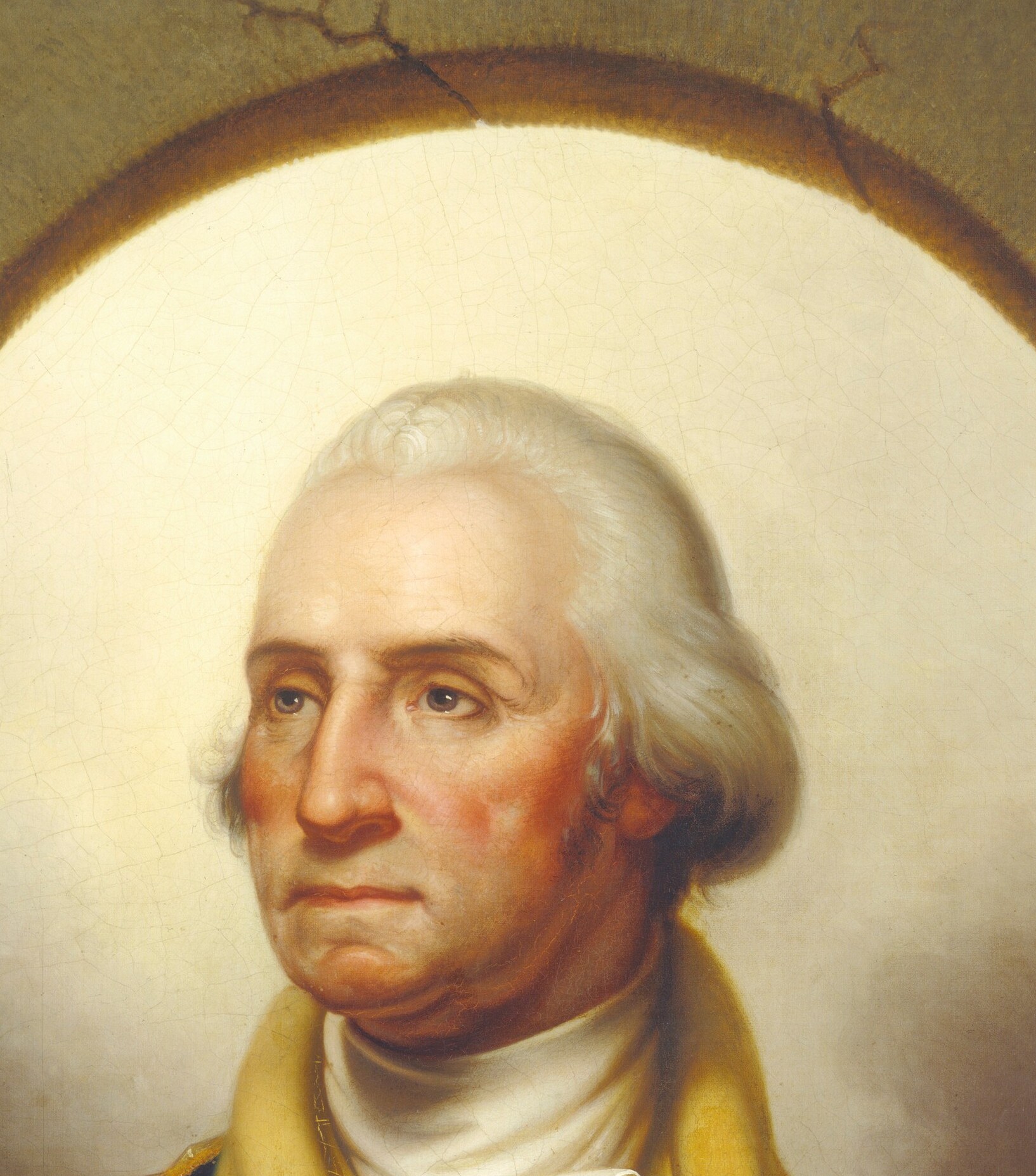
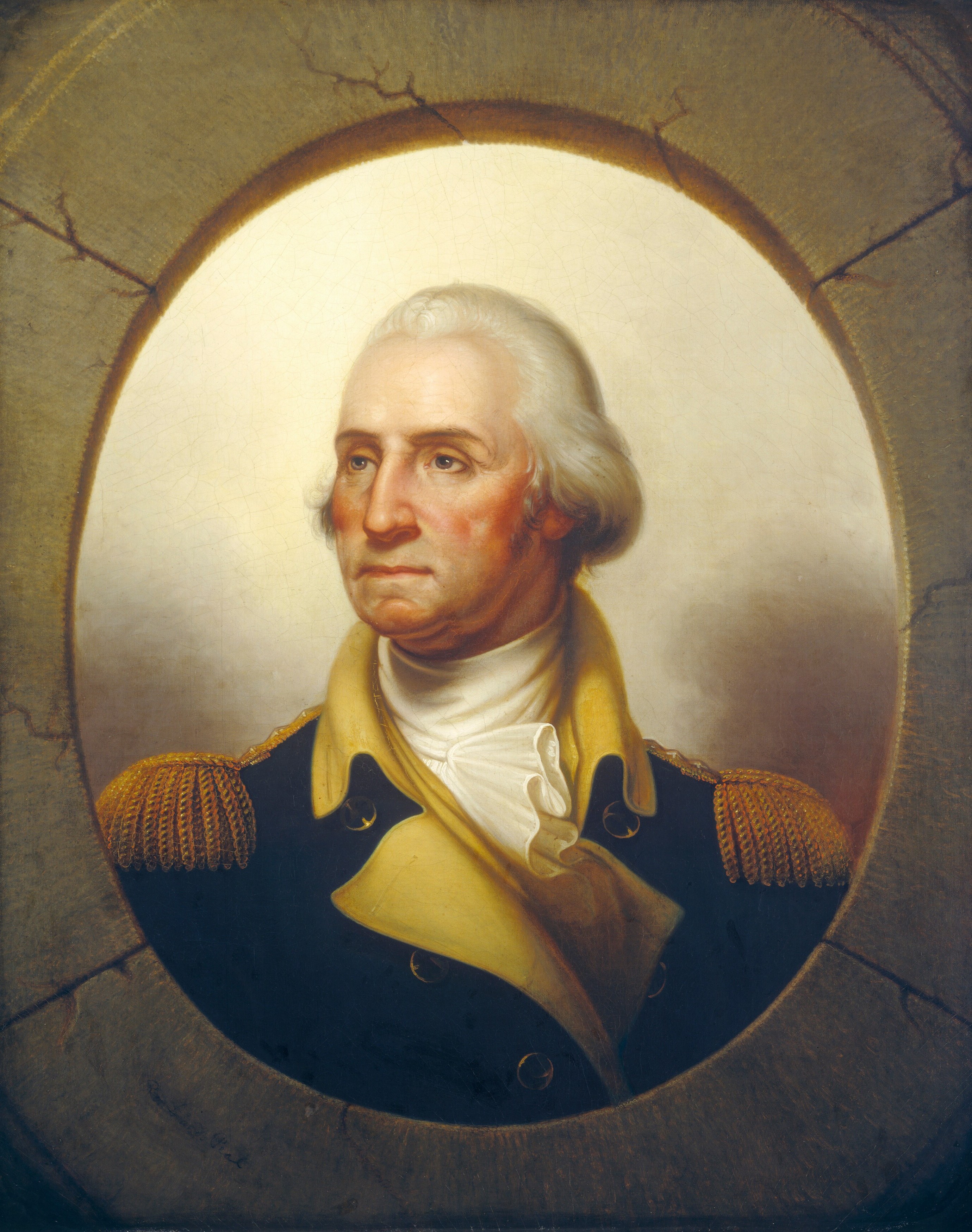
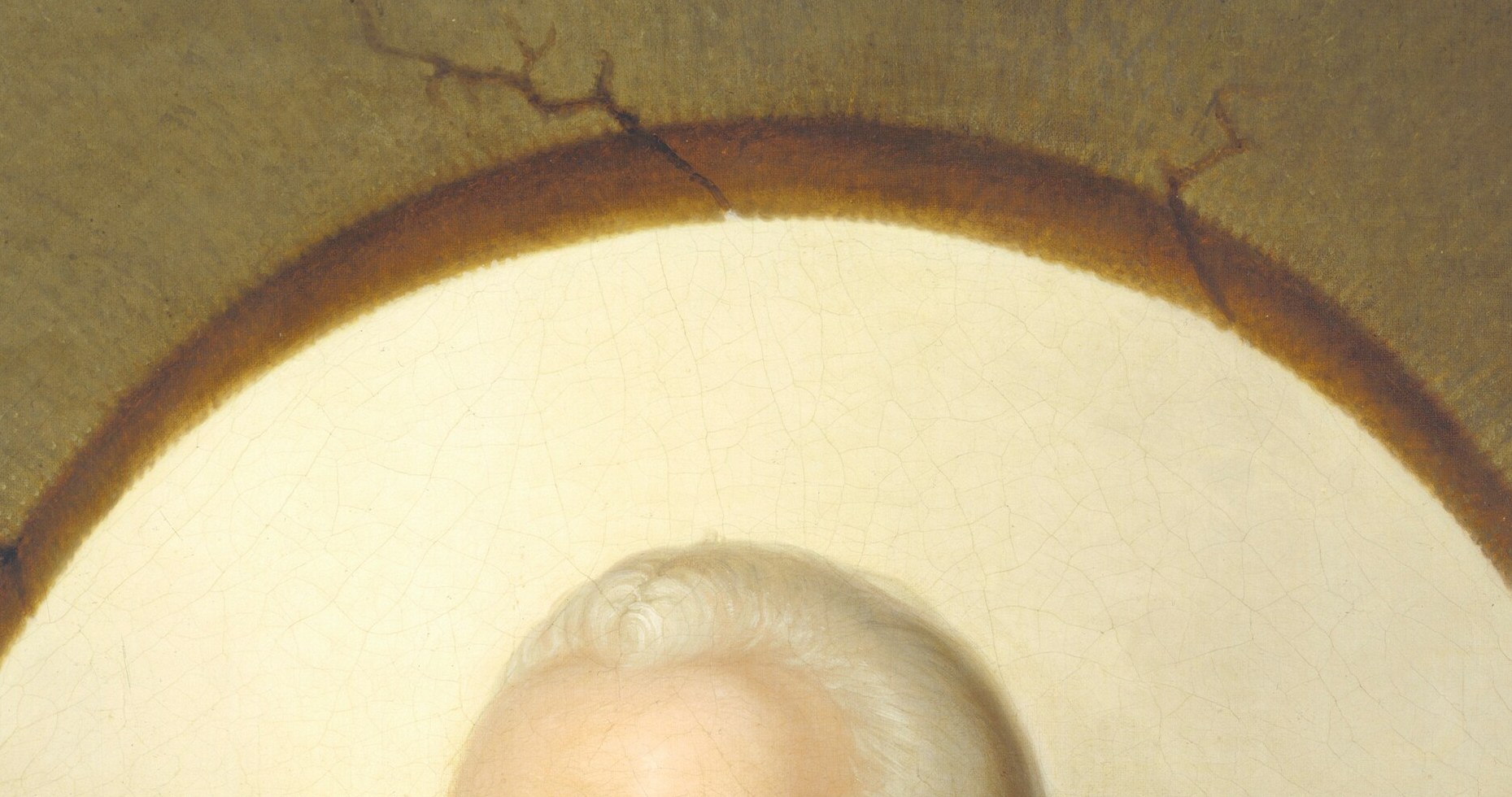
This is Rembrandt Peale's 'George Washington,' painted around 1850, now in the collection of the Crystal Bridges Museum of American Art. Rembrandt Peale never once laid eyes on the man he spent a lifetime painting.
He was born in 1778, the year the American Revolution was in full swing. By the time he took up his brush to paint Washington's portrait, the president had been dead for half a century. His claim to the likeness came from a single source: his father, Charles Willson Peale, who had painted Washington from life.
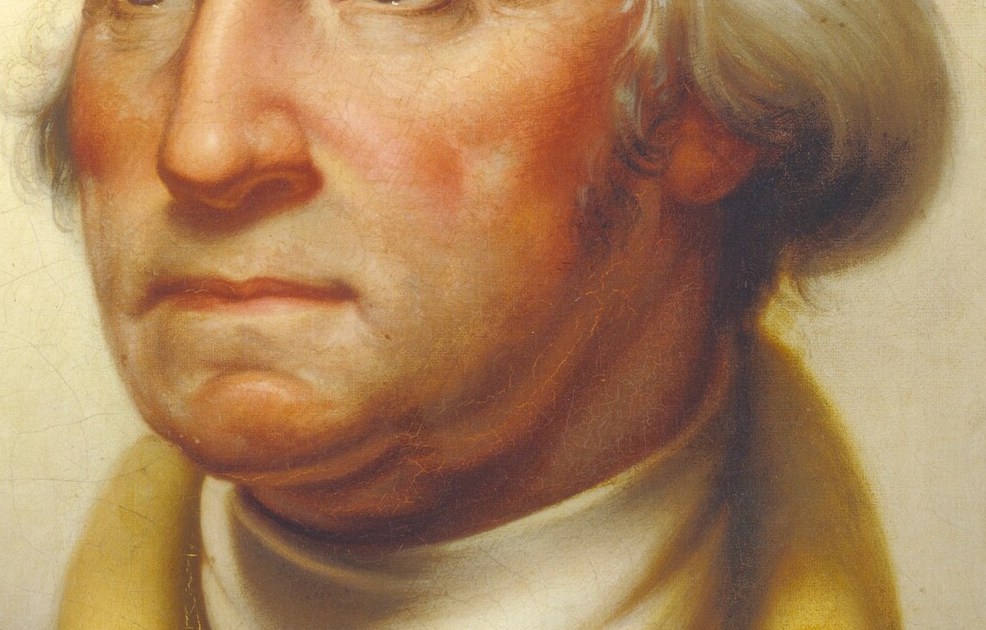
Look at the right eye. That is where the inheritance lives. Charles Willson Peale's memory of Washington's actual gaze is transmitted through his son's brush. The left eye, slightly in shadow, introduces an asymmetry that keeps the face from becoming a mask. The tight, thin mouth is a republican choice: composure over charisma, restraint over royalty.
Rembrandt Peale made at least seventeen of these portraits, which he called 'portholes,' framing Washington inside a painted stone oval as if he were already a Roman bust. He chased this image his whole life, trying to make the man visible to a nation that had already begun to forget the person inside the monument.
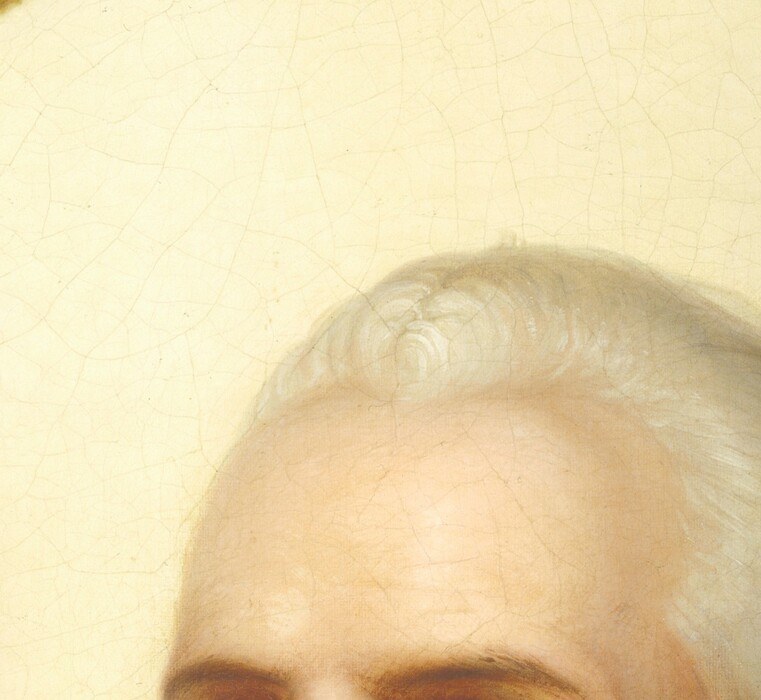
Details
Transcript
Rembrandt Peale never saw Washington in the flesh. He was born the year the Declaration was signed, and painted this in 1850. So how does a man paint a face he never saw? He copied his father, who painted Washington from life. That right eye is a second-hand memory, transmitted across a generation. He frames it in stone, as if Washington already belonged to a monument. Rembrandt Peale made seventeen of these. He called them 'portholes.' A lifetime spent trying to fix the face of a man already becoming a myth.