The Man of Sorrows by Aelbrecht Bouts
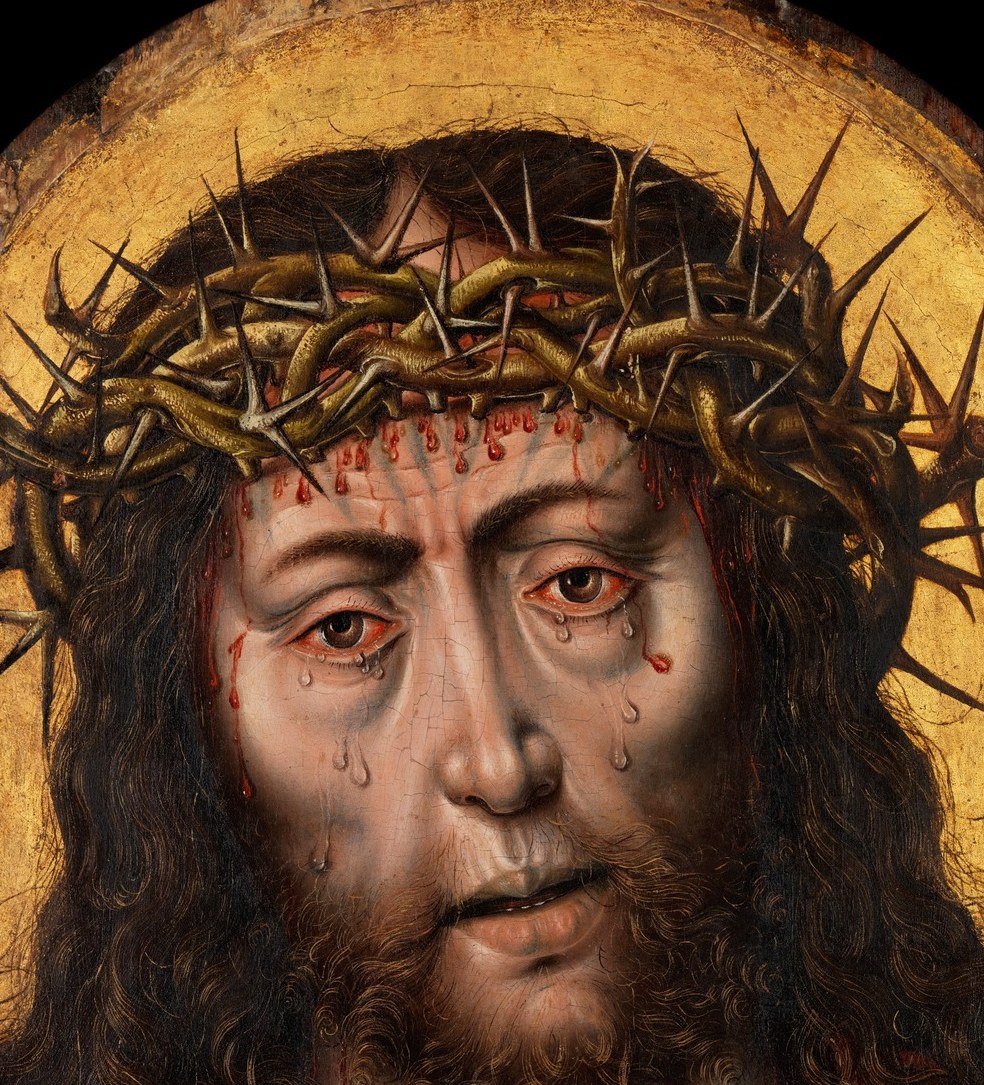
Aelbrecht Bouts painted The Man of Sorrows in 1525, and it has quietly outlasted empires. Now in the Metropolitan Museum of Art, it is a concentrated dose of Early Netherlandish devotional realism: a single figure against total darkness, built for private meditation.
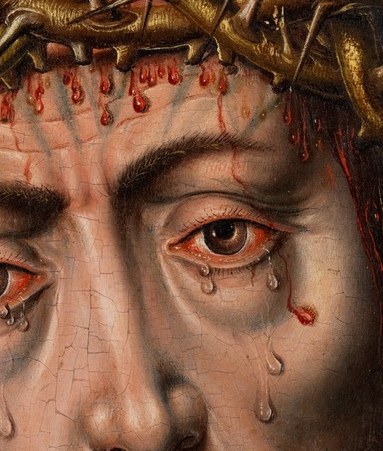
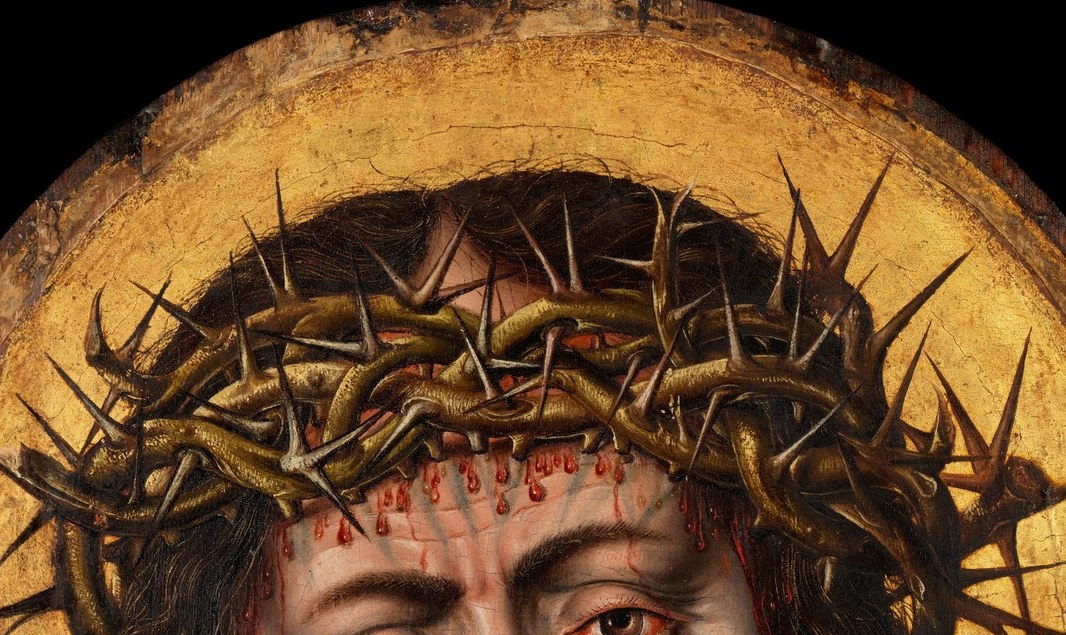
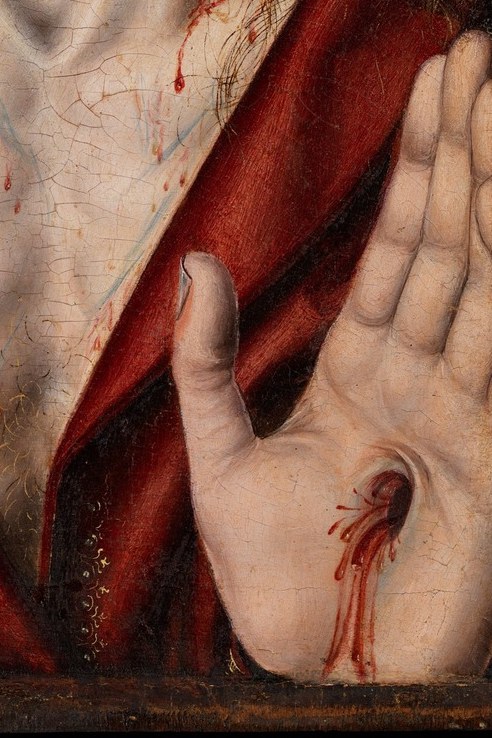
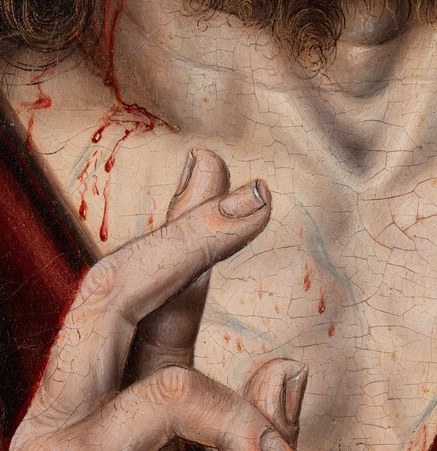
Look first at the tears. Bouts gave the left eye a single bright highlight on the wet track, a tiny optical decision that makes grief feel immediate. Then look at the crown of thorns: each thorn is painted with individual attention, each tiny puncture marked by a distinct bead of blood with its own catchlight. The hands create a dialogue: the right index finger points upward in an intercessory gesture, while the left hand curls inward at the chest.
Aelbrecht was the less famous son. While his brother Dieric the Younger inherited their father's studio and carried on the house style, Aelbrecht set up his own workshop in Leuven and developed a hotter palette, richer textures, and a tighter focus. The Man of Sorrows was a popular subject, and his workshop produced them to order for private patrons who wanted a personal object of contemplation.
The dark background is a theological choice: no landscape, no crowd at Golgotha, no narrative distraction. Just the face and the wounds, asking you to stay with them. What detail holds you longest?
Details
Transcript
A sorrowful Christ for private prayer, painted in 1525. The tears are not just painted. They are built with light. Bouts tracked every thorn. Each has its own sharp highlight. His workshop in Leuven produced these on commission. The pointing hand is an intercessory pose: he points toward heaven. Blood from the spear wound appears at the collar. Easy to miss. Aelbrecht Bouts ran his own shop, apart from his brother's. Five centuries later, it still holds a wall at the Met.