Brother and Sister by American 19th Century
This is "Brother and Sister," painted around 1845 by an unknown American artist. It lives at the National Gallery of Art, a quiet testament to a family we will never fully know.
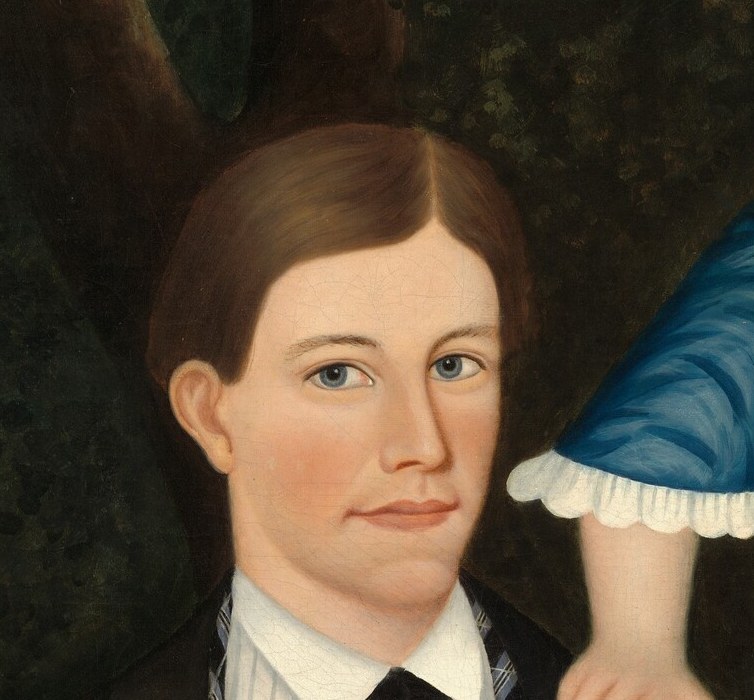
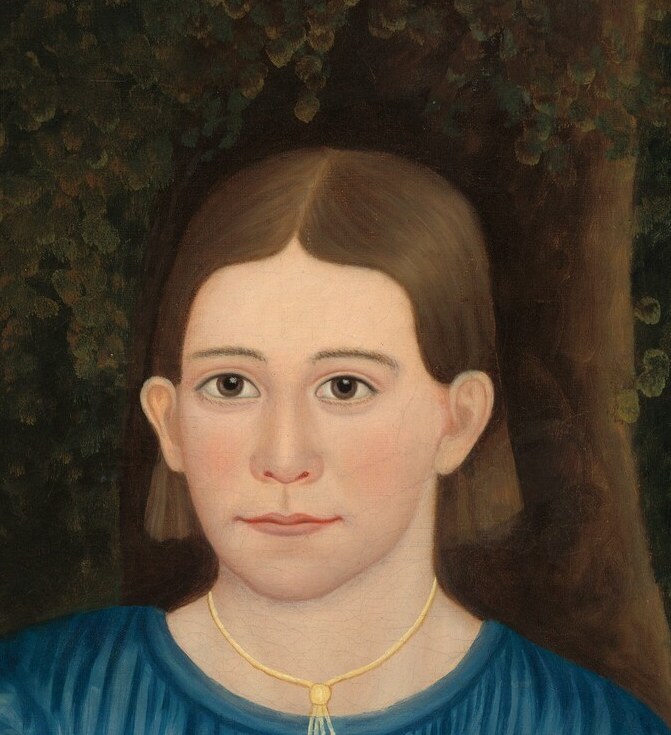
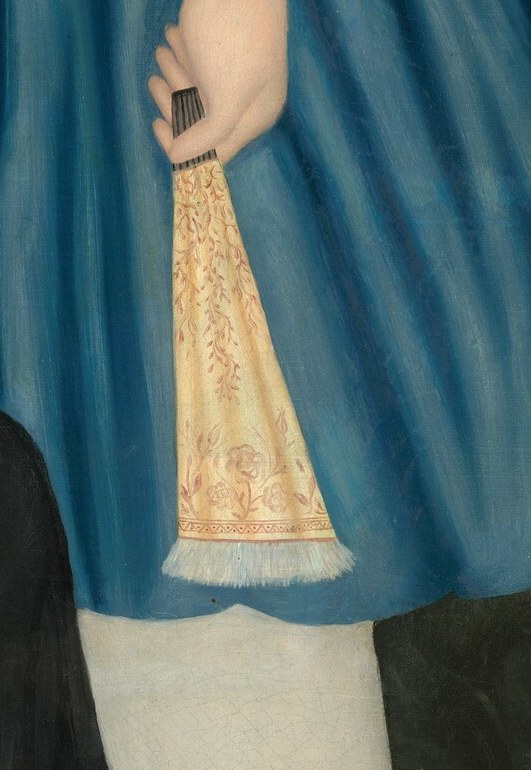
Notice the small, deliberate details: the open book in the boy's hands, the girl's hand resting protectively on his shoulder. These were not casual choices. In an era before photography was widely accessible, a painted portrait was a deliberate act of memory and aspiration. The book signals a mind being shaped; the girl's steady gaze and careful touch suggest a bond the family wanted to last beyond childhood.
We don't know who these children were. The artist's name has been lost too, likely a traveling portraitist who moved from town to town, capturing families who could afford a single painting to hang in the parlor. The serene landscape behind them, with its calm water and sturdy tree, frames them not just as individuals, but as part of a larger, hopeful story about who they would become.
Their faces still hold that hope, suspended in oil paint. What do you think the boy was reading?
Details
Transcript
Before photography, a portrait had to do a lot of work. It held memory, yes. But it also held hope. Look at her hand on his shoulder. She is not just his sister. She is his protector. The book is open. He has stopped reading for you. This was painted around 1845, likely by a traveling American artist. No famous name. Just a family who wanted to be seen.