The Rape of the Sabine Women by French 18th Century
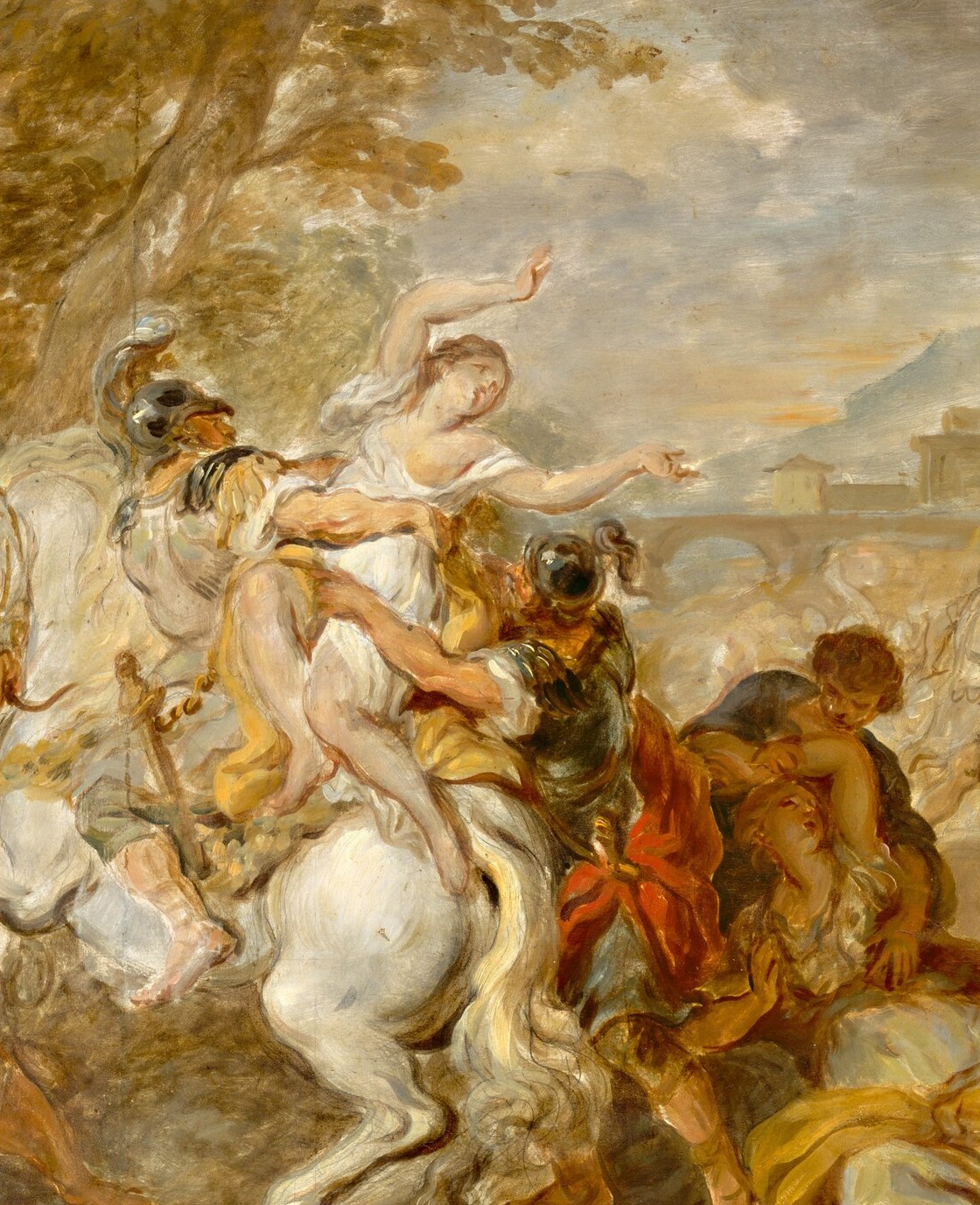
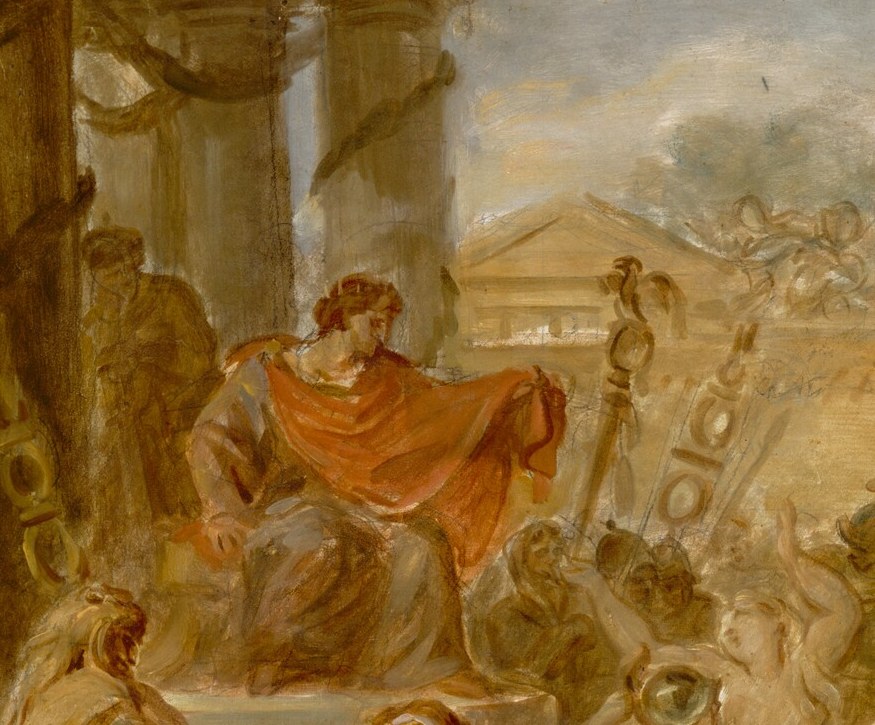
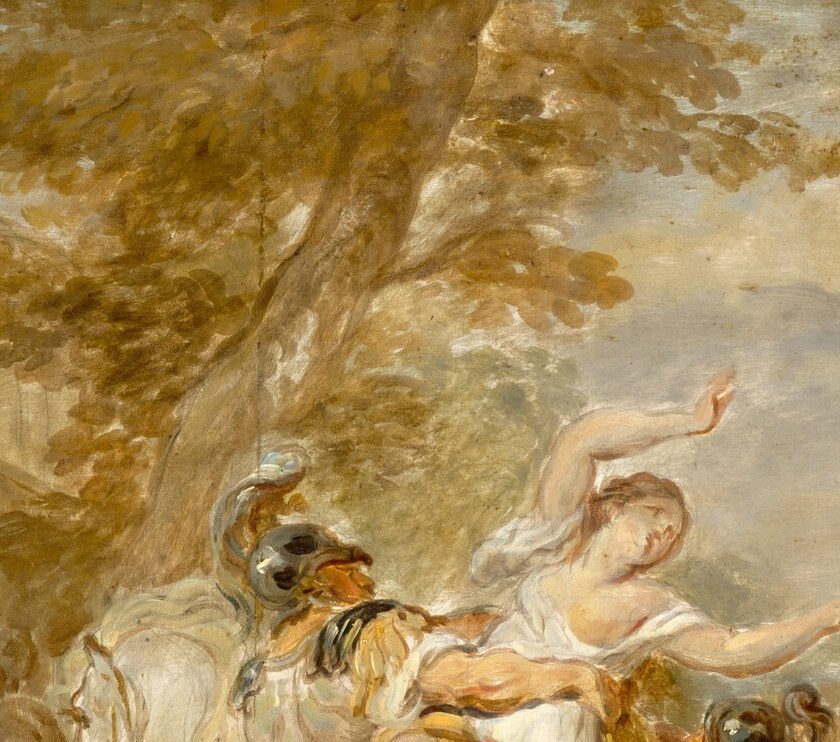
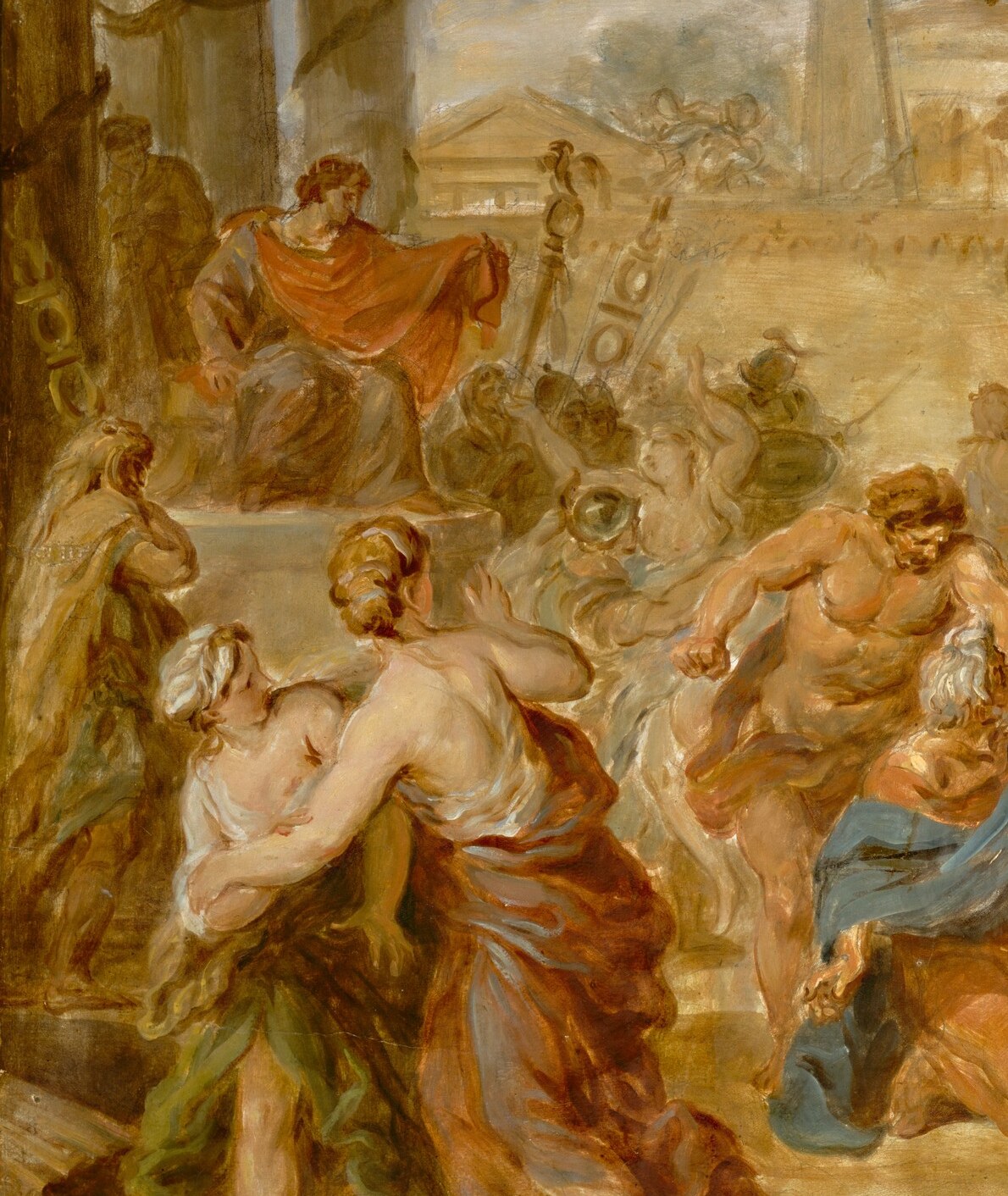
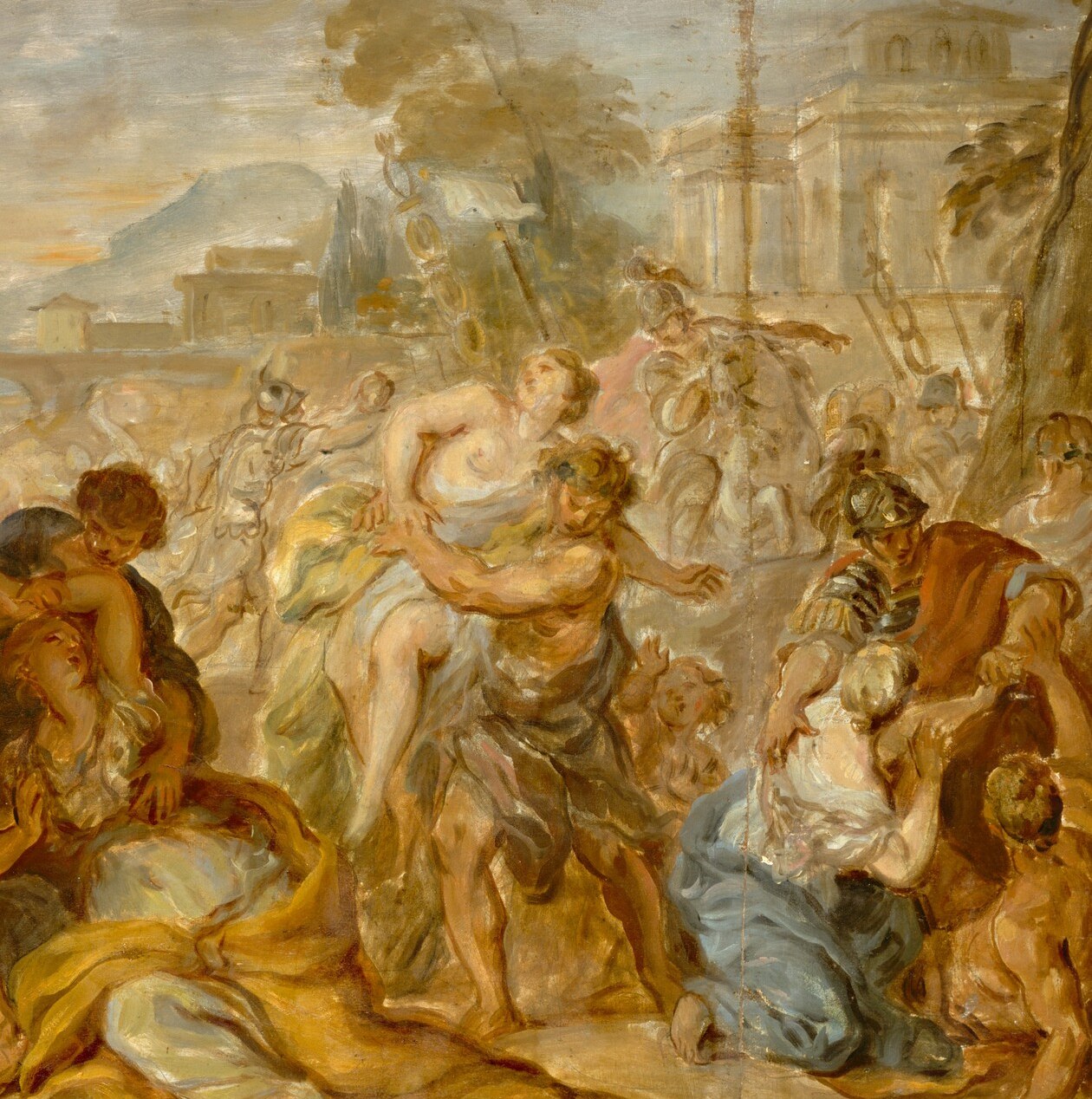
This is The Rape of the Sabine Women, an oil-on-paper painting from around 1770 by an unknown French artist, now at the National Gallery of Art in Washington. It is barely two feet wide, yet it contains a multitude.
The scene feels like an explosion, but the composition is a machine. Every figure, every flung arm, is strung on a tight web of diagonals radiating from the central white horse. The horse is not merely a character in the story; it is the structural bolt holding the entire painting together. Follow the thrust of its body upward and you can trace the lines of force pushing out into the struggling groups on the left and right. The chaos is an illusion, engineered with a draftsman's precision.
The subject is the legendary abduction of women from the Sabine tribe by the early men of Rome, a story used for centuries as a dark allegory for power and the founding of civic order. Here, that violence is rendered with furious brushwork and a compressed, almost sculptural density of bodies. The artist builds the scene from foreground sprawl to distant architecture, creating an extraordinary sense of depth on a small piece of paper.
Next time a painting feels like pure chaos, look for the diagonal. There is almost always a hidden geometry underneath.
Details
Transcript
It looks like a hundred bodies exploding at once. But the whole riot rotates around one anchor. The horse is a white diagonal bolt driven through the canvas. Every line of force radiates from this axis. The commander's arm pushes right. The raised arms plead left. A hidden machine of diagonals holds the chaos together. This painting is oil on paper, barely two feet wide. A whole mythic abduction, engineered from a single thrust.