Triptych with the adoration of the Magi (centre panel and inner wings), St Antony Abbot (outer left wing) and St Adrian (outer right wing) by Master of Alkmaar
The Triptych with the Adoration of the Magi, painted by the Master of Alkmaar around 1500, offers a unique window into life at the turn of the sixteenth century in the Netherlands. While depicting a religious narrative, the artist included rich details of contemporary society.
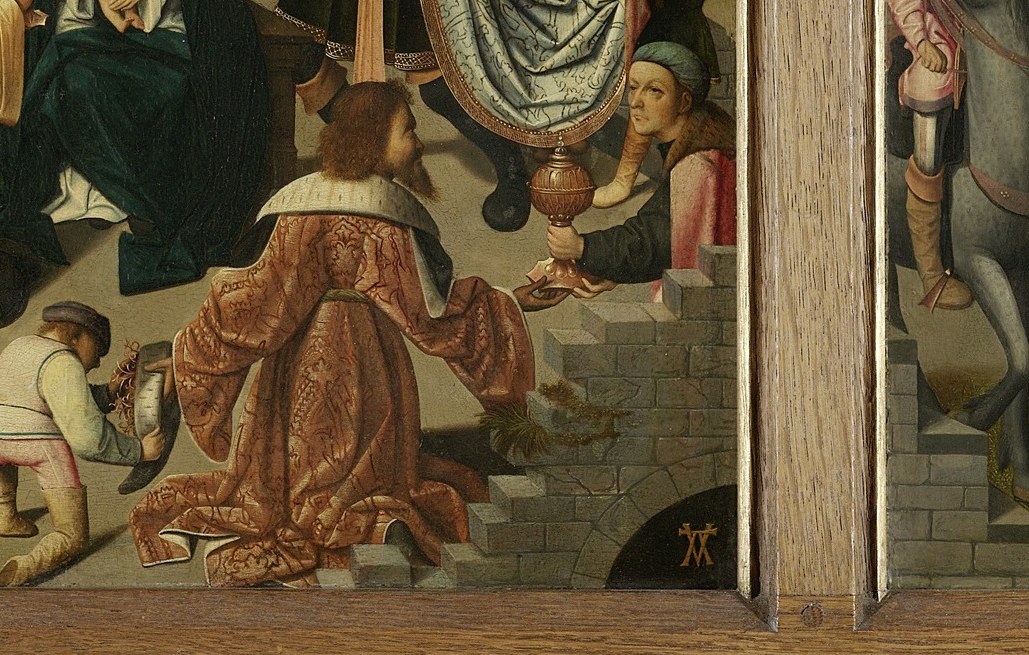
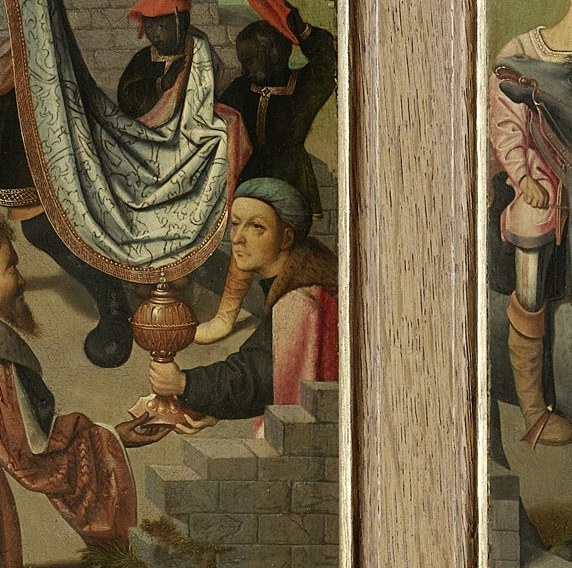
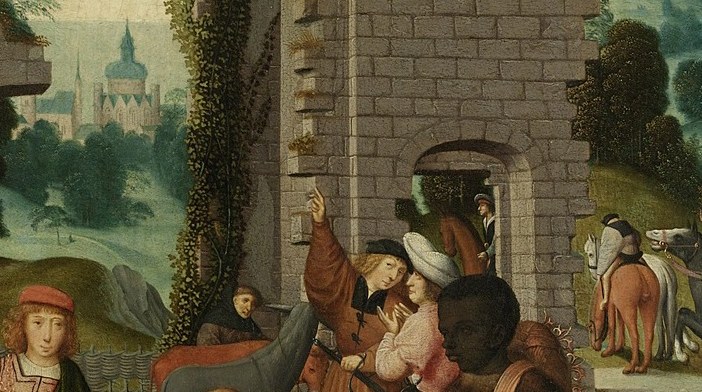
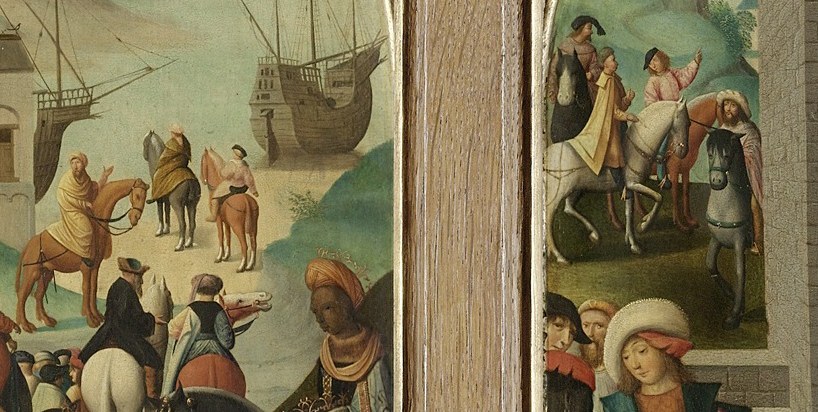
Observe the varied attire of the figures, especially the Magi, whose elaborate robes reflect the luxury and status of wealthy travelers of the period. The presence of the Black Magus highlights the global awareness and connections of the time, placing the religious event within a broader geographical context.
The Master of Alkmaar was active around the Dutch city of Alkmaar. His work, including this piece held at the Rijksmuseum in Amsterdam, exemplifies the Northern Renaissance style with its detailed rendering and use of oil paint. He meticulously captured elements of his world, from the types of ships on rivers to the architectural styles of distant cities.
What other everyday details do you notice in this historic scene?
Details
Transcript
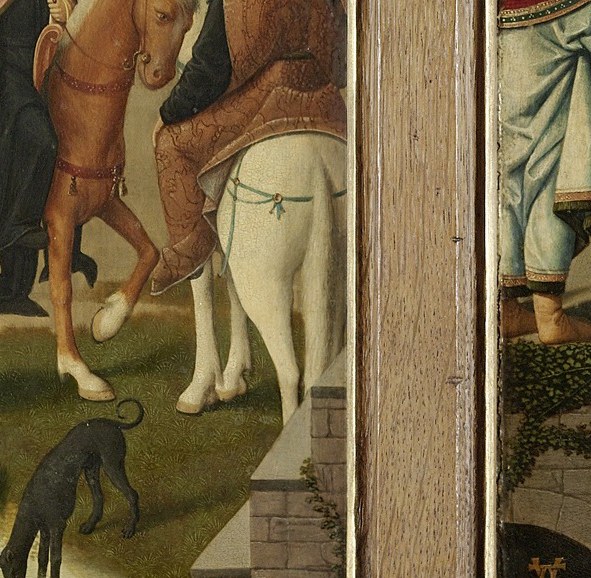
This painting from 1500 shows a familiar story. But look closely, and it also shows 16th-century Dutch life. Wealthy travelers like the Magi arrived on horseback. Their clothes were bright and luxurious, a sign of status. And this Black Magus reminds us of the wider world. The painter captured these details around 1500 in Alkmaar. Every figure, ship, and building was part of his world.