Esther and Mordecai by Steenwijk the Younger, Hendrick van
View the artwork: Esther and Mordecai →
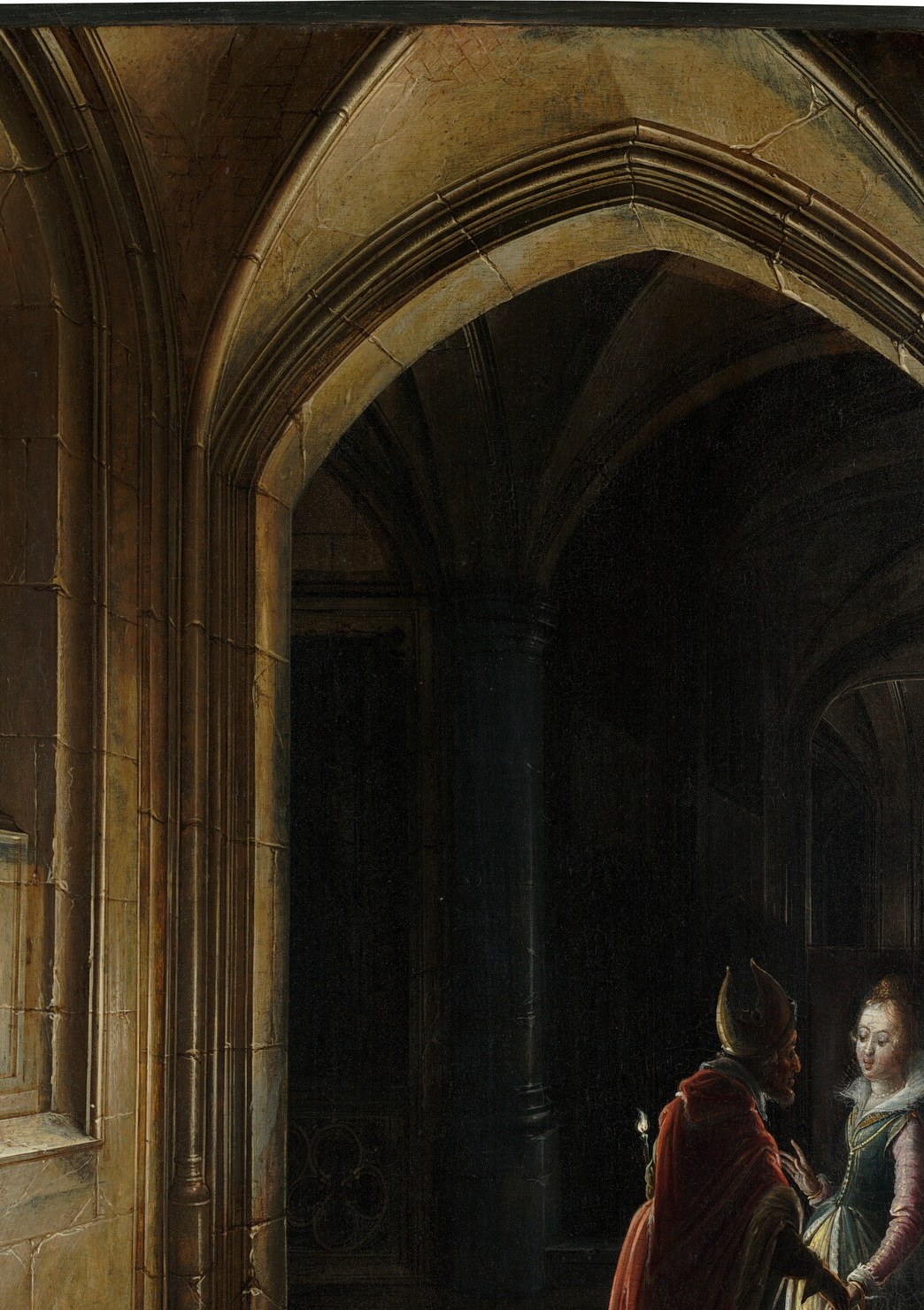
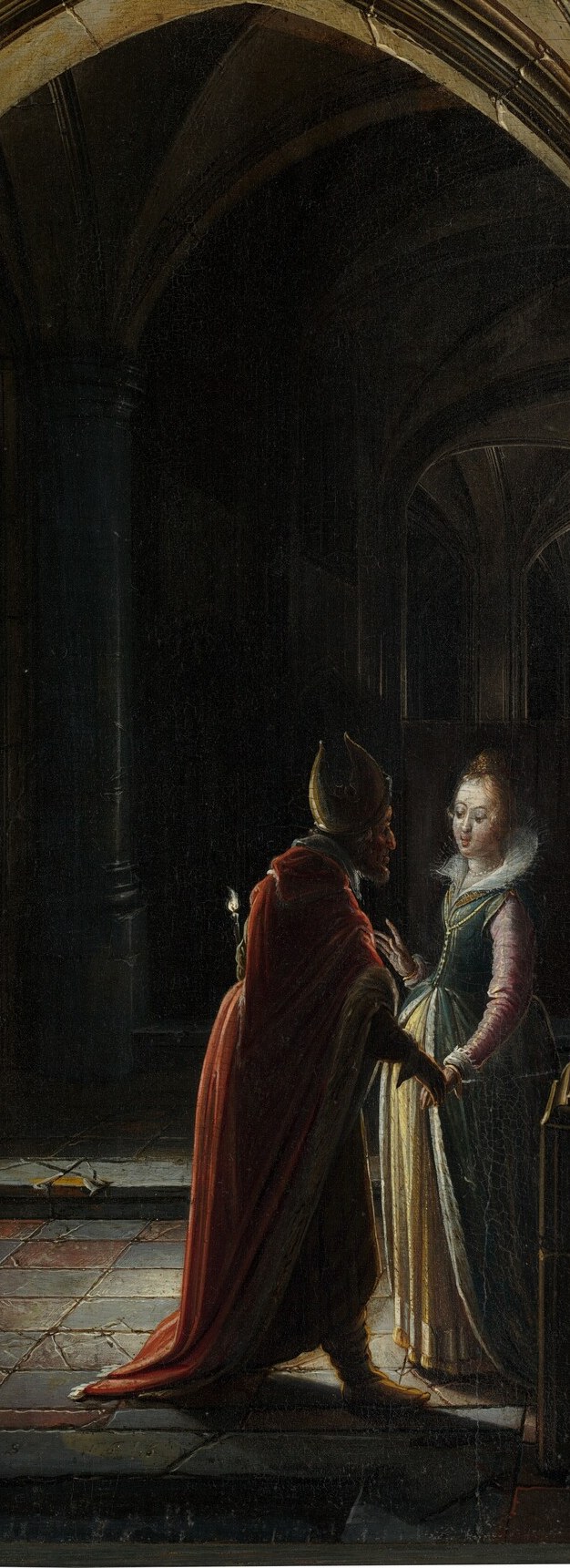
This is 'Esther and Mordecai,' painted by Hendrick van Steenwijk the Younger in 1616. It captures the biblical moment when Queen Esther enters the throne room of King Ahasuerus unsummoned, an act punishable by death unless the king extends his golden scepter. She intends to plead for the lives of her people.
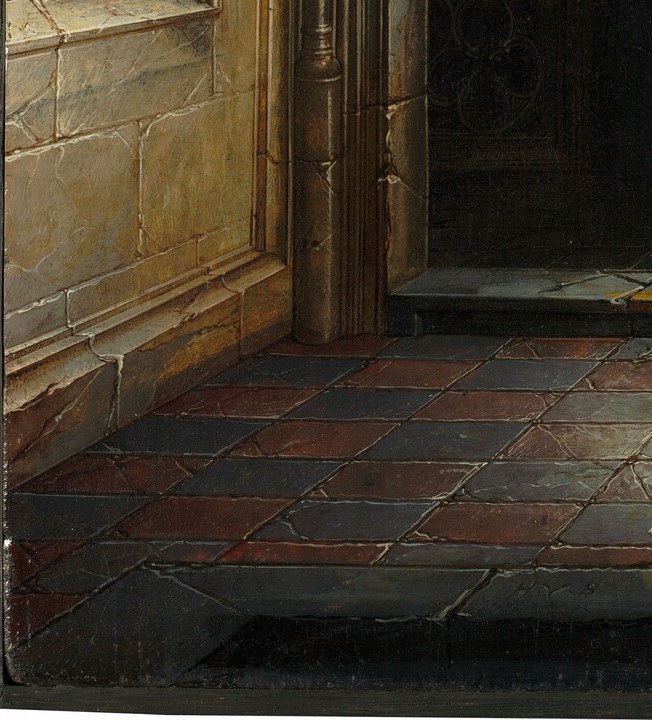
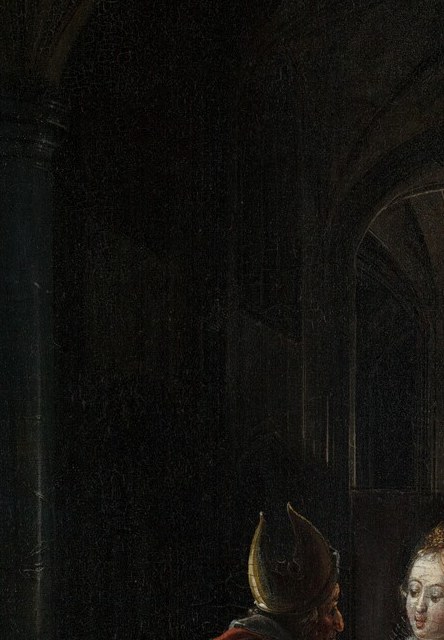
The artist embeds the story's stakes in the objects. On the stone floor sits a discarded crown, showing Esther has laid aside her royal rank to approach as a supplicant. Her white bodice glows against deep shadow, marking her as morally luminous. The king's heavy crimson cloak reads as the pooling weight of absolute power, momentarily paused.
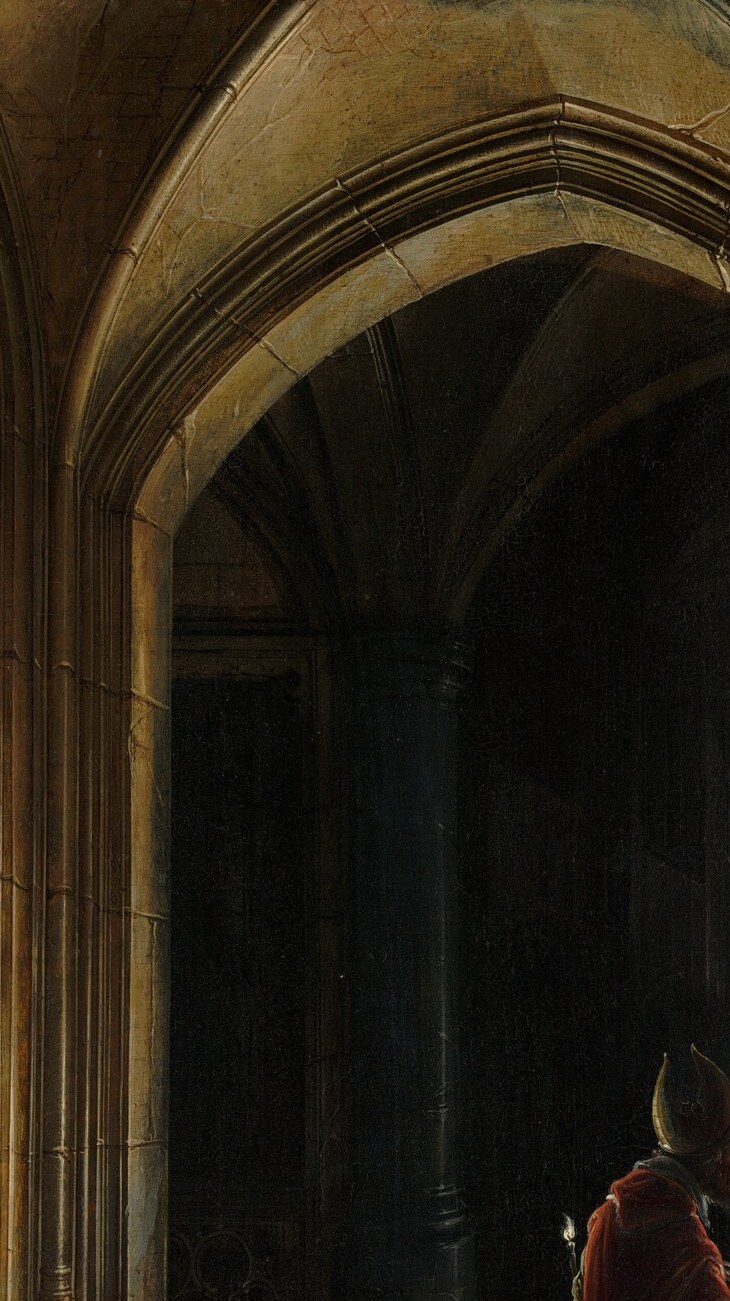
Hendrick van Steenwijk the Younger was known for architectural fantasies, particularly church interiors and nocturnal scenes. Here he applies that eye to a biblical narrative, using a Gothic stone archway to frame a Persian court, conferring a specifically Christian sacred solemnity onto the Old Testament drama. The figures themselves are lit with studied chiaroscuro, pulling Esther forward from the murk.
Every material choice presses the same meaning: real intercession requires vulnerability. The painting hangs on the silence between the plea and the response.
#arthistory #dutchgoldenage #biblicalart
Details
Transcript
Look first at what she has thrown to the stone floor. Her crown. In the biblical story, Esther discards it. She enters the throne room without rank or protection. Her white dress reads as pure supplication against the dark. The king's crimson cloak pools like a reservoir of withheld judgment. A Gothic arch frames a Persian court. Steenwijk gives it sacred weight. The code adds up: humility before power, faith before a throne.