Artwork
Esther and Mordecai
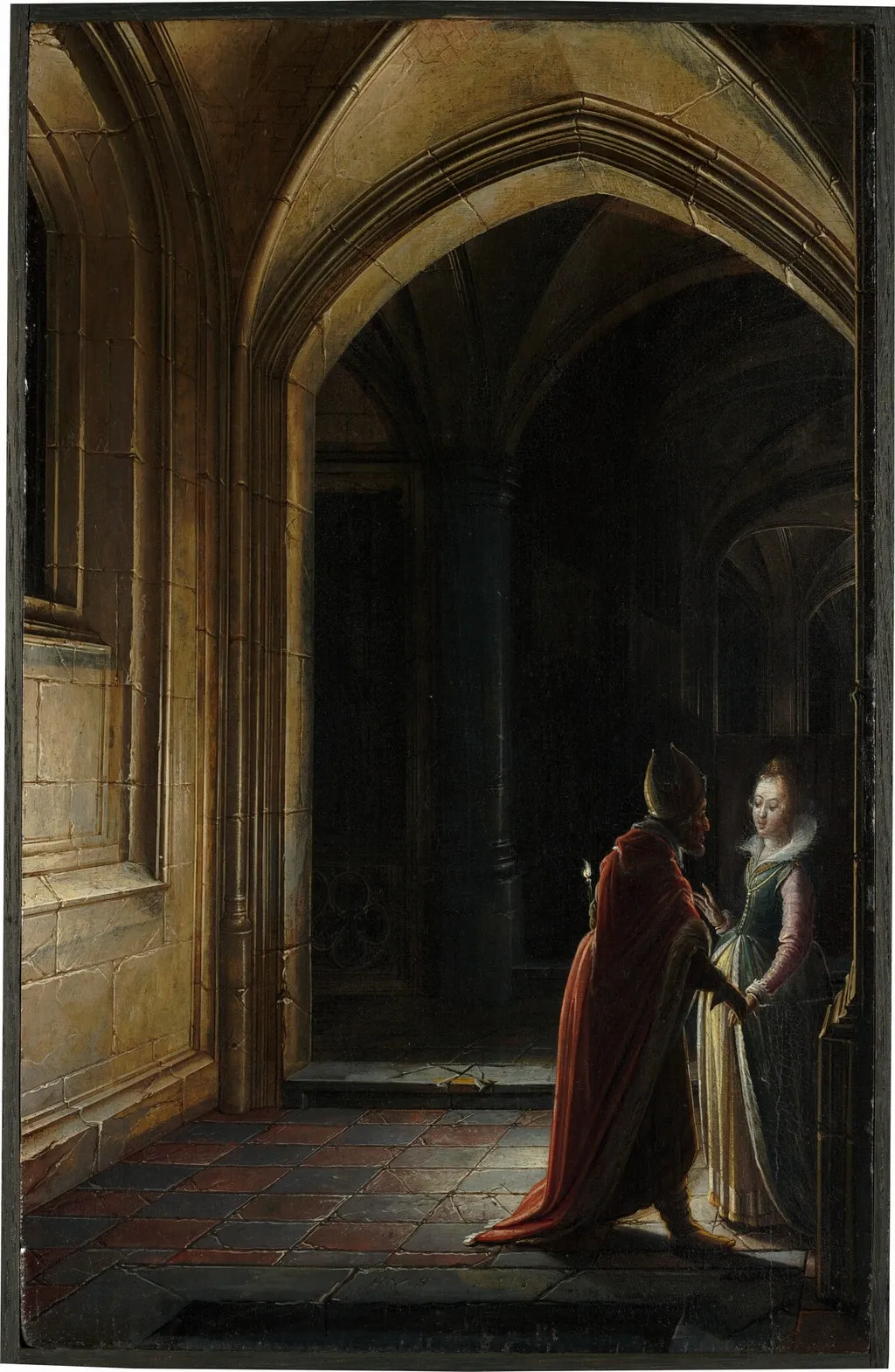
Esther and Mordecai is an oil painting by the Baroque artist Hendrik van Steenwijk II. It dates from 1616 and is held in the collection of the National Gallery of Art. This oil painting on panel depicts a pivotal scene from the biblical book of Esther.
- Inscription
- Inscribed:lower margin in monogram: H.V.S / 1616
About this work
History & Provenance
The painting Esther and Mordecai by Hendrick van Steenwijk the Younger is dated to 1616 based on internal records and provenance documentation.
The painting Esther and Mordecai by Hendrick van Steenwijk the Younger is dated to 1616 based on internal records and provenance documentation. The work entered the provenance chain in a private Belgian collection before passing through the hands of Dr. Walter Cohen in Düsseldorf, who sold it in July 1922 to Dr. Matthias K.H. Rech of Bonn. It remained in the Rech family by descent until its sale at Van Ham Kunstauktionen, Cologne, in November 2004.
The painting was subsequently acquired by Thomas le Claire and ultimately purchased by the National Gallery of Art (Washington, D.C.) on 17 February 2006.
The painting is held by the National Gallery of Art, Washington, D.C., where it is recorded as accession number 2006.1.1. It entered the collection on 17 February 2006 through purchase from Thomas le Claire, Hamburg. Its exhibition history includes display at the National Gallery of Art, Washington, D.C., following acquisition.
Overview
This oil painting on panel depicts a pivotal scene from the biblical book of Esther. The composition centers on Esther, who kneels before King Ahasuerus, her crown discarded on the ground. In the background, Mordecai observes the unfolding drama, leaning against a column.
The artist highlights Esther's figure with a vibrant garment, contrasting it with the surrounding darker tones, drawing the viewer's eye to her central role.
Subject & Meaning
The artwork captures a moment of profound tension and decision. Esther's humble posture, with her crown cast aside, underscores the gravity of her appeal to King Ahasuerus. This quiet intensity suggests the immense personal risk she undertakes to intercede for her people.
The scene conveys a sense of anticipation, portraying the calm before a potentially life-altering confrontation that will determine the fate of her community.
Technique & Style
The artist employs chiaroscuro, a technique utilizing strong contrasts between light and dark, to sculpt forms and guide the viewer's gaze. This dramatic lighting emphasizes key elements, particularly Esther's radiant attire, which appears to glow amidst the surrounding shadows. The skillful manipulation of light and shade creates a sense of depth and volume, enhancing the emotional impact and drawing attention to the central figures within the narrative.
Own this work as a print
Artist & collection
Artist
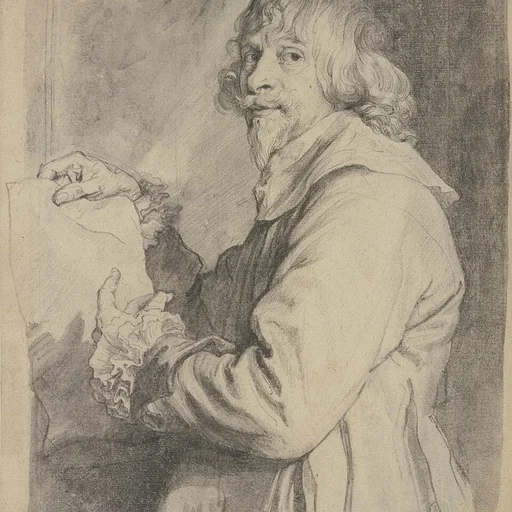
Hendrik van Steenwijck II (also Steenwyck, Steinwick) (c.1580–1640) was a Baroque painter mostly of architectural interiors, but also of biblical scenes and still lifes.

- Conversation outside a Palace
 Scene with soldier
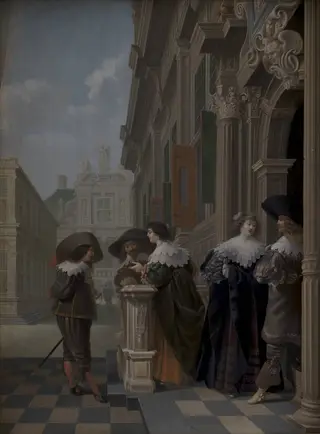 Conversation outside a Palace
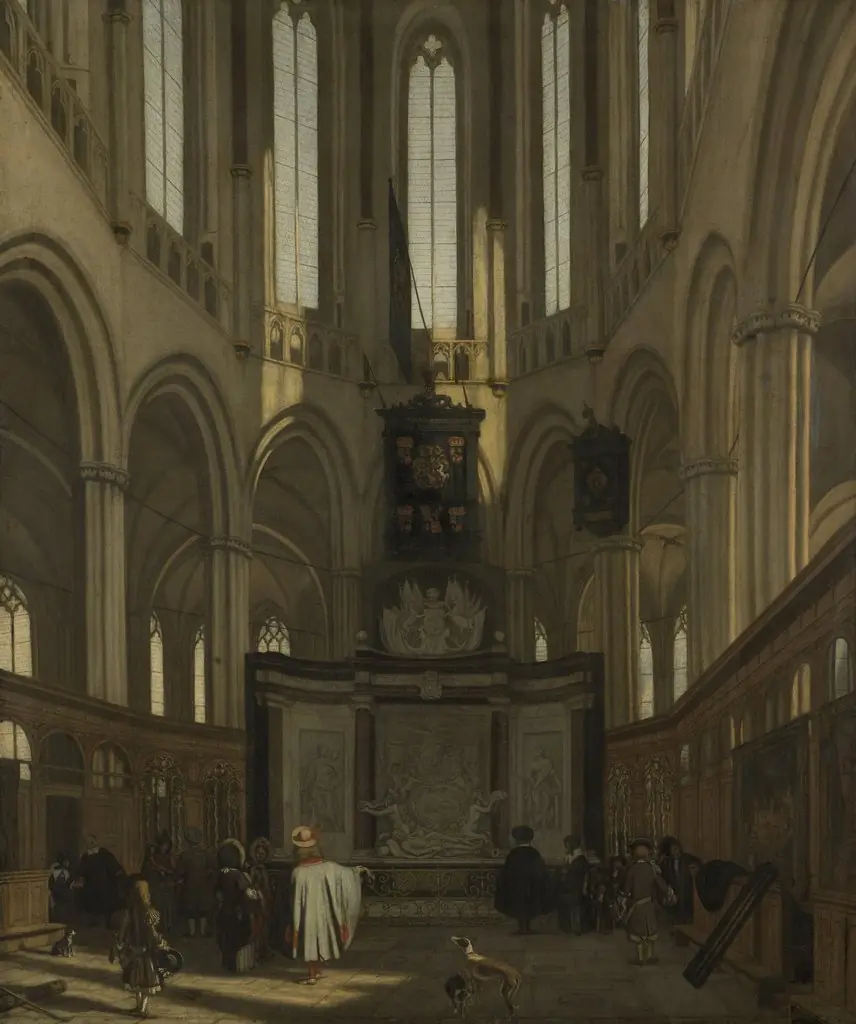 The Tomb of Michiel de Ruyter in the Nieuwe Kerk, Amsterdam
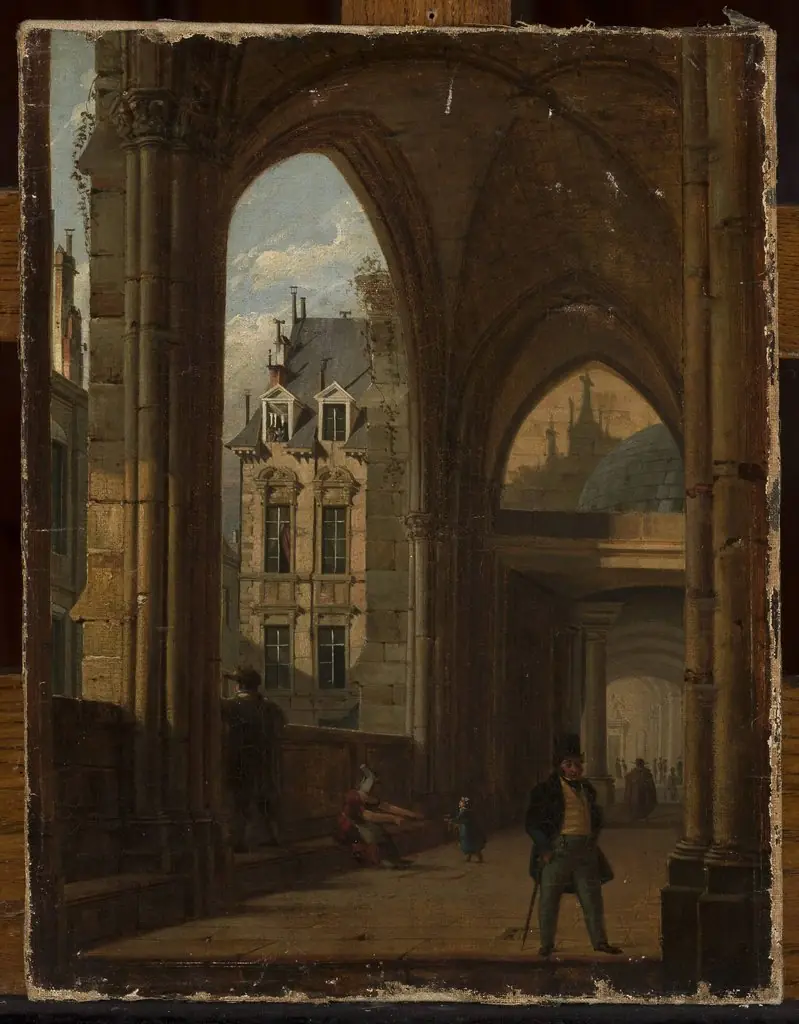 Arcades with the view of the city
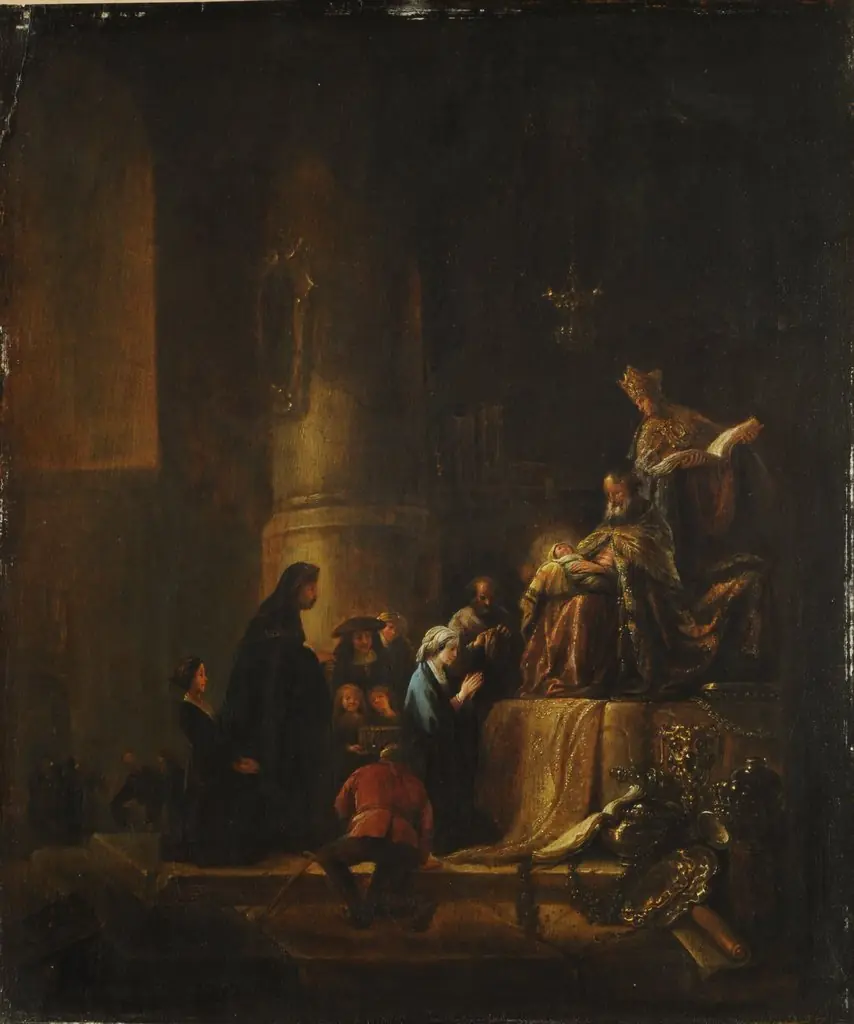 Presentation to the temple
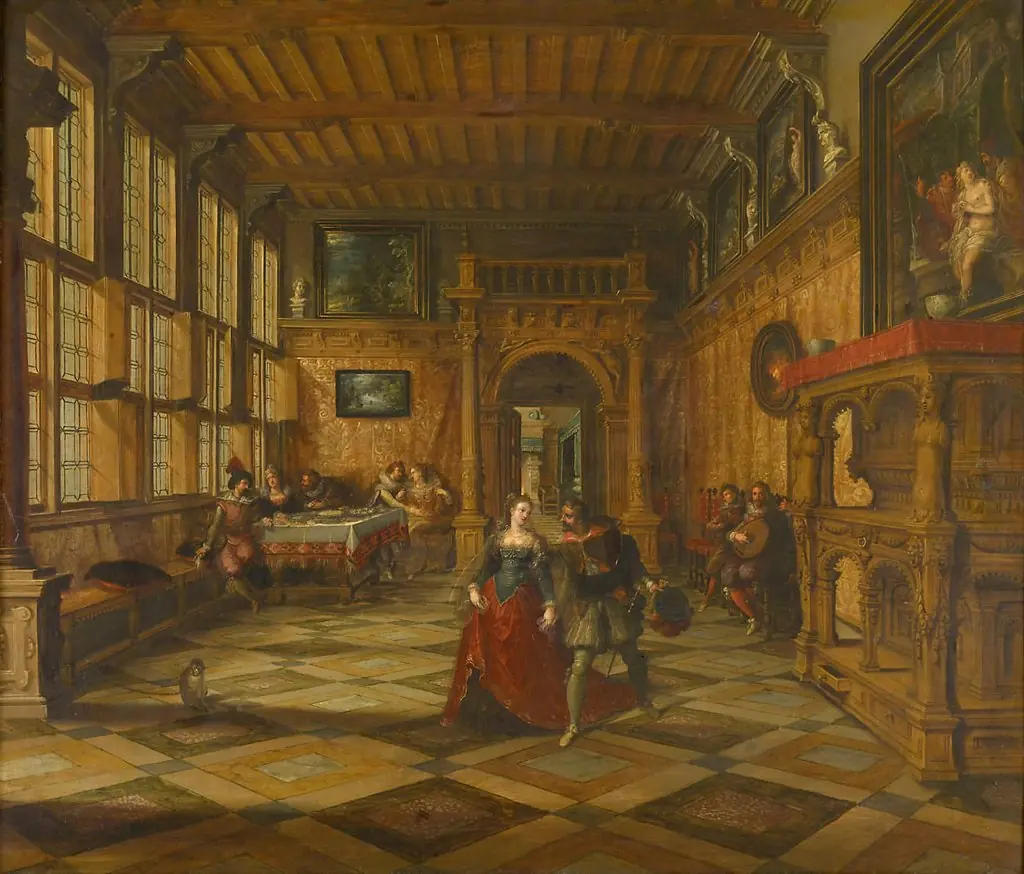 Gesellschaftsszene
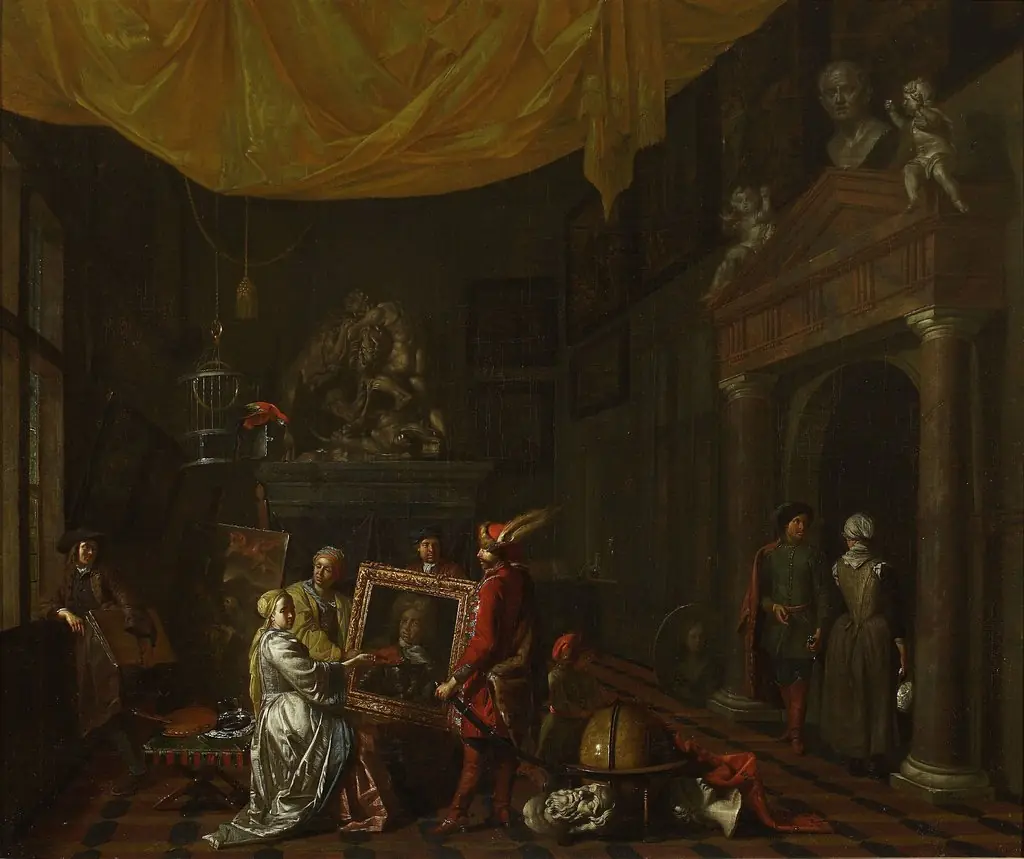 Visit to the painter's studio
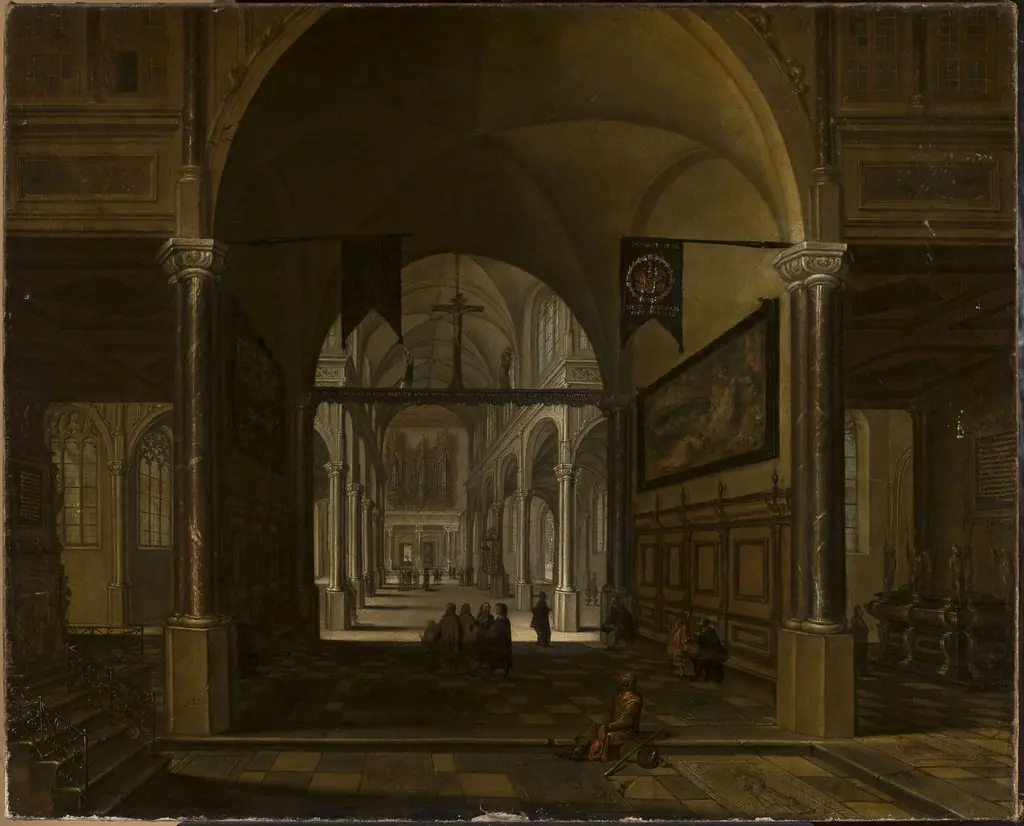 Church interior
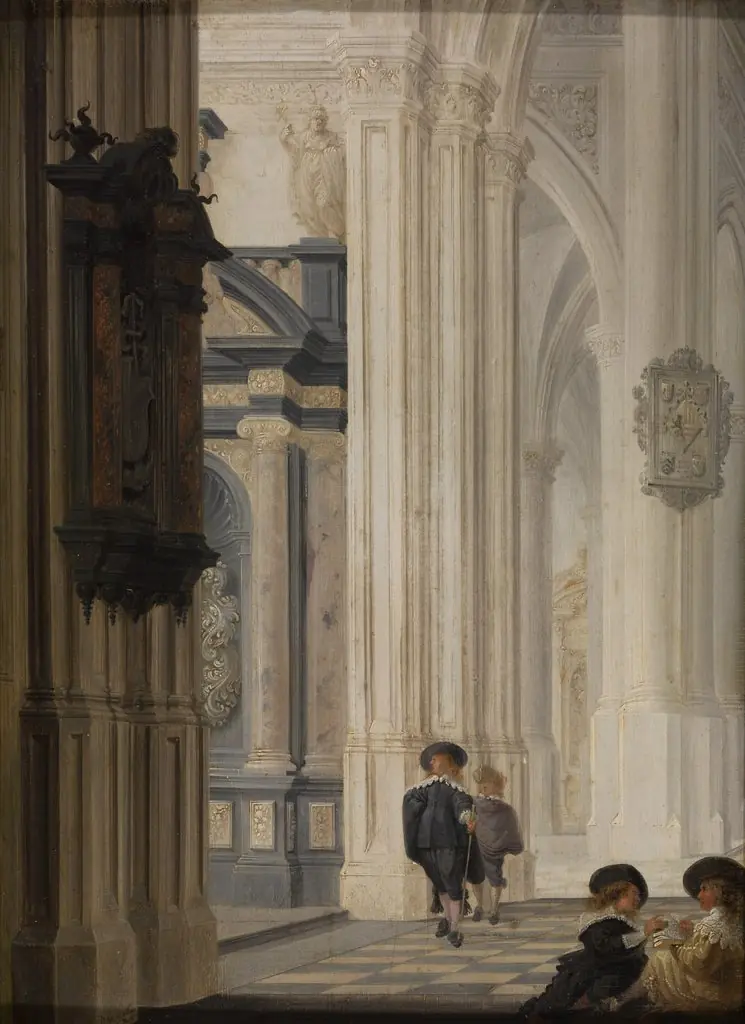 Interior of Church
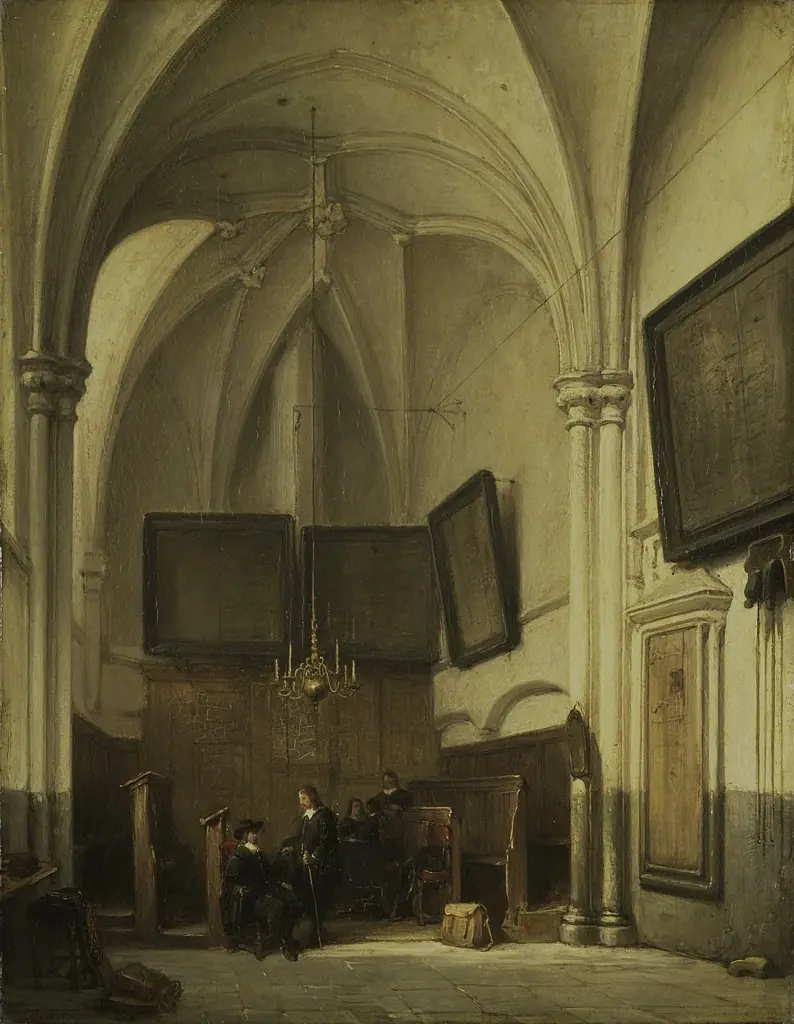 Vestry of the Church of St Stephen in Nijmegen
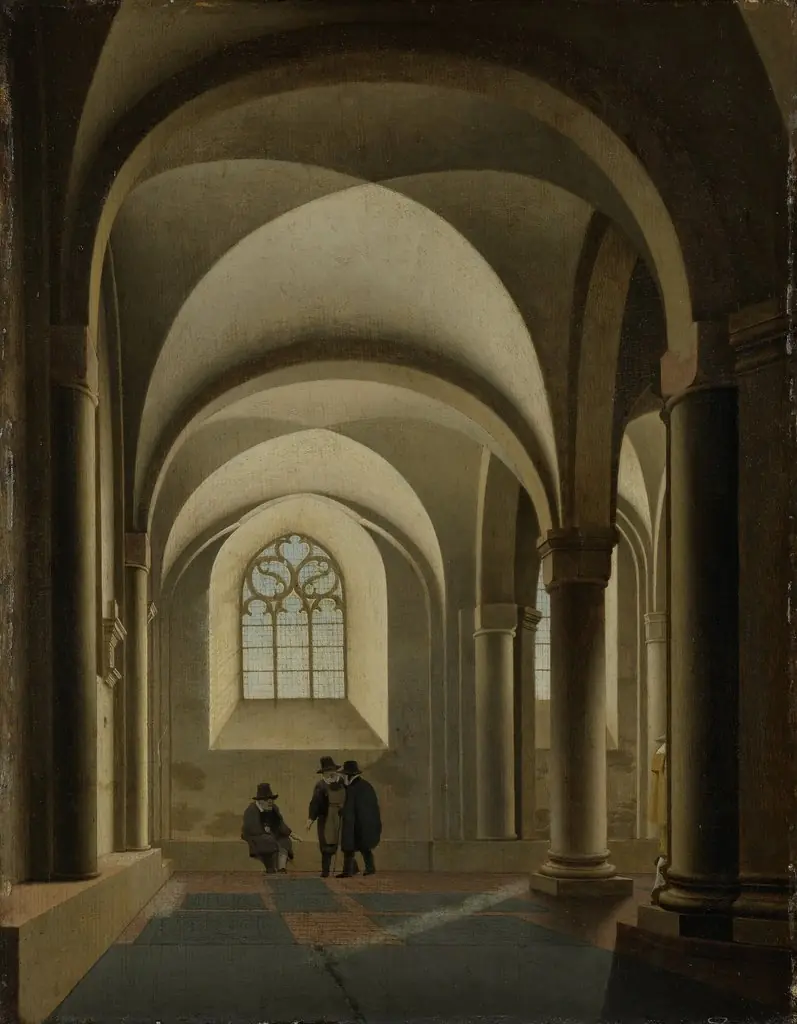 The westernmost bays of the south aisle of the Mariakerk in Utrecht