View of La Cava by Lanoüe, Félix-Hippolyte
This is View of La Cava, painted around 1840 by the French landscape artist Félix-Hippolyte Lanoüe. It was looted by the Nazis during the occupation of France and was missing for more than half a century before being recovered and restituted to its rightful owners.
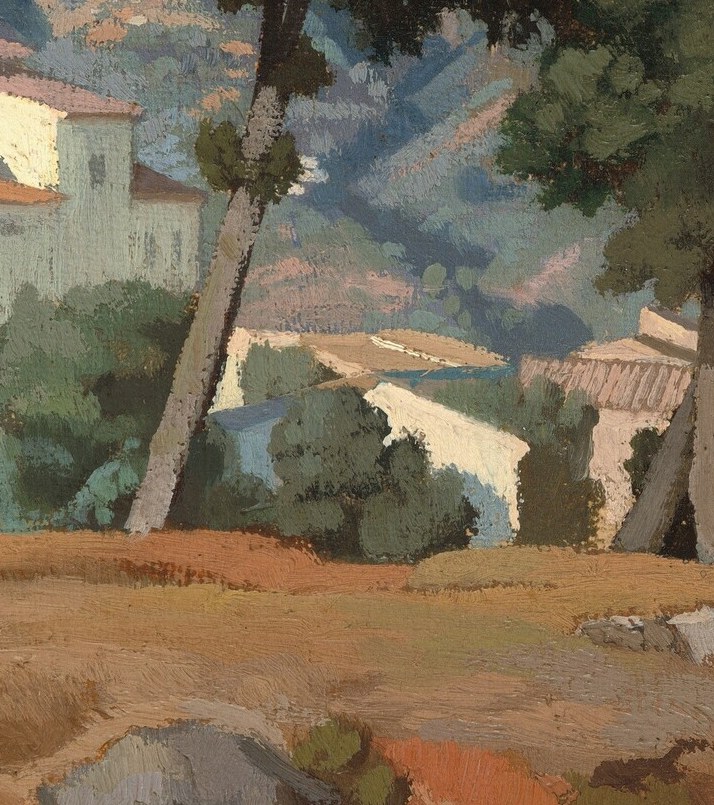
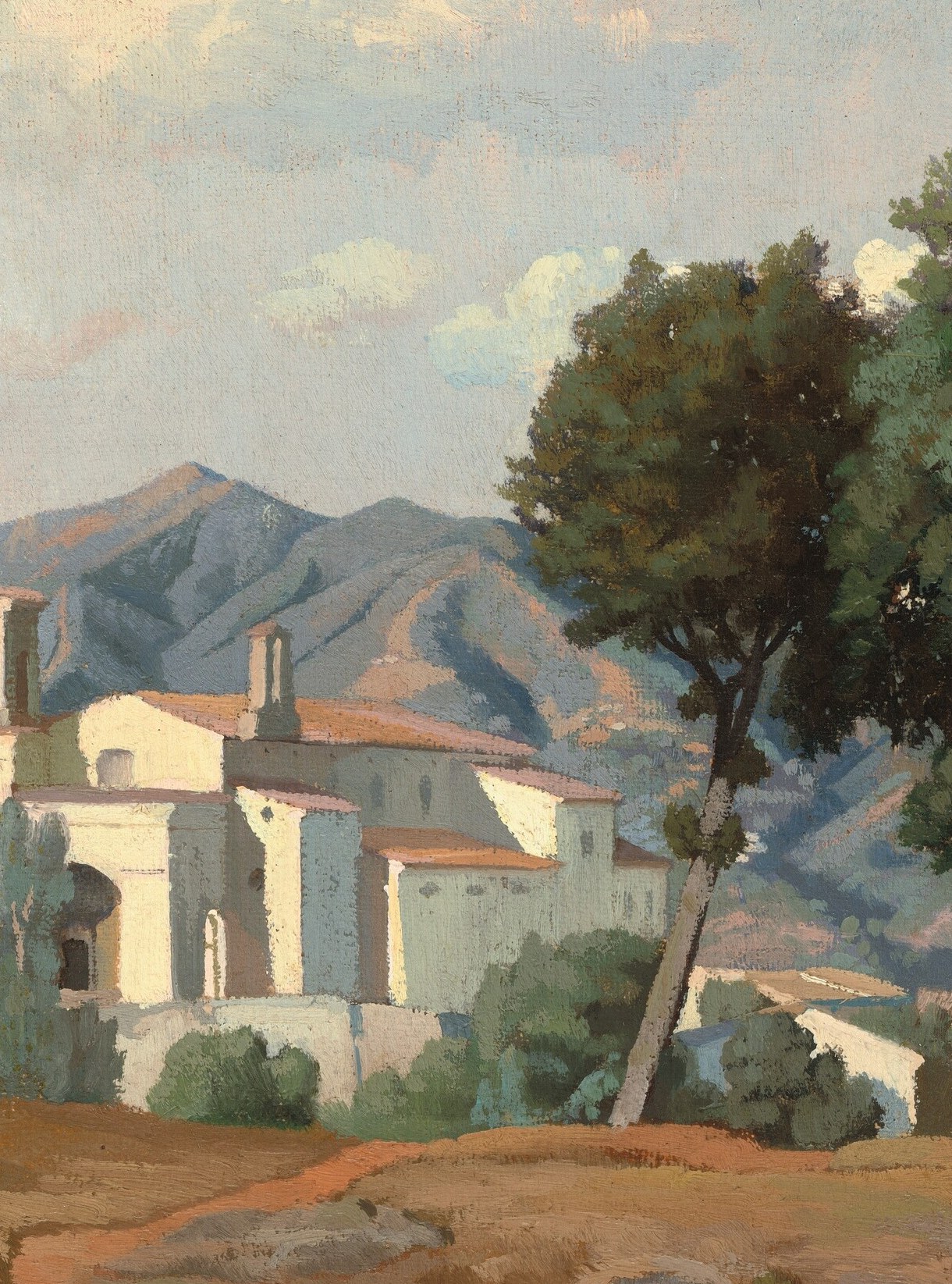
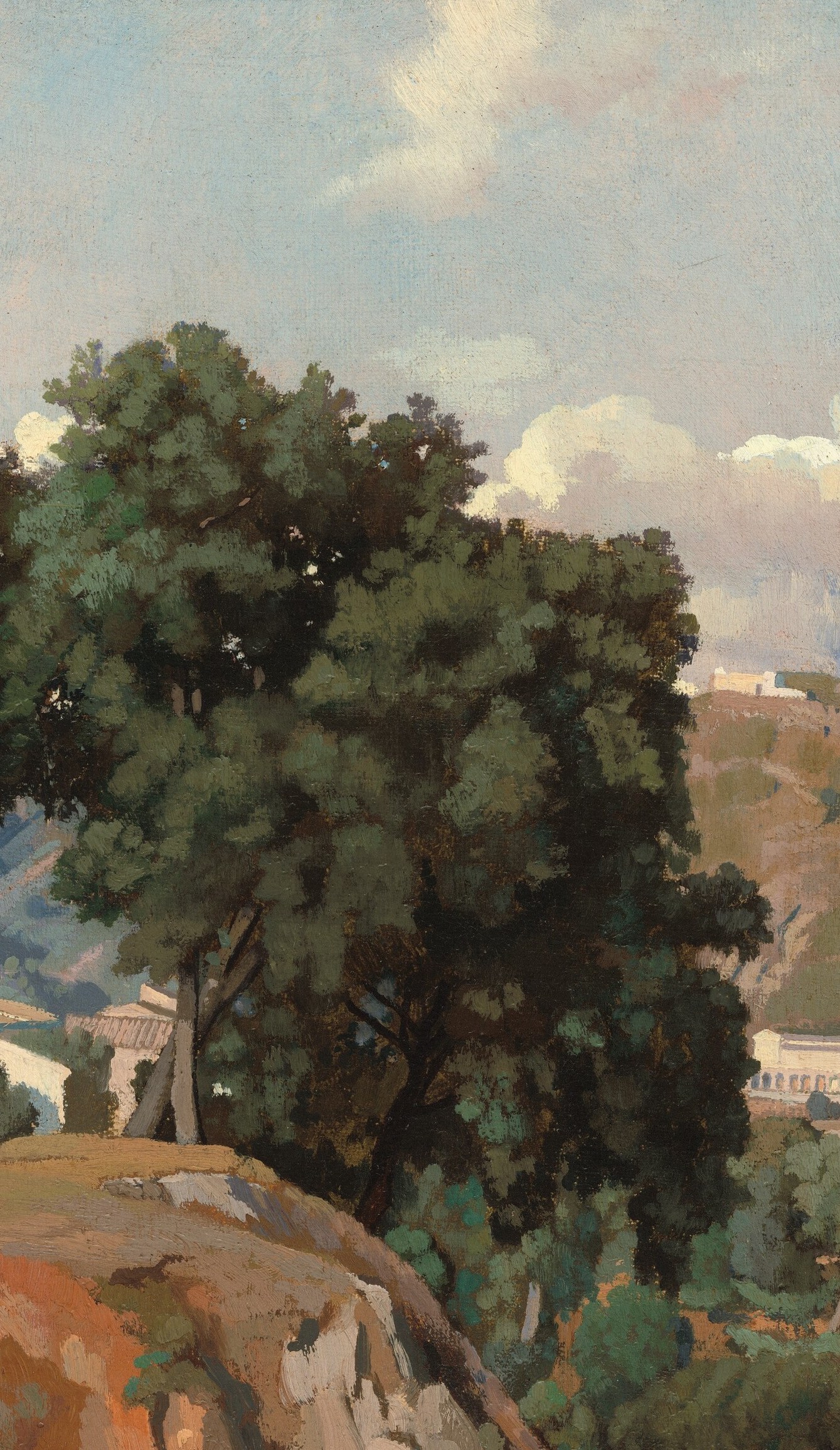
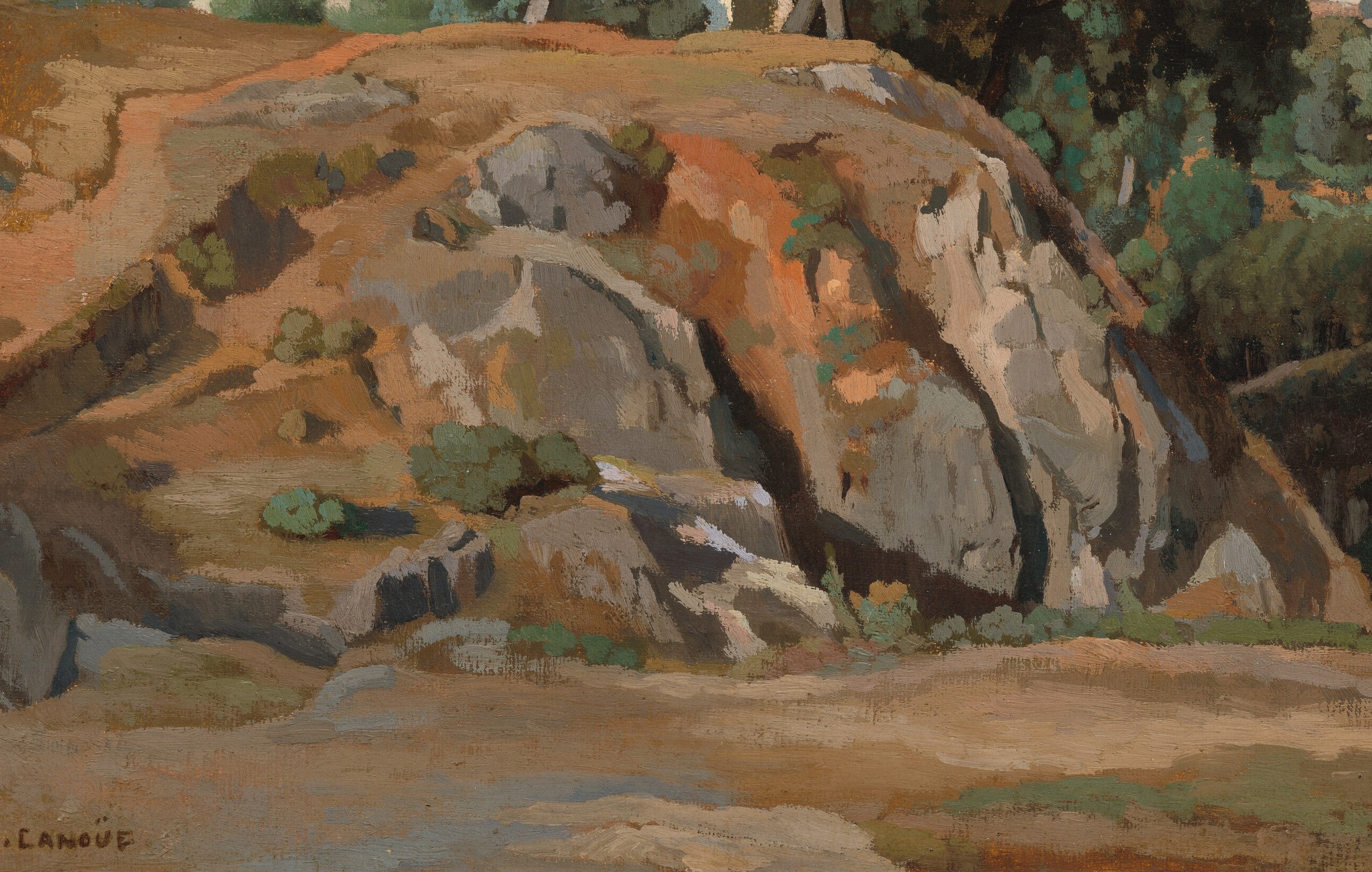
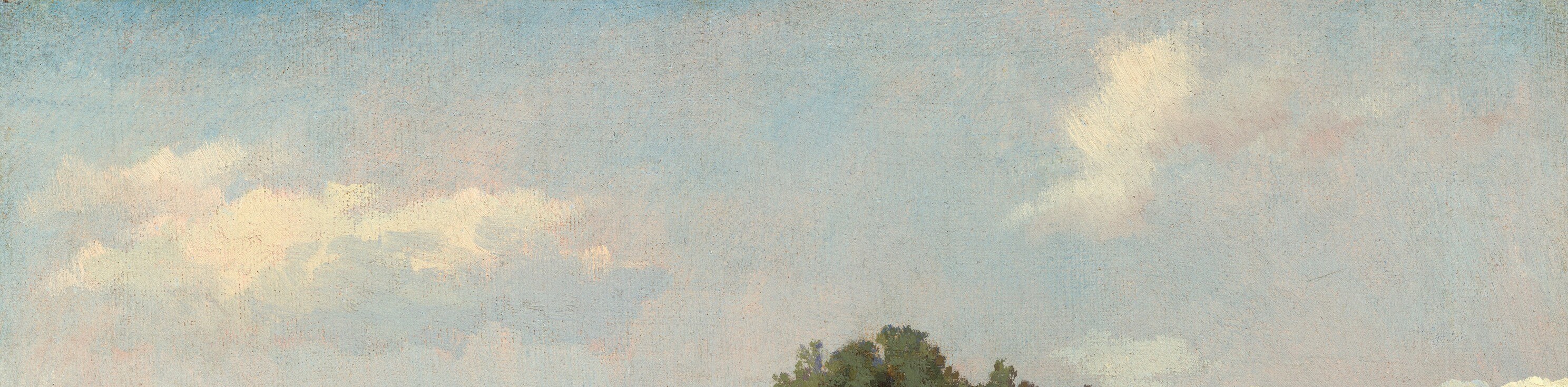
Lanoüe doesn't give us a sweeping panorama. He commits the entire canvas to a single massive oak tree, its dark canopy dominating a hillside. Your eye moves from the warm limestone rocks in the foreground to the gleaming white walls of the Benedictine abbey of Santissima Trinità, and finally through the shadowed passage carved into the middle distance. The sky behind it is luminous and calm.
The abbey itself is a quiet legend. In 1943, as the Allied advance threatened to destroy the monastery of Monte Cassino, its irreplaceable archive of medieval and Renaissance manuscripts was smuggled south and hidden within the walls of this very abbey at La Cava. The documents survived the war intact. This painting, stolen from a French home and eventually hidden in a German storage depot, had its own quieter survival story.
A painting of a tree and a white church on a quiet Mediterranean day. But the ground it depicts held some of Europe's most fragile history, and the canvas itself was carried off as plunder. It came home.
Details
Transcript
In 1940, this landscape disappeared from a French collection. The German army took it. For sixty years, it was lost. Now look at the darkness between the buildings. The abbey at La Cava. Its archives saved a nation's history. The monks hid the entire archive of Monte Cassino. It survived. This painting, hidden in a depot, survived too.