Agnes Gordon Higginson Fuller (Mrs. George Fuller) by Fuller, George
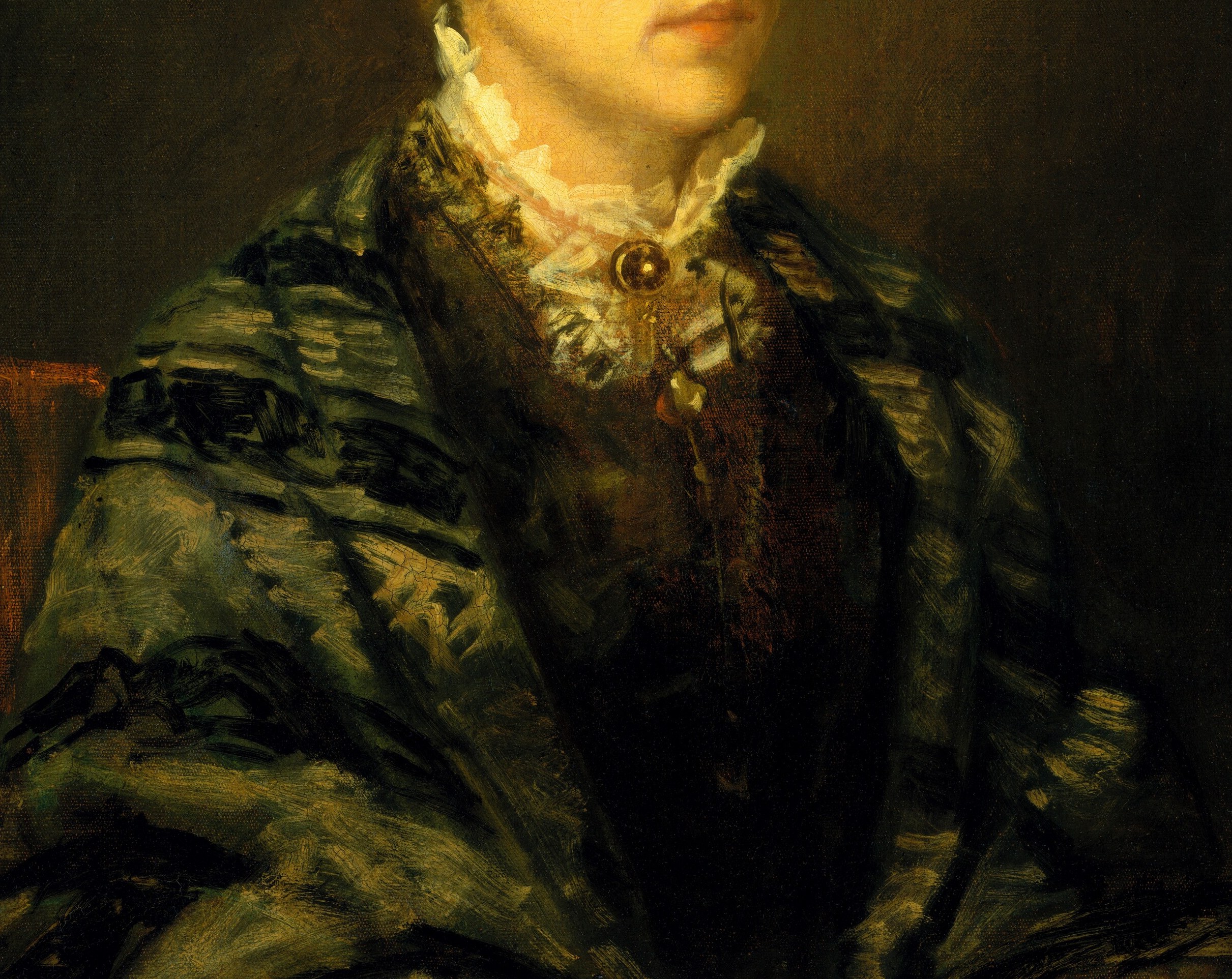
George Fuller painted his wife, Agnes, around 1877, creating a portrait that is as much about Victorian values as it is about an individual. Now in the collection of the Museum of Fine Arts, Boston, the painting is a masterclass in what is not shown. Fuller collapses her form into deep olive-black silk, isolating her face as the sole zone of personality.
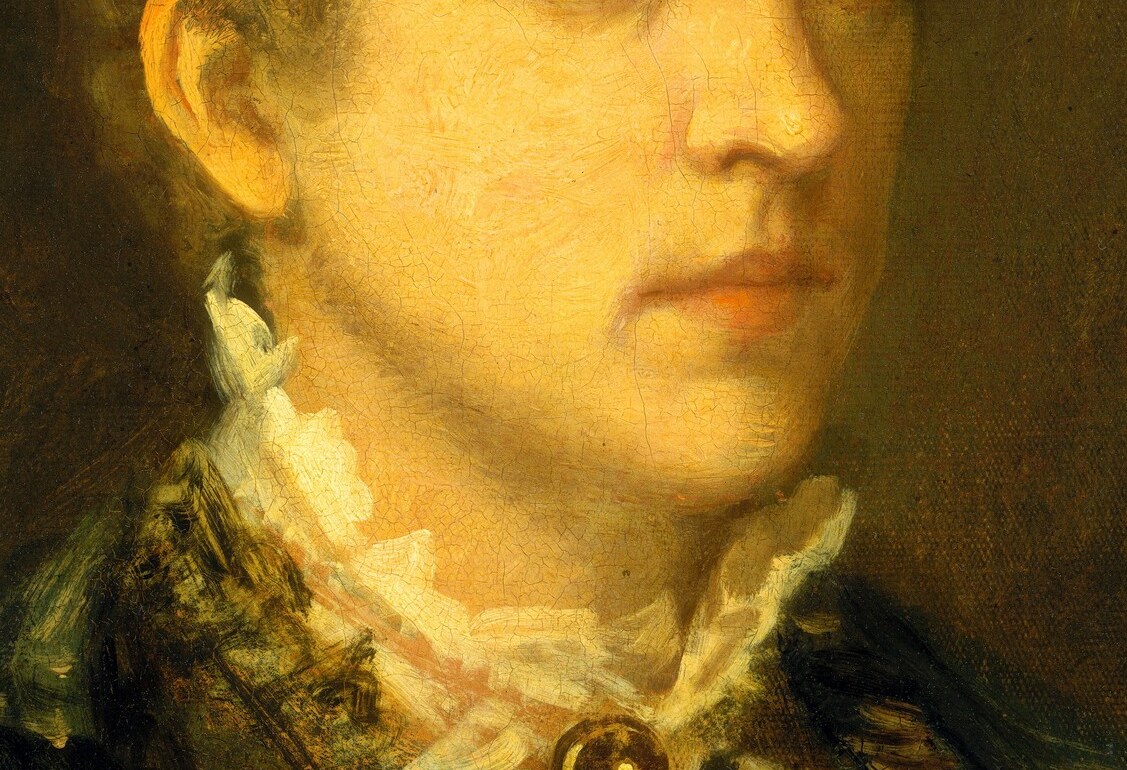
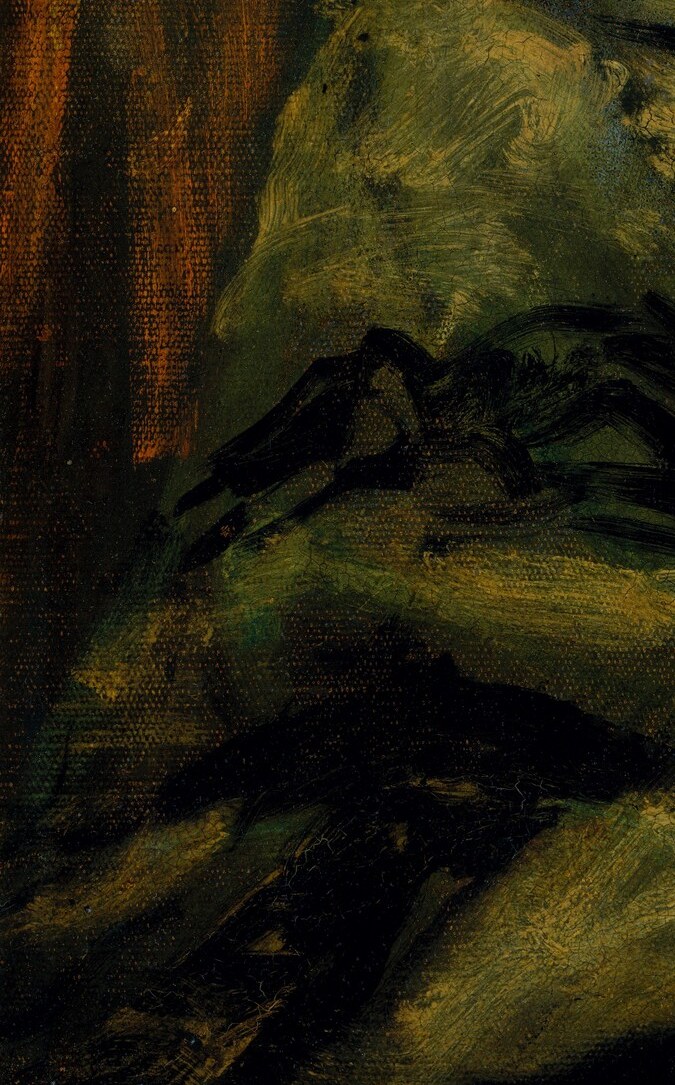
Look first at the dress, which melts into the undefined amber and black background. This near-erasure is not neglect; it is a code. Next, find the bright white lace collar. Fuller places it as the lightest value in the entire composition, a foil to the dark dress that signals moral purity. Finally, glance at the lower left. The rich red arm of her chair is the only saturated color in the painting, a small but telling glimpse of a respectable domestic interior.
Fuller was a late-blooming figure in American art, associated with the Tonalist movement. He often painted from memory and imagination, using soft contours and a warm, limited palette to build a mood of quiet reverie. A portrait of one's own wife in a private moment, as opposed to a formal commission, allowed for a less guarded, more psychological representation.
Every object in this painting is doing double duty. The dress is restraint, the lace is purity, the chair is home. Agnes herself remains slightly distant, her eyes averted. For Fuller, her identity is less an individual story and more a harmonious arrangement of the ideals a Victorian wife was asked to embody.
Details


Transcript
A Victorian wife, seated against darkness. Her dress vanishes into shadow, almost erased. Black silk was not just fashion. It signaled moral restraint. The white lace is a deliberate foil, a beacon of purity. A glimpse of red upholstery, the only saturated color here. A chair like this meant a well-appointed, respectable home. Together, they code her as modest, pure, and domestic.