Launching a Canoe - Nayas Indians by Catlin, George
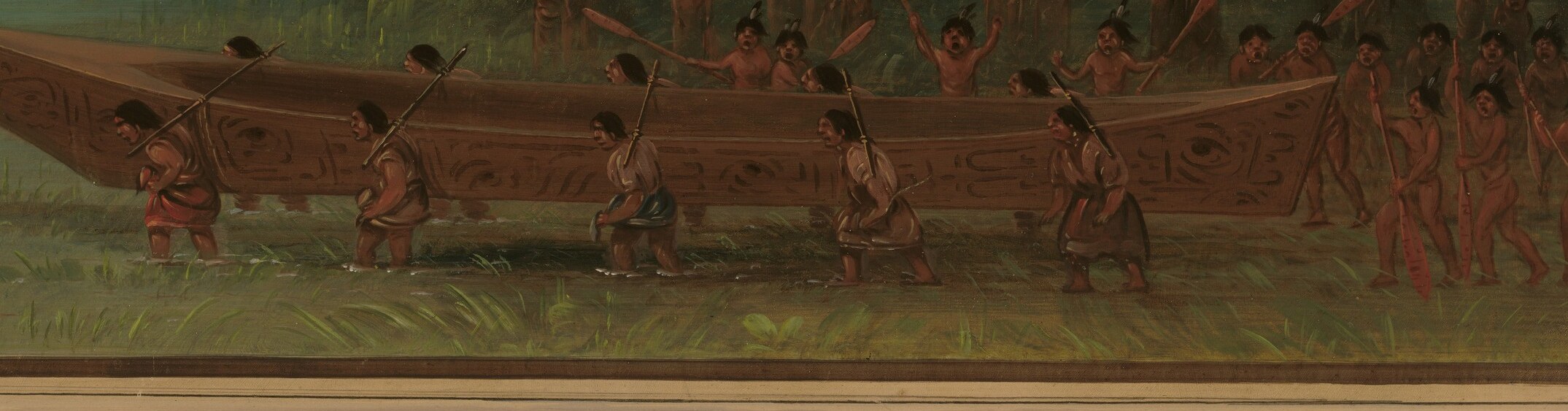
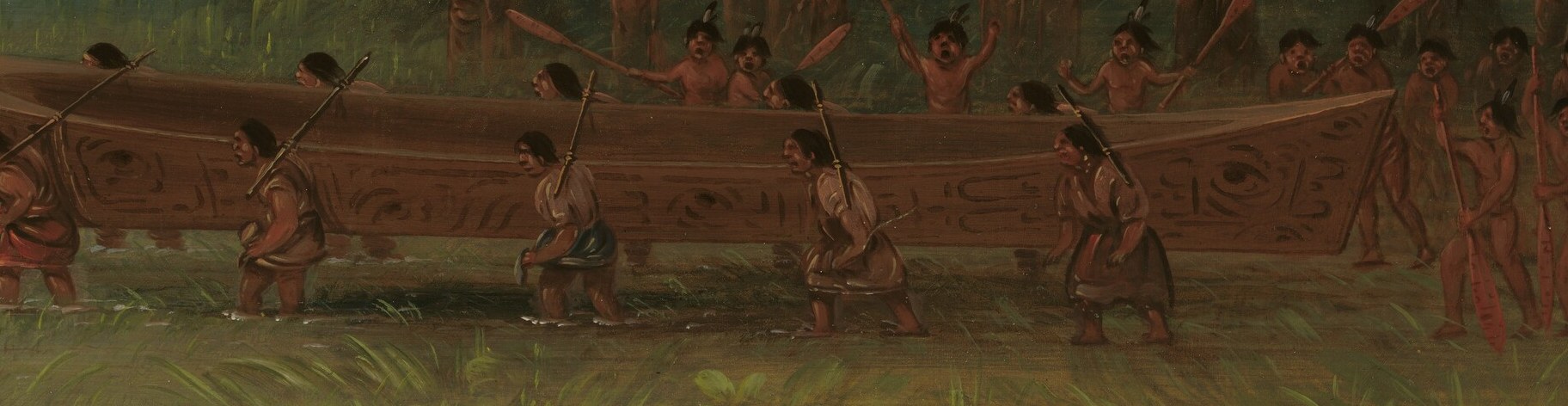
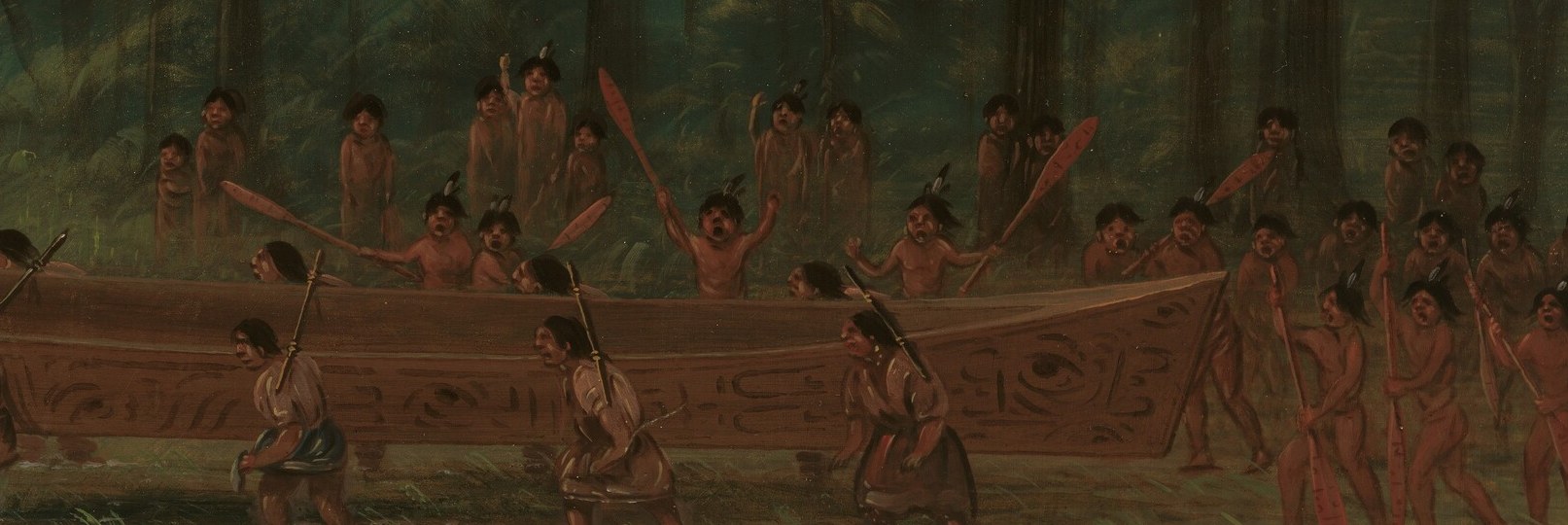
George Catlin painted "Launching a Canoe, Nayas Indians" in 1862, but the scene itself was born decades earlier from sketches he made traveling the American frontier in the 1830s. It belongs to the collection of the Smithsonian American Art Museum.
The first thing to see is the collective effort. Men on shore push the slender canoe into calm water while a seated figure holds a paddle ready. But let your eye drift inside the vessel. A woman with a child sits low among the others. The painting isn't about a ceremony or a battle. It is a routine morning.
Catlin was a lawyer turned painter who made five journeys into the West, convinced he was witnessing the end of Indigenous life as he knew it. He painted over 500 portraits and scenes, writing that he was rescuing "from oblivion" the looks and customs of a vanishing race. This work, made later in his life from those field sketches, carries the weight of that conviction.
When you see a parent holding a child in a canoe that is just being pushed from shore, you are not seeing a metaphor. You are seeing a moment somebody worried the world might forget.
Details
Transcript
This is not a painting of an event. It is a record of a normal morning, over 160 years ago. The painter believed this way of life was vanishing. So he spent his life documenting it, face by face. Look inside the canoe. A mother holds her child. The ordinary moment he most wanted to save.