Mr. Pease by Field, Erastus Salisbury
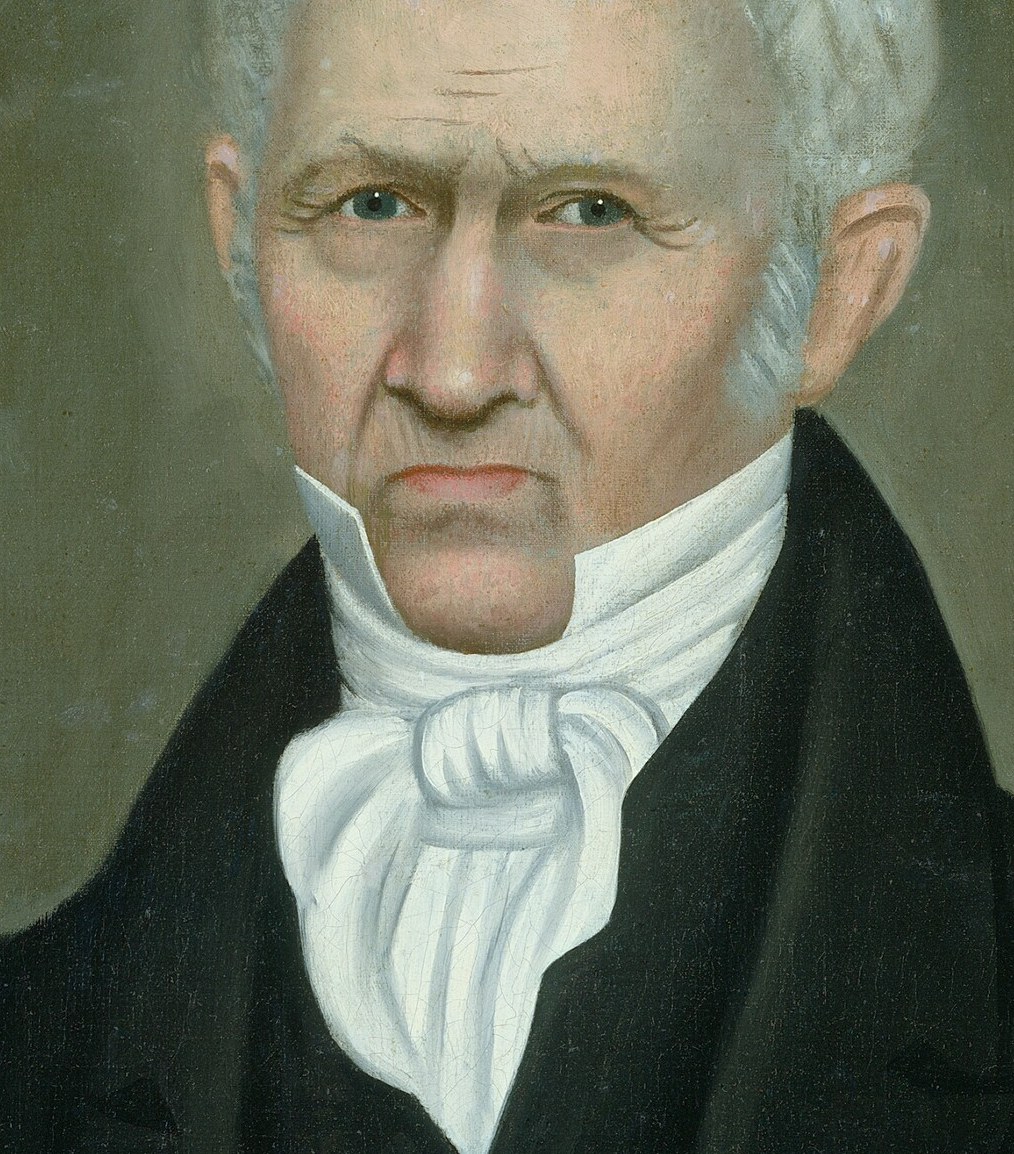
This is "Mr. Pease," painted around 1837 by the American folk artist Erastus Salisbury Field. The portrait now hangs in a museum collection, but we know almost nothing about the man in it.
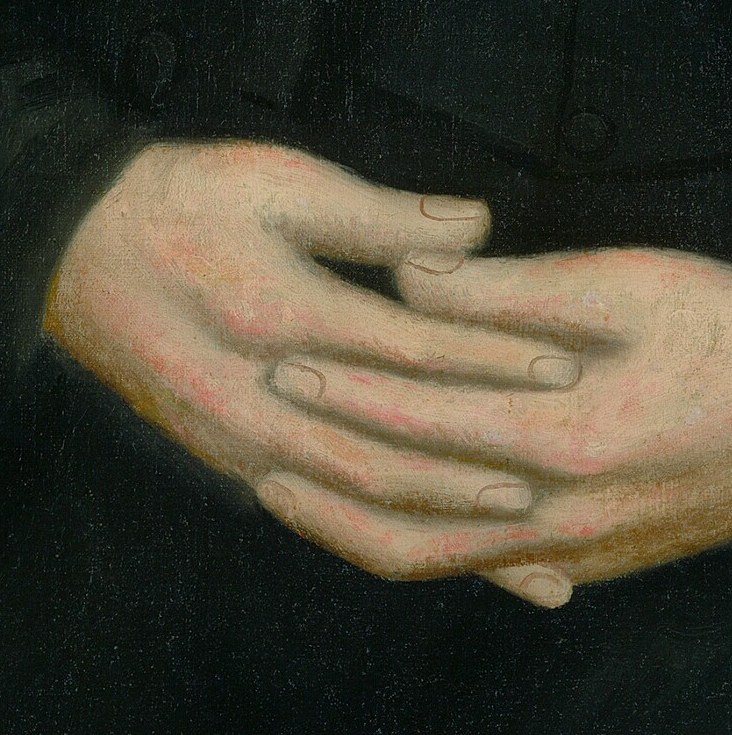
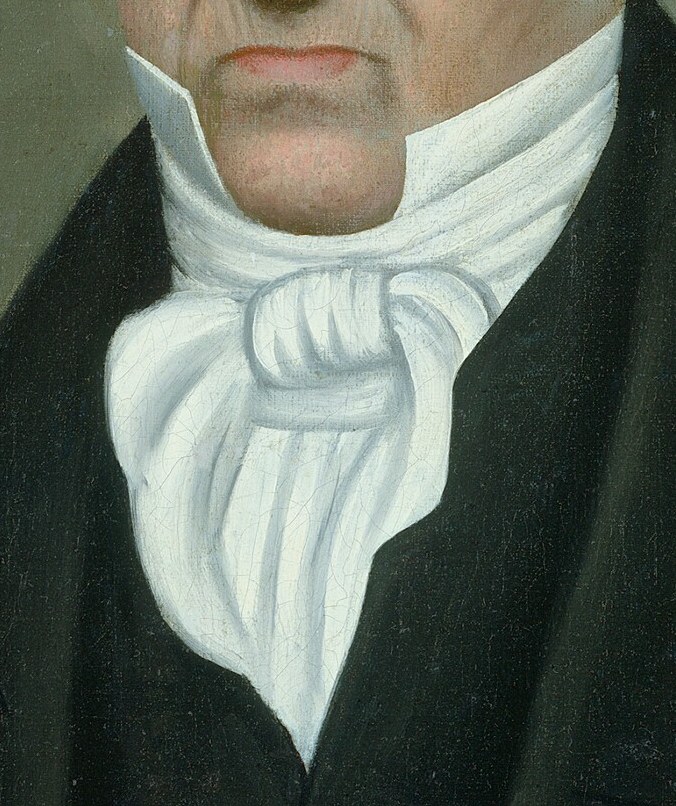
Look at the details Field chose to record. The clasped hands, held tight in his lap. The single flash of red from the chair corner, the only break in a life of black wool and white linen. His eyes meet the viewer directly, but reveal nothing.
Field was a regional portraitist working in Massachusetts and the Connecticut River Valley. He would travel from town to town, painting families who could afford a few hours of his time. A sitter would dress in their best clothes and hold still while Field fixed their likeness to canvas. For Mr. Pease, this one sitting became his entire surviving record.
A portrait was an act of quiet optimism: proof you were here, that you mattered. Mr. Pease sat down one day and made sure of it. What would you choose to have remembered?
Details
Transcript
His name was Mr. Pease. We know almost nothing else about him. A life reduced to a single sitting. His hands are clasped tight in his lap. A flash of red behind him, the only color he allowed. He sat for a traveling painter passing through town. All that survives of him is this quiet dignity.