Camp Fire by Winslow Homer (American, 1836–1910)
Winslow Homer's *Camp Fire* (1880) was painted for a private patron in New York, and for decades it lived quietly in a Manhattan mansion. Its real story is a survival story. As Nazi looting units drew up lists of American art to seize, this canvas disappeared from public record entirely, tucked away by a collector who understood what was coming.
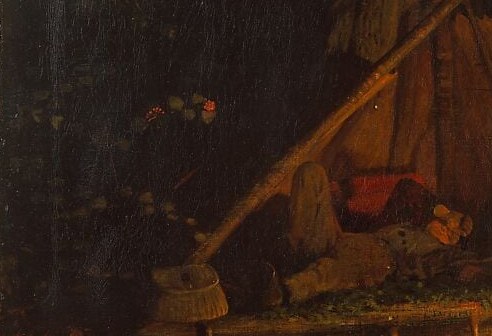
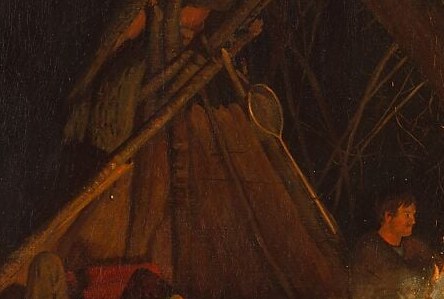
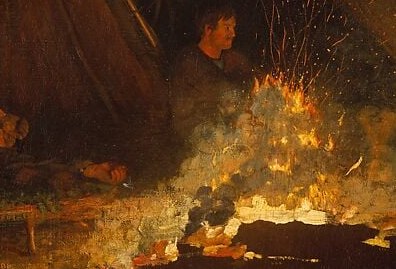
Homer built the entire scene from a single flame. The fire is the painting's sun: everything else, the tent fabric, the ground, the solitary figure, the smoke, exists only because the fire illuminates it. He painted this after his own solitary camping trips in the Adirondacks, where he went alone to study how light behaves in the woods at night. The man at the left is barely visible, nearly swallowed by shadow. He is not the subject. The light is.
By the 1930s, Homer was firmly established as one of the most important American painters alive. His works hung in major museums, and their value was climbing. That made them targets. The Nazi regime's ERR and related agencies compiled detailed wishlists of American holdings. *Camp Fire* was one of many works privately relocated by its owner, slipping out of museum loans and auction records until the danger passed. It stayed in the same family for generations, hidden in plain sight.
This is not a painting about heroism. It is about staying warm in the dark and waiting. The flames here are a circle of safety, and for a few violent decades, so was the home that held it.
Details

Transcript
This campfire looks like a quiet night in the Adirondacks. In 1880, Winslow Homer painted wilderness as a place for a man to think. Look how the firelight bleeds onto the tent canvas. Homer knew this warmth. He camped alone to paint the real backcountry. Fifty years later, the Nazis wanted American masterpieces for a Führermuseum. A New York collector quietly moved this painting out of public view. It vanished into a private home. No catalog. No exhibition. Just darkness. The fire kept burning on canvas. A small circle of light, unextinguished.