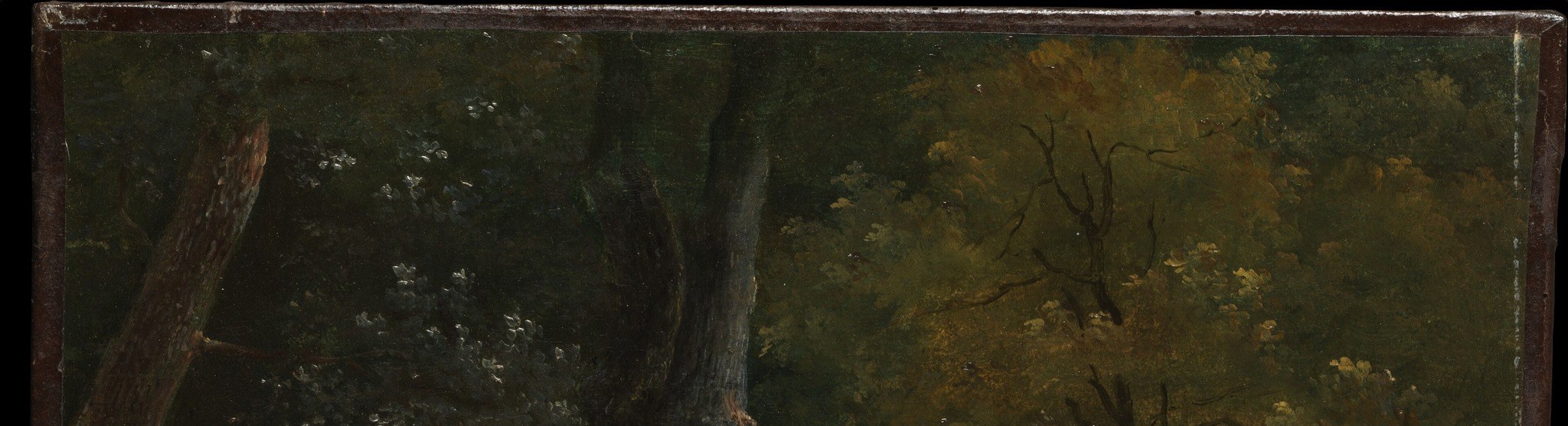
Trees in the Bois de Boulogne, Paris by Achille Etna Michallon
Achille Etna Michallon painted *Trees in the Bois de Boulogne, Paris* in 1812, and five years later he became the first artist ever to win the Prix de Rome for historical landscape. He was twenty-five when pneumonia killed him. This canvas is not the famous victory lap it should have been, it is the quiet, serious study of a young painter who had already learned to make a forest breathe.
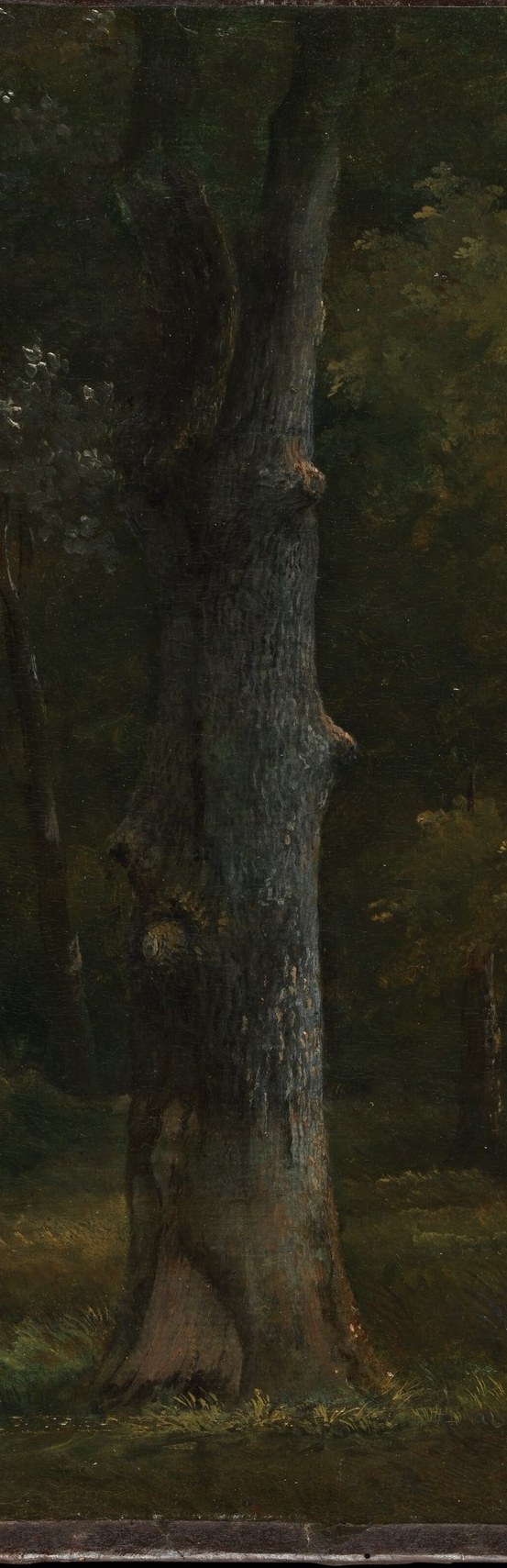
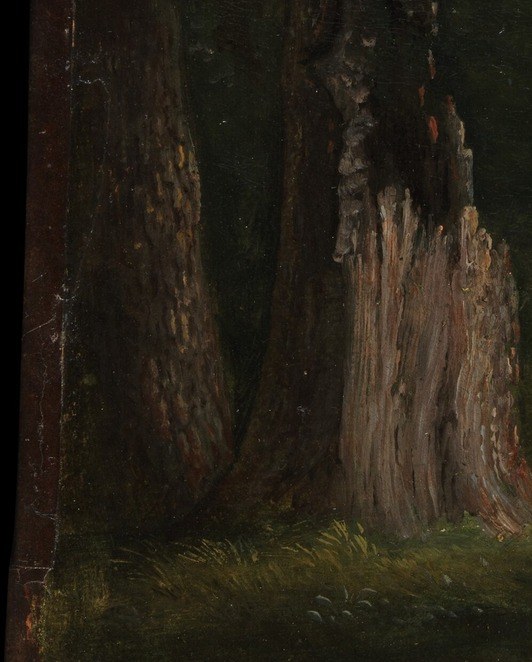
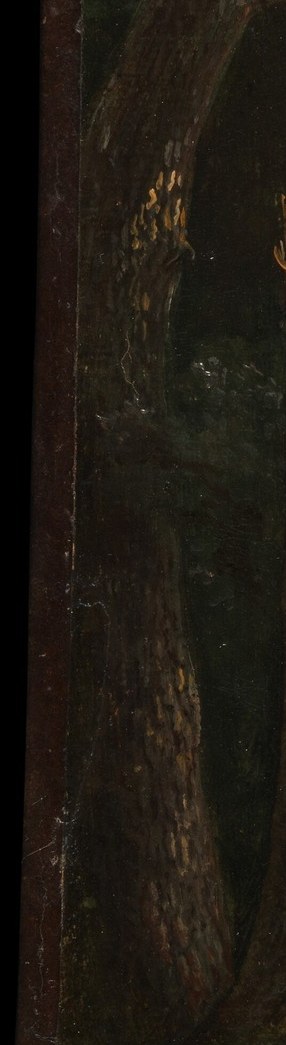
Look how the light grazes the central trunk, warm and low, catching every ridge of bark. The most surprising moment is at the far left edge: a dark vertical form that is not quite a trunk and not quite empty shadow. It is the only place in the painting where the forest refuses to explain itself. That ambiguity, the sense that the woods continue past what the frame permits, is the mark of Valenciennes-school atmospheric thinking.
Michallon studied under Jacques-Louis David and Pierre-Henri de Valenciennes, and his family was full of sculptors. He traveled to Italy in 1818 and stayed over two years, absorbing light and ruins. Corot is sometimes called his pupil. He had the training, the prize, the Roman sojourn, and then almost no time to use any of it.
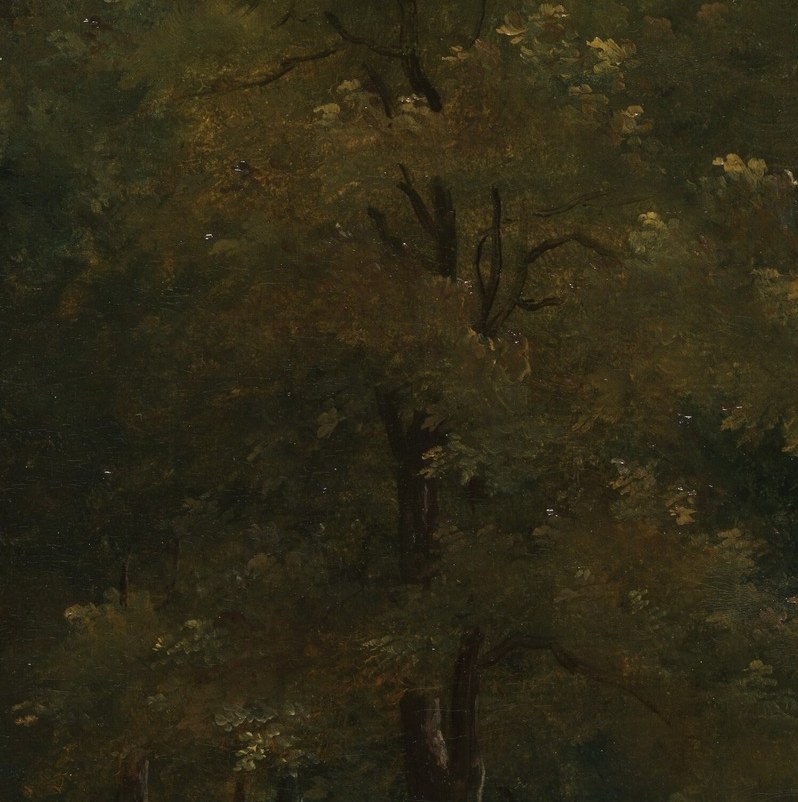
A painting this dark rewards a few extra seconds. The longer you look, the more the shadows separate into different densities of night. I wonder what he would have painted at thirty.
Details
Transcript
This looks like a dense nocturnal forest. The painter was a star student. He trained under David. In 1817, he won the very first Prix de Rome for landscape. And then he died, just five years after this 1812 study. Follow the light through the clearing. Now look at the far left edge. It is a dark vertical form, not quite a trunk, not quite space. He was 25. His forest still continues past the edge of the frame.