Adoration of the Magi by Benvenuto Tisi
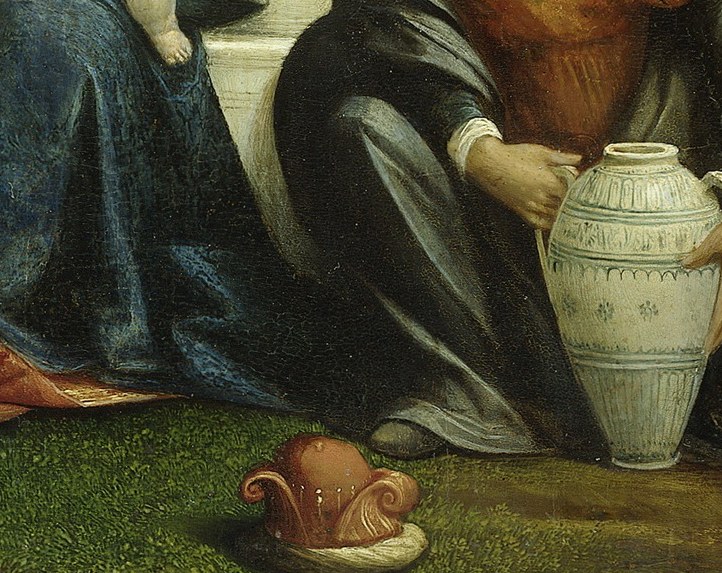
Benvenuto Tisi, known as Il Garofalo, often included a secret signature in his works: a small carnation. In his 1530 "Adoration of the Magi" at the Rijksmuseum, look closely at the foreground, and you'll find this subtle detail, a nod to his enduring nickname.
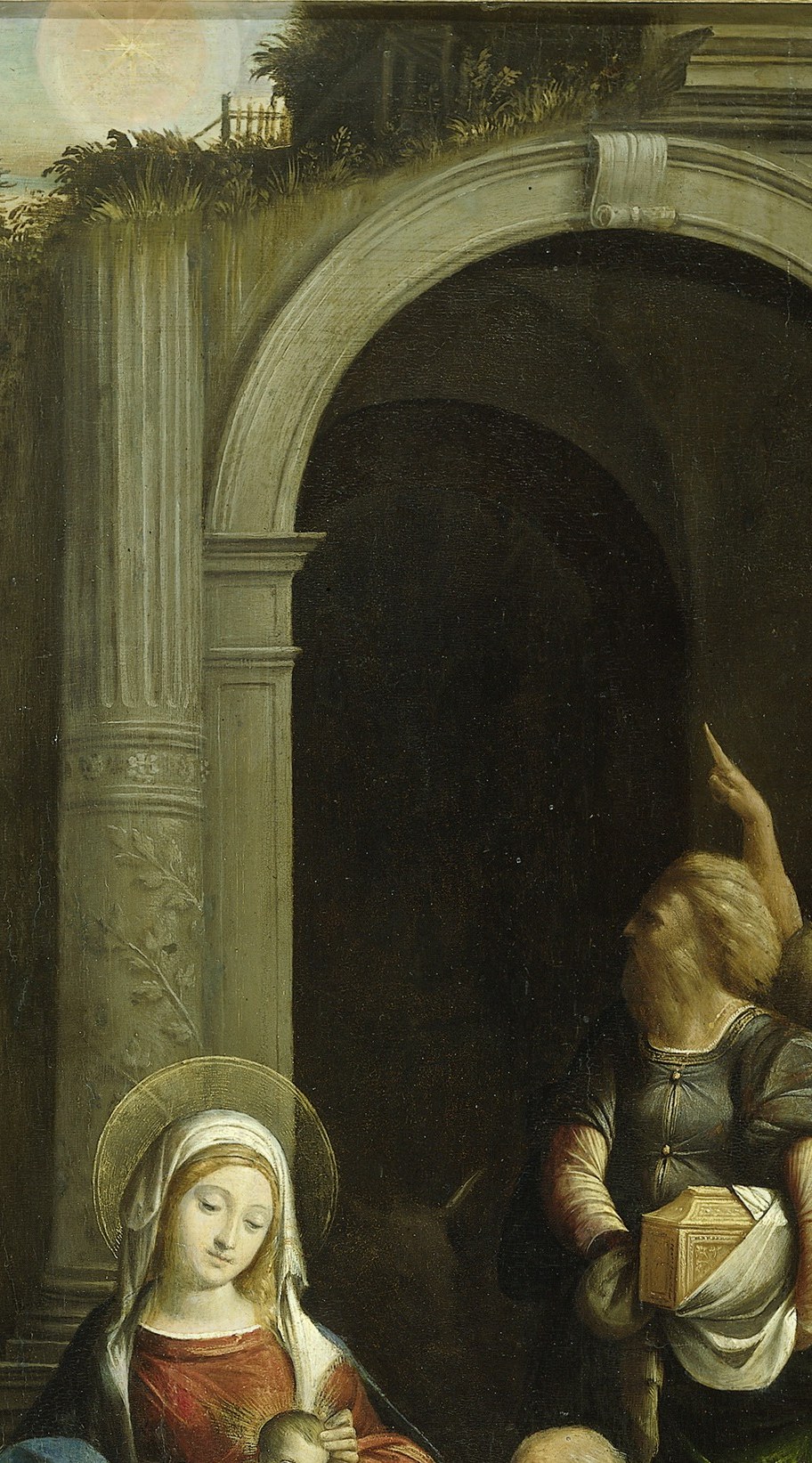
This Renaissance masterpiece, painted with oil on panel, showcases Tisi's skill in composition and light. The grand architectural arch frames the central figures, while the distant castle on the mountain suggests the vast journey of the Magi.
Working for the Duke d'Este, Tisi was a prominent figure in the School of Ferrara. His early works are known for their idyllic quality and elaborate conceits, often reflecting the refined tastes of his courtly patrons. His nickname, Garofalo, is an Italian word for carnation.
It's a charming detail that reminds us of the personal touches artists left in their work. What other hidden symbols might be found in Renaissance paintings?
Details
Transcript
This painting is by Benvenuto Tisi, an Italian Renaissance artist. His artistic patron was the Duke d'Este, a powerful figure. Tisi was often called 'Il Garofalo', meaning 'the carnation'. He sometimes signed his paintings with a small flower. Look closely at this small, red object on the ground. It is a carnation, his secret signature.