An Egyptian in a Doorway by Lawrence Alma-Tadema
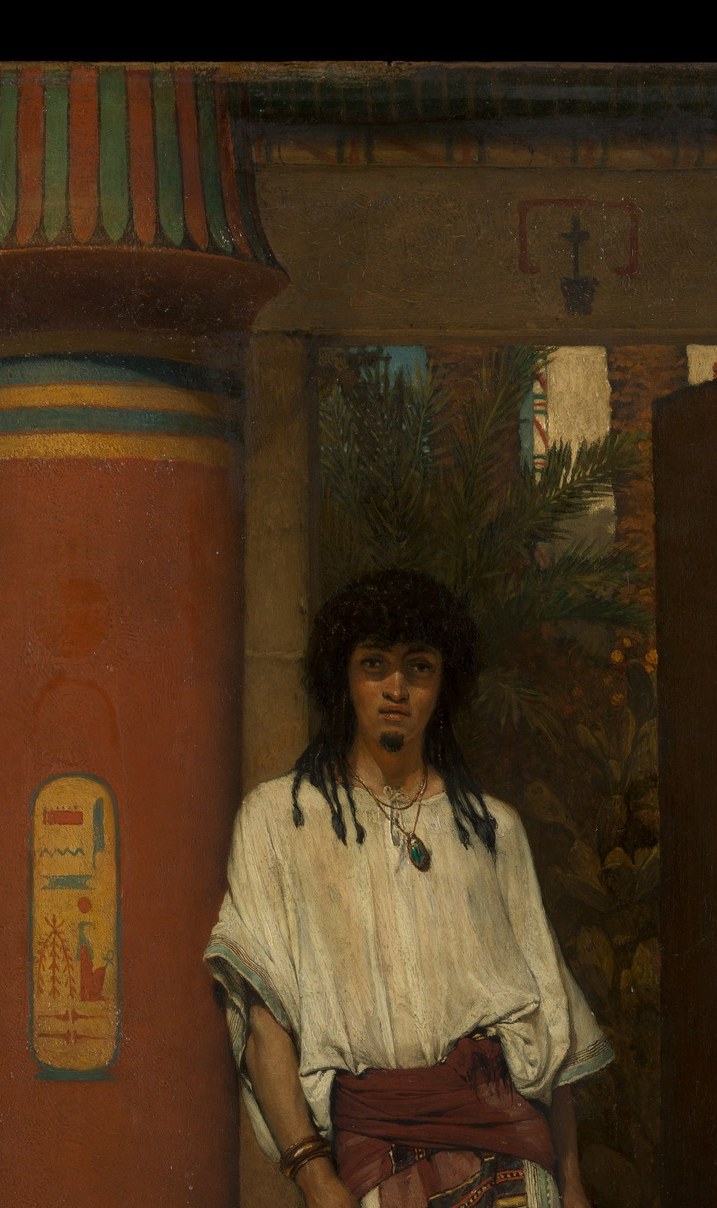
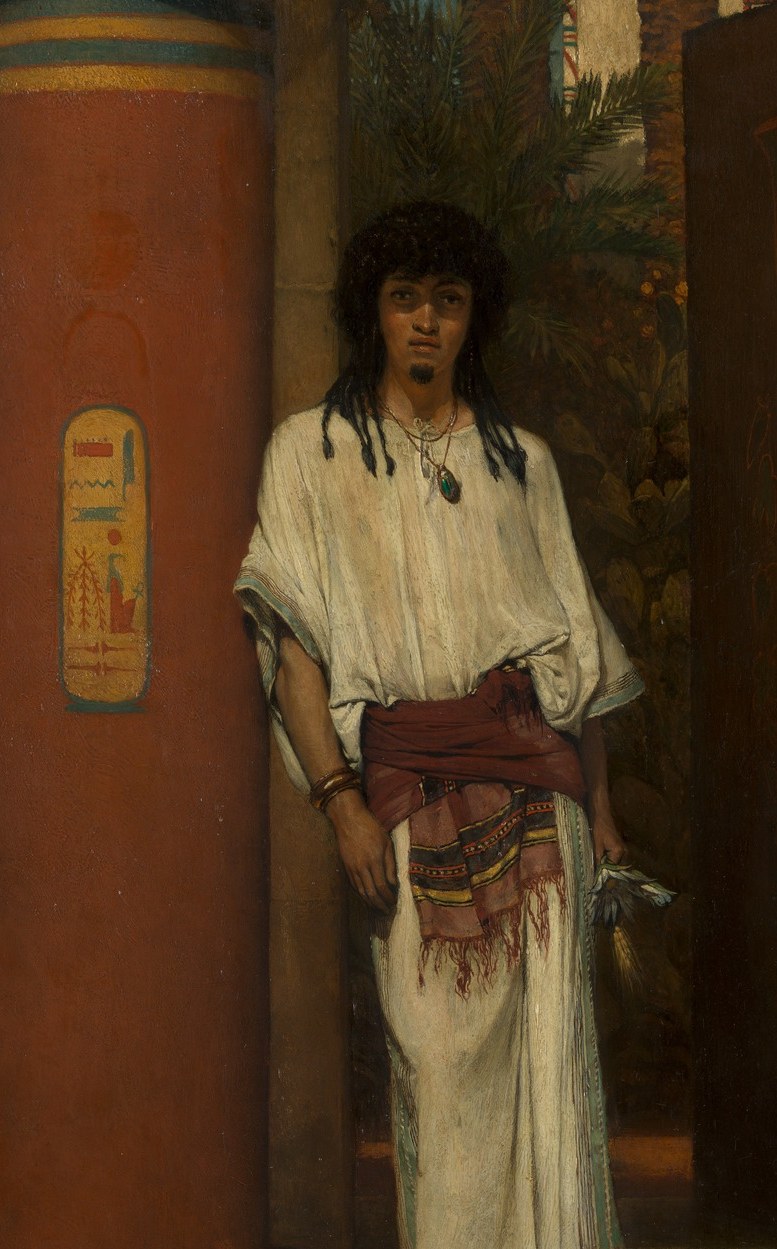
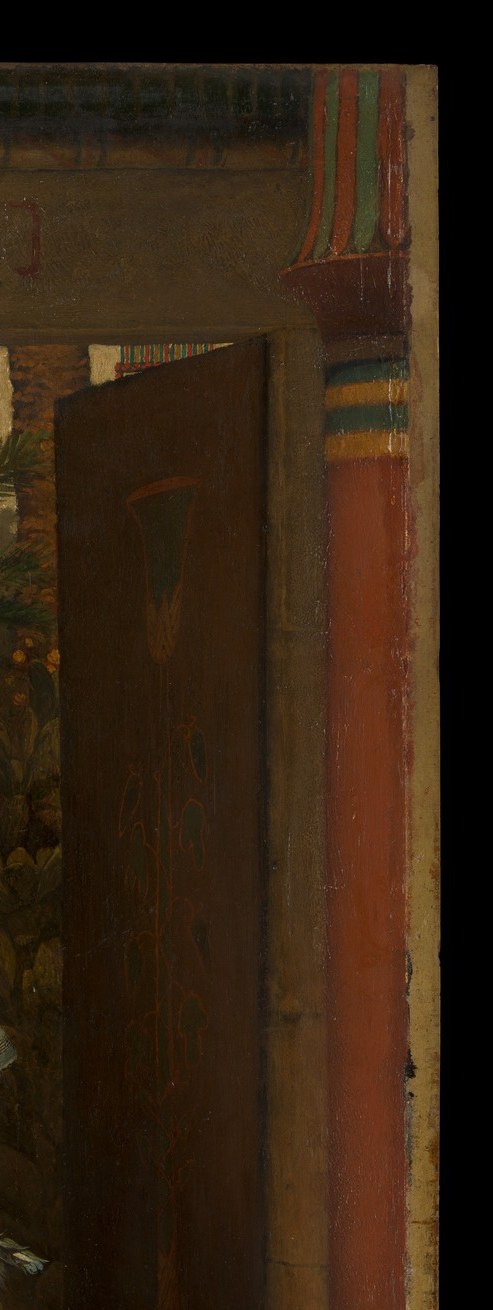
This is An Egyptian in a Doorway, painted by Lawrence Alma-Tadema in 1865. It hangs in the Metropolitan Museum of Art. What you cannot see in a photograph is the scar tissue on the man's forehead, left there by a meat cleaver in 1913.
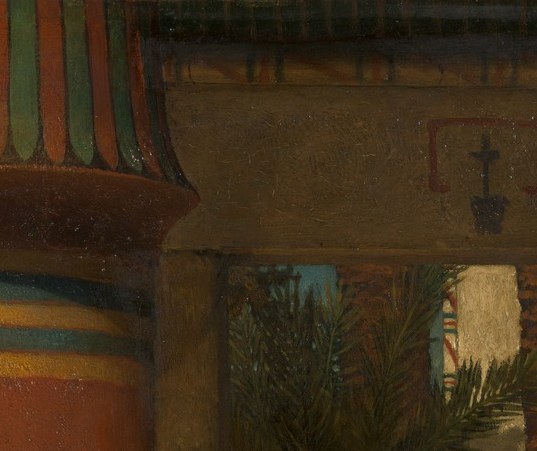
Look at the forehead in the tight shot. The physical damage is still visible in the paint layer over a century later. The attacker was a woman named Mary Wood, a known suffragette. The press blamed militancy, but the truth was far stranger. Wood had become convinced the painted figure was her dead husband, and she visited the gallery repeatedly to stare at him before finally attacking the canvas.
Alma-Tadema was still alive and famous at the time. He was devastated by the attack on a painting he had made nearly fifty years earlier, in his early career, before he became the great painter of Roman luxury. He took the damaged canvas and repaired it himself in his studio. The dark doorway behind the figure, which Wood could not reach, took on a grim new meaning: a threshold between life and death that she tried to cross with a blade.
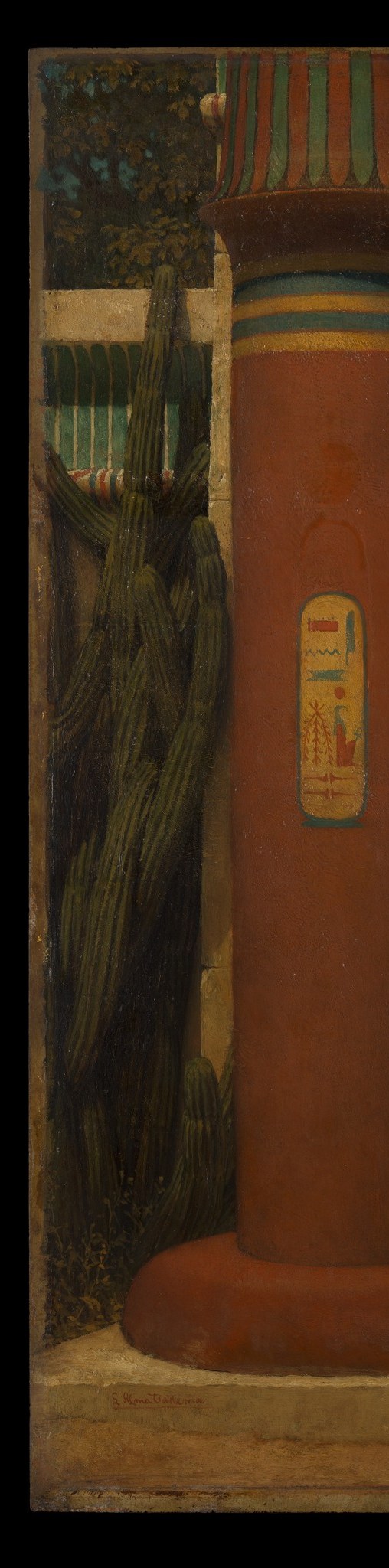
The painting itself is an early Orientalist work, trading Alma-Tadema's later marble temples for red Egyptian columns and hieroglyphic inscriptions. The man's kohl-lined eyes, his white linen tunic, and the ornament at his chest were all researched from museum collections. Do you think the scar changes the picture, or does it become part of the picture now?
Details
Transcript
In 1913, a woman walked into a Manchester gallery with a meat cleaver. She headed for this painting and began slashing at the figure's face. Look closely at the forehead. The scars are still visible. Her name was Mary Wood. She was a suffragette, but this was not a political protest. She had been staring at this painting for weeks. She believed the figure was her dead husband. The darkness behind him: the doorway she could not cross. Alma-Tadema, who painted this in 1865, was devastated. He repaired it personally.