Mound of Cherries by Brown, William Mason
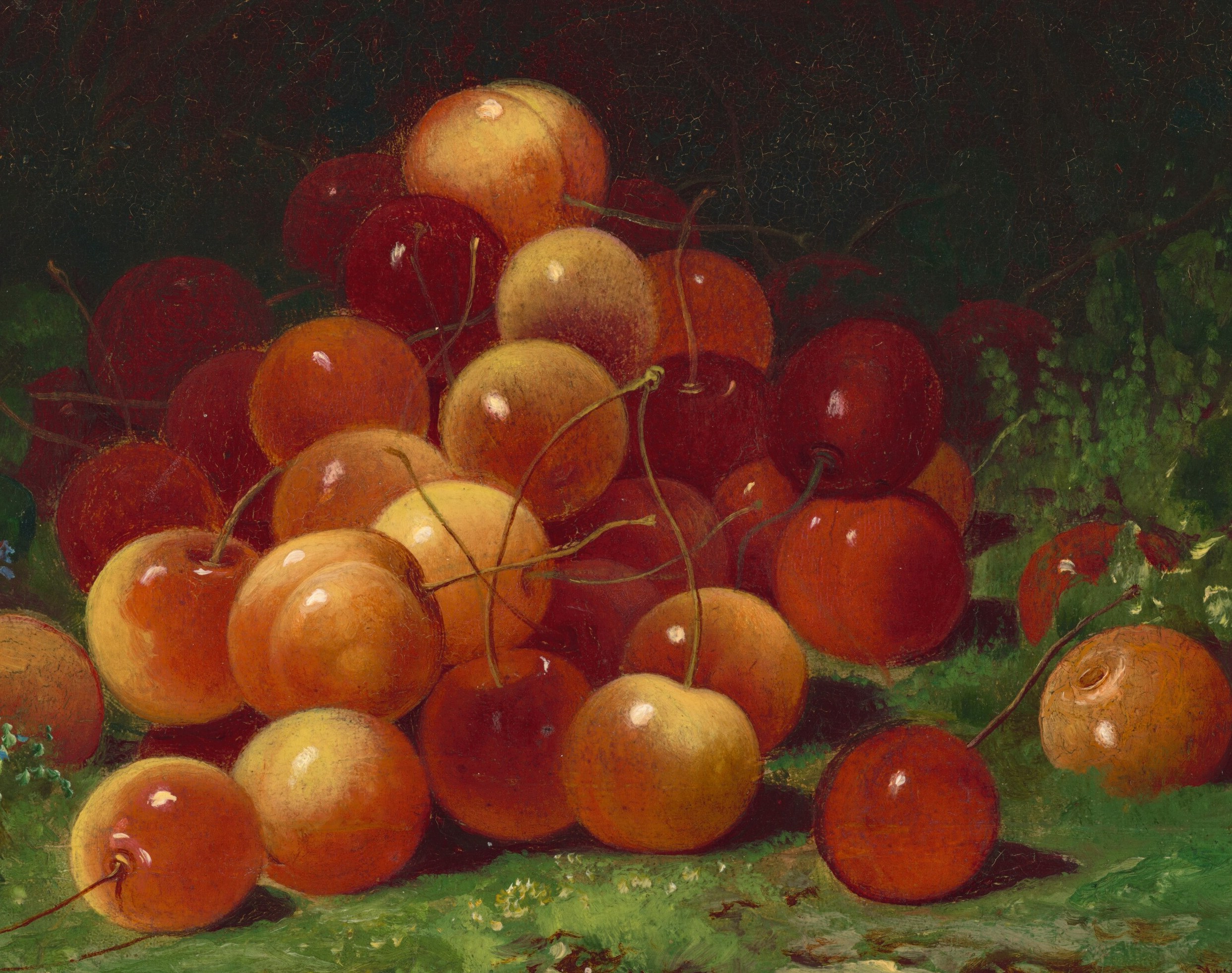
William Mason Brown's "Mound of Cherries" (1863) is a captivating still life that showcases the artist's remarkable ability to render fruit with lifelike detail. This oil on wood painting, held in an unknown collection, makes the cherries appear so fresh and dewy, you can almost taste them.
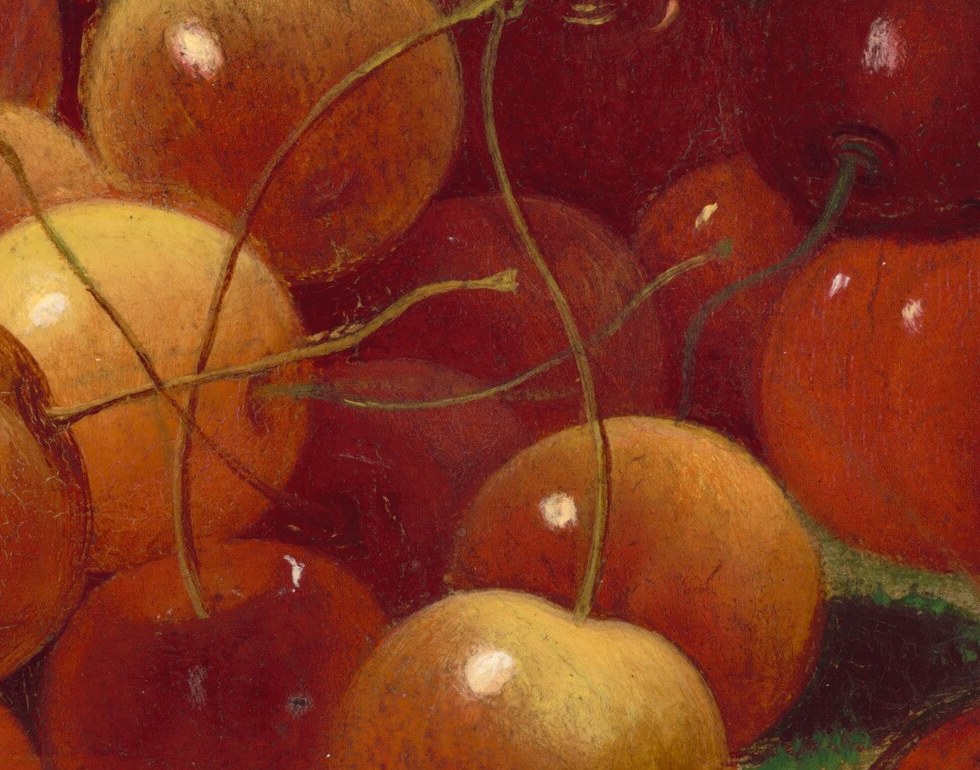
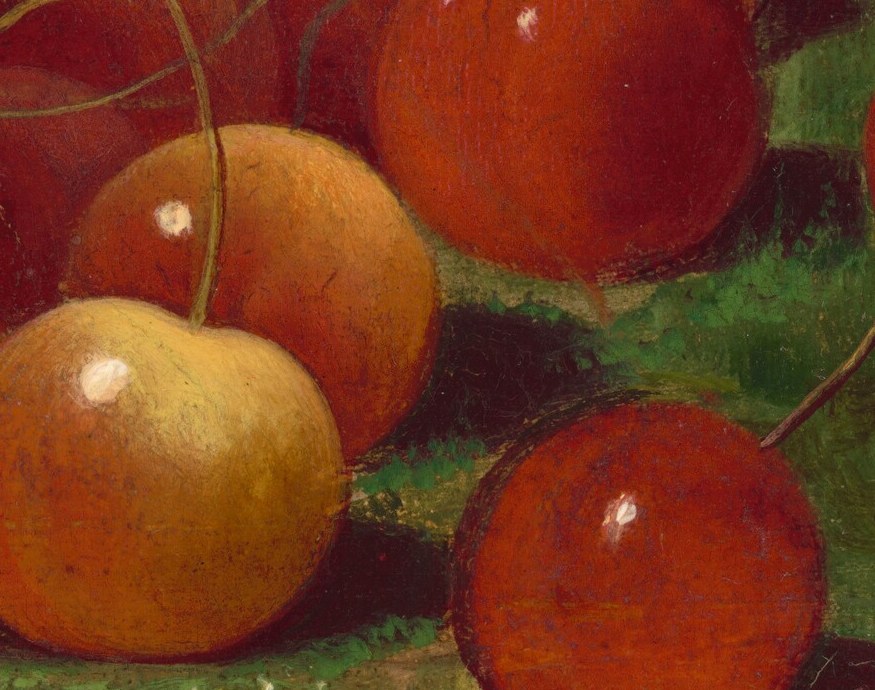
Look closely at the surface of the cherries, especially the subtle highlights that mimic moisture on their skins. Brown achieved this realistic effect through impasto, applying thick layers of paint to create texture and depth. The intertwined stems and varied hues, from deep red to an orange blush, add to the illusion of freshly picked fruit.
Brown, born in Troy in 1828, was celebrated for his still life paintings. His meticulous technique and keen eye for natural detail allowed him to elevate everyday objects into subjects of artistic study, capturing their essence with precision and vibrancy.
What other hidden details do you notice in this bountiful arrangement?
Details
Transcript
This painter was celebrated for making fruit look real enough to pick. He used thick paint layers, called impasto, to mimic glossy skin. See how the highlights suggest moisture, making them look dewy. The stems are meticulously intertwined, as if freshly gathered. Even the subtle blushes on some cherries show variations of ripeness. His signature, 'W.B. BROWN,' grounds this vibrant still life.