A Crow Village and the Salmon River Mountains by Catlin, George
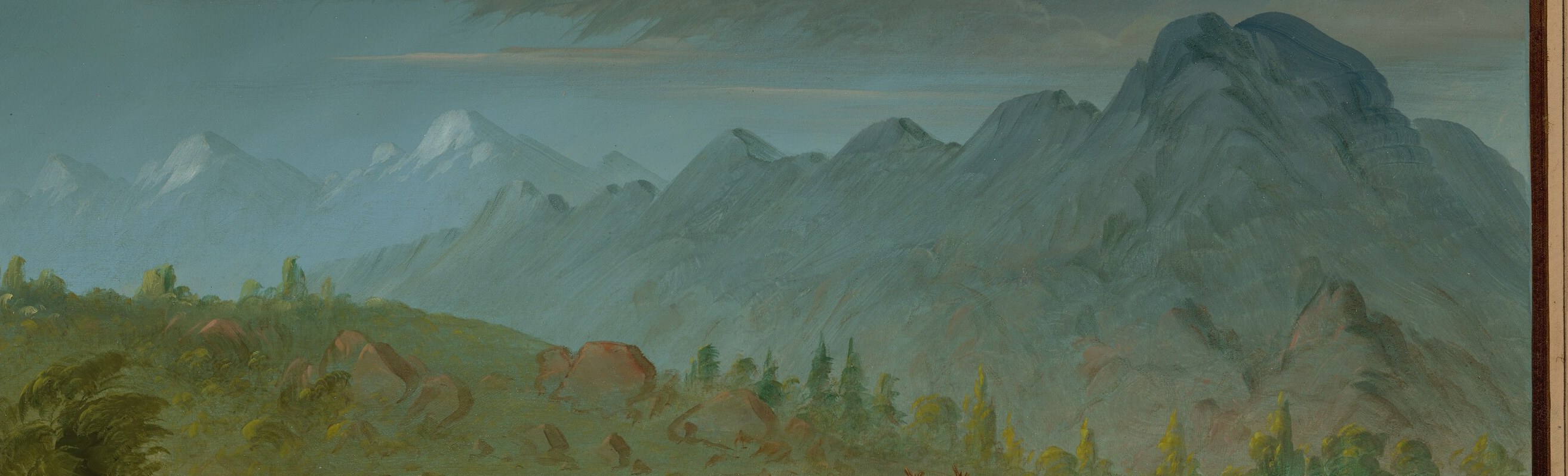
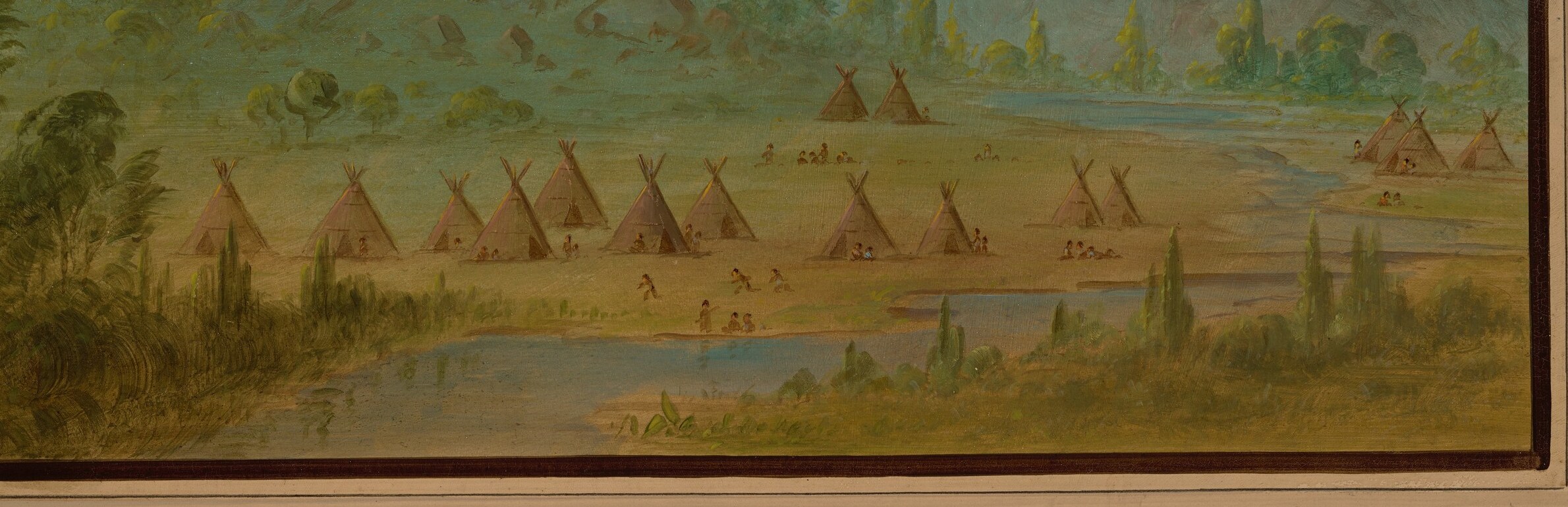
At first glance, George Catlin's *A Crow Village and the Salmon River Mountains* (1855-1869) appears to be a sweeping landscape. But look closely: it's a subtle document of a thriving community, currently housed at the Smithsonian American Art Museum.
Catlin, an American lawyer and painter, made it his life's work to document the Indigenous cultures and landscapes of the American West. He embarked on five extensive journeys across the frontier in the 1830s, meticulously recording scenes before photography became widely accessible.
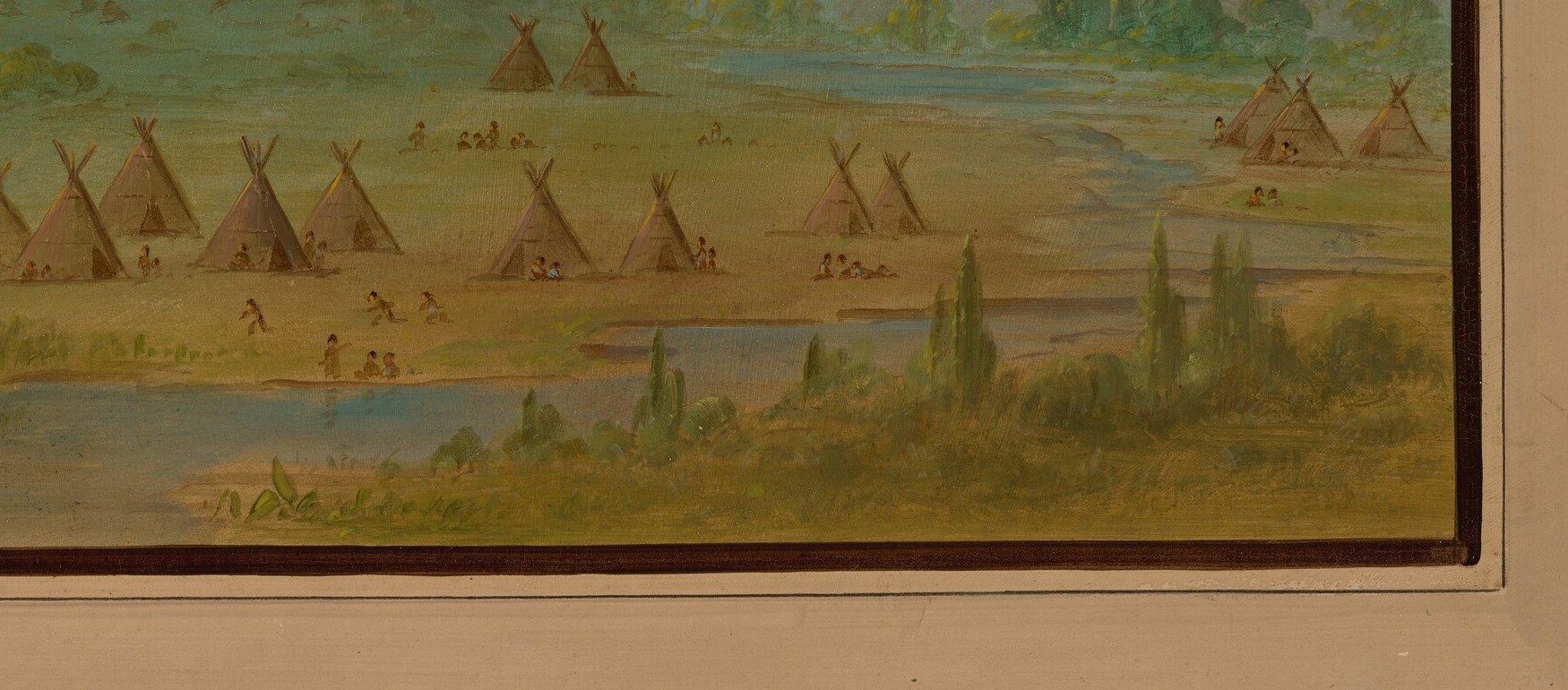
Here, the painting reveals tiny figures moving among conical tipis beside a wide river, with faint plumes of smoke suggesting active fires. These small details transform a simple landscape into a living record of a Crow village and its daily life.
Catlin's work offers a valuable glimpse into a crucial period of American history. What other hidden stories do you think paintings like this hold?
Details
Transcript
This painting depicts an American West landscape. The artist, George Catlin, traveled the West five times. He documented Indigenous cultures across the frontier. Look closely: a Crow village is alive by the river. Tiny figures move among the tipis. Faint plumes of smoke rise from their fires.