Countryside in Picardy by Rousseau, Théodore
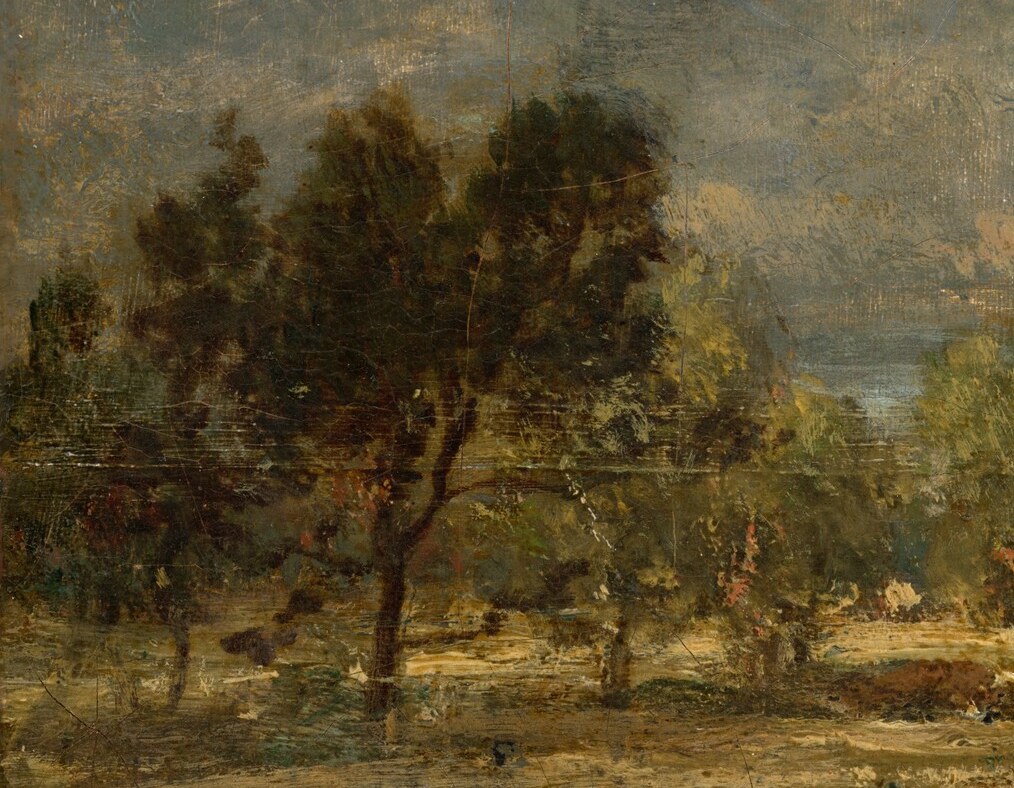
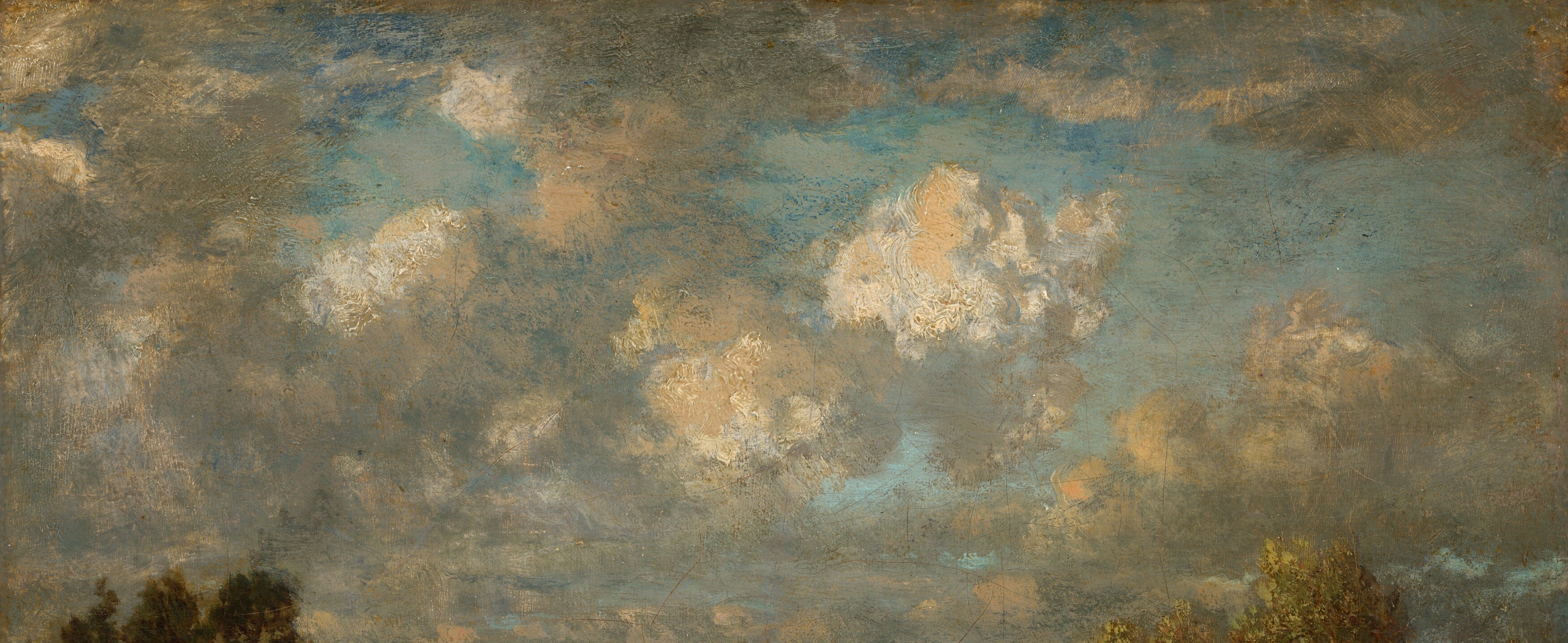
Théodore Rousseau's 'Countryside in Picardy' (1860) is a masterwork of the Barbizon School, yet its most intimate detail is a tiny, scratched signature hidden in the lower-left foreground.
Look at the sweeping sky first. The patches of light breaking through the clouds give the whole scene an atmospheric weight, a dynamic play of light and shadow that looks forward to Impressionism. Then let your eye travel down to the textured earth. The signature is right there, carved into the paint itself, easy to scroll past on a screen.
Rousseau was a leader of the Barbizon painters, a group that left their studios to work directly from nature in the Fontainebleau forest. This practice of plein-air painting was radical in the mid-19th century and laid the groundwork for Monet and the Impressionists who followed. This canvas, however, depicts Picardy, a rural region north of Paris, capturing ordinary country life with a Realist's unidealized eye.
A signature so discreet it nearly vanishes into the dirt feels like the artist's own quiet declaration: I was here, standing in this field, watching this sky.
Details
Transcript
A storm is breaking over the French countryside. A horse-drawn carriage makes its way across the field. This was painted in 1860, on the eve of Impressionism. Théodore Rousseau led the Barbizon School. They painted nature outside. This painting sold recently for a modest sum. But one detail was nearly overlooked. Down here, scratched into the paint: the artist's signature.