Madonna and Child by Duccio di Buoninsegna
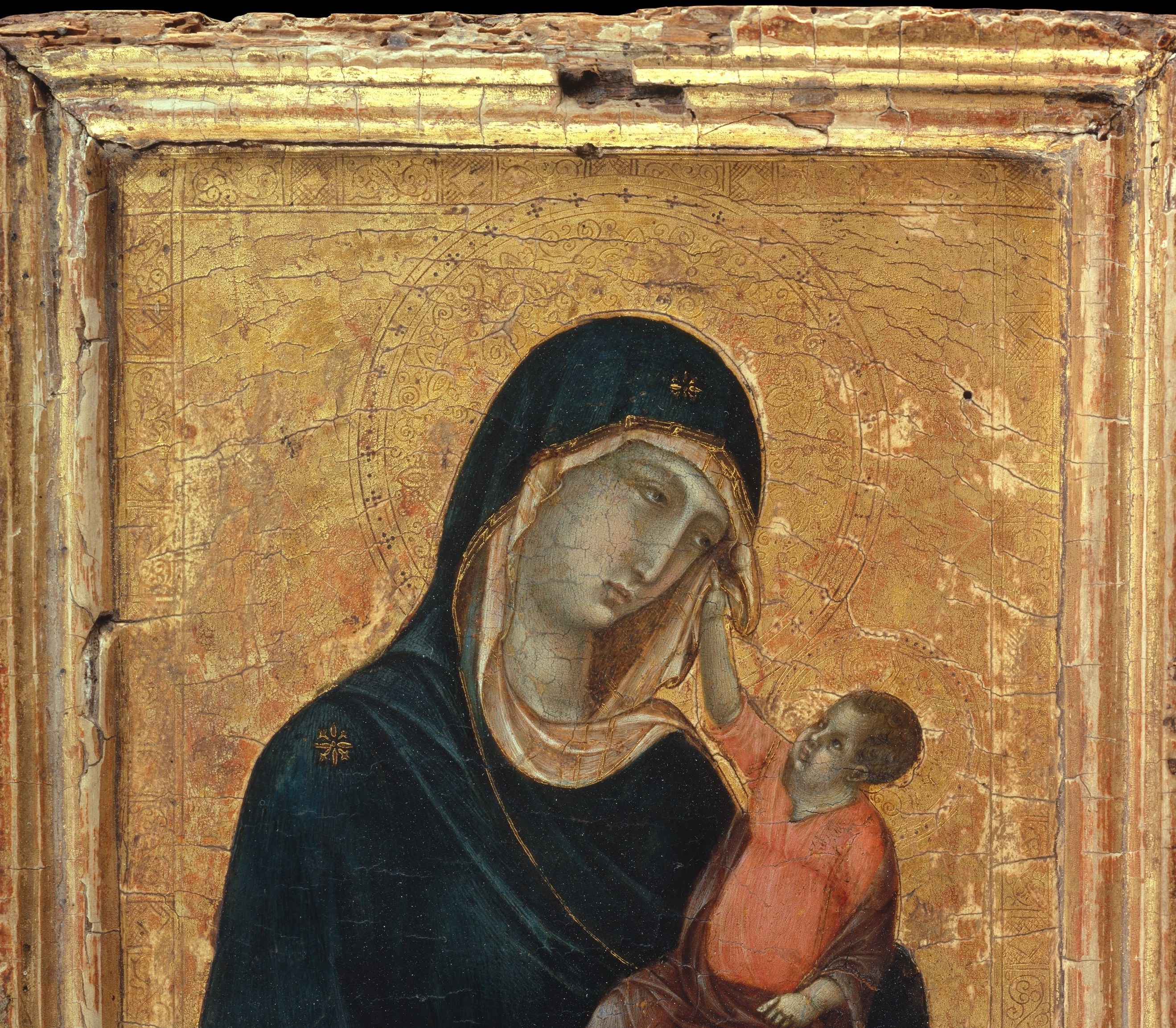
This is the 'Madonna and Child' by Duccio di Buoninsegna, painted around 1300 and now in the collection of The Metropolitan Museum of Art. It is one of the earliest Italian paintings where the Virgin Mary looks at her child instead of out at the viewer, a turn of the head that changes the entire emotional register of Western devotional art.
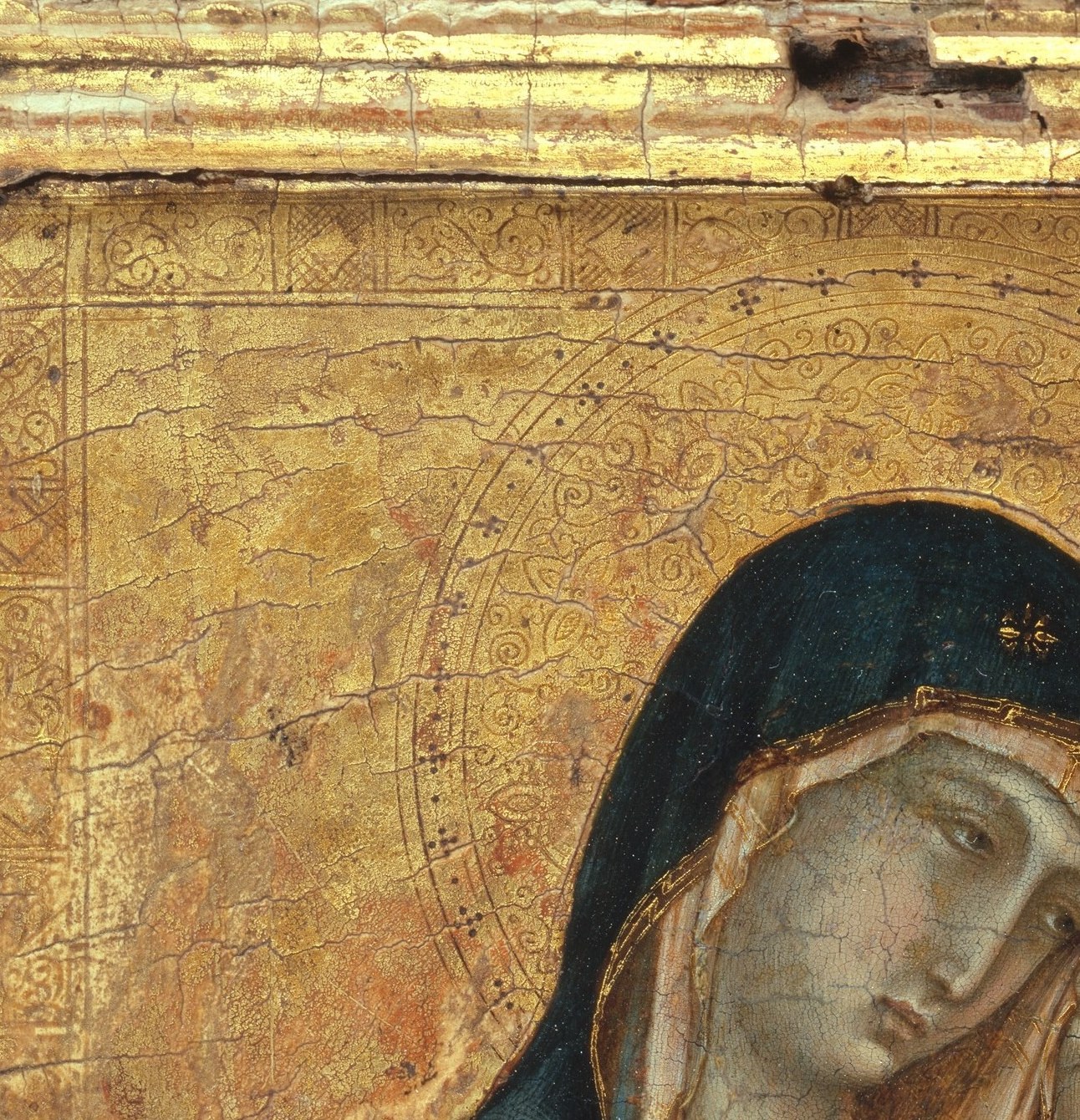
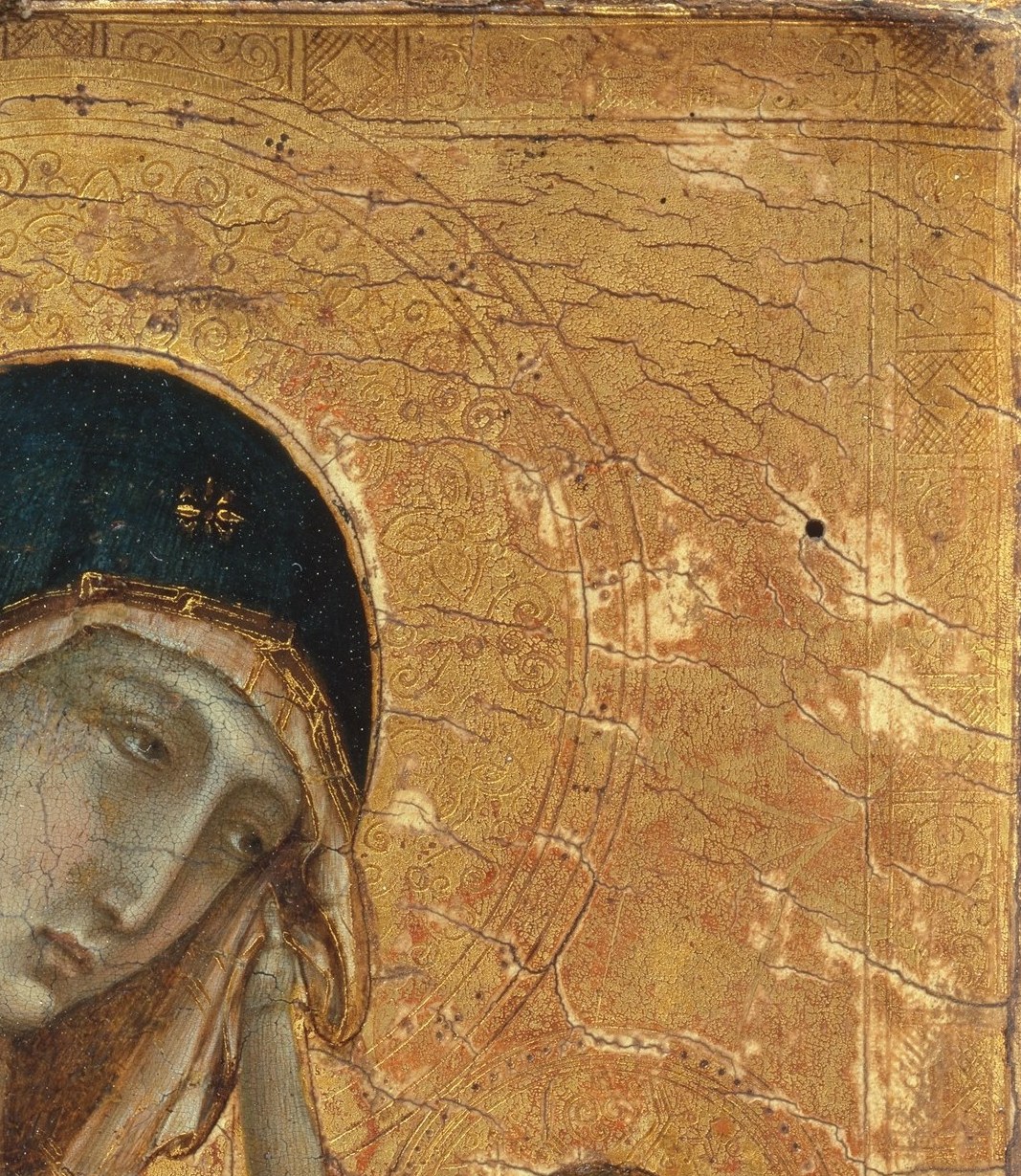
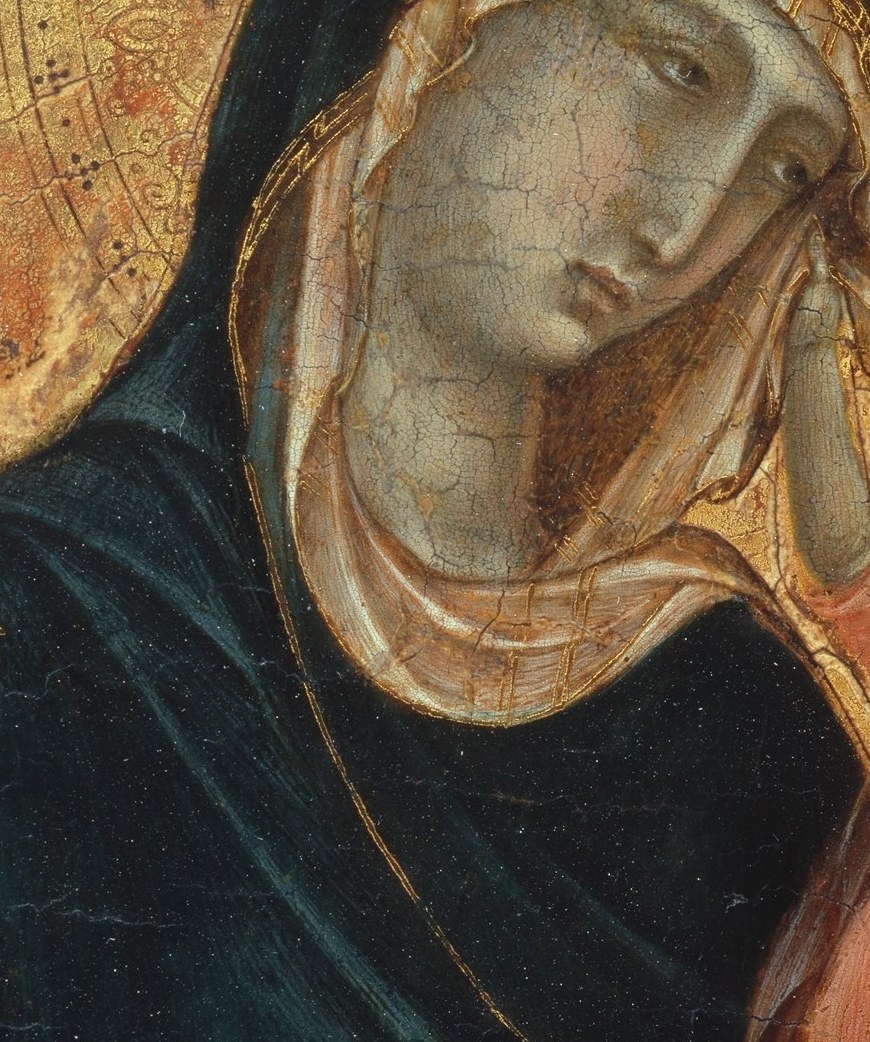
Look at her eyes. They are downcast, aimed at the infant she holds, and they carry something earlier Byzantine Madonnas did not: an interior knowledge, a shadow. The Christ child's face is not a baby's but a small man's, a theological convention that signals his adult consciousness. And his left hand reaches up for the edge of her veil. That grasp is the center of the painting. Divine and human, infinite and dependent, all in the curl of small fingers on blue cloth.
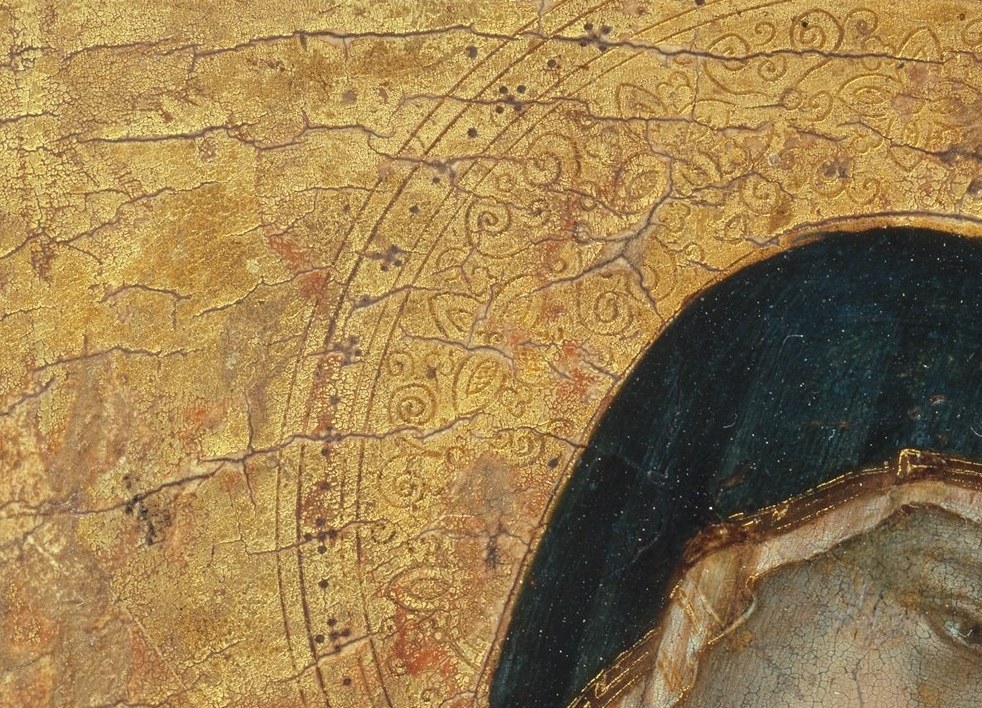
Duccio worked in Siena at the hinge between medieval icon painting and what would become the Renaissance. The gold ground is not sky but Heaven itself, flat and eternal. Against that abstraction, he introduced foreshortening in the hands, three-quarter turning of the face, and the first tremor of psychological realism. The ultramarine of Mary's mantle was made from ground lapis lazuli, the most expensive pigment available, a statement of both her status and the patron's wealth.
This is the founding image of maternal tenderness in the Western tradition, but tenderness with a long shadow. She holds him close, she looks at him, and she already knows.
Details
Transcript
Before this, Madonnas stared straight out. Icons, not mothers. Here, she turns away. She looks down at the child. Duccio is the first Italian painter to give her this interior sorrow. The Christ child does not look like an infant. He looks like a man. This is deliberate: a baby who knows the Passion is coming. His hand reaches for her veil. God, needing his mother.