A Cowherd at Valhermeil, Auvers-sur-Oise by Camille Pissarro
View the artwork: A Cowherd at Valhermeil, Auvers-sur-Oise →
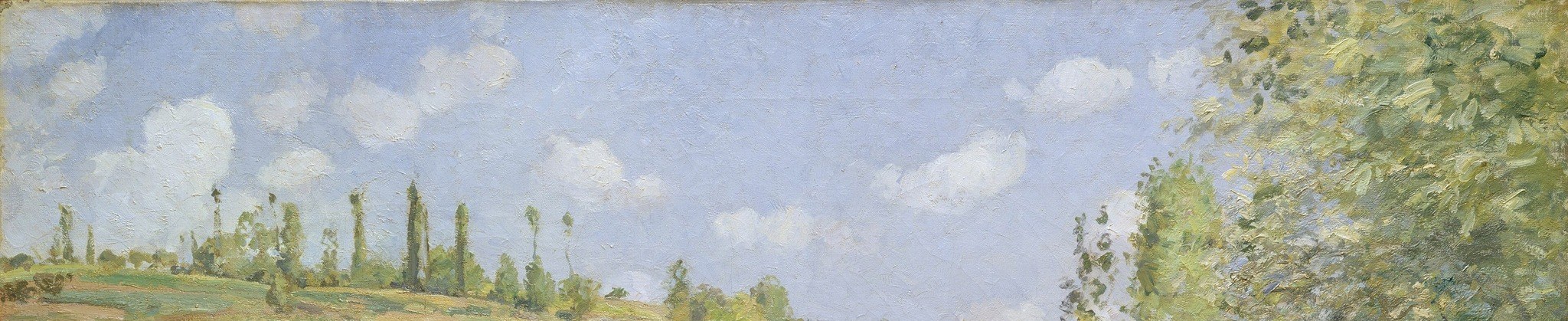
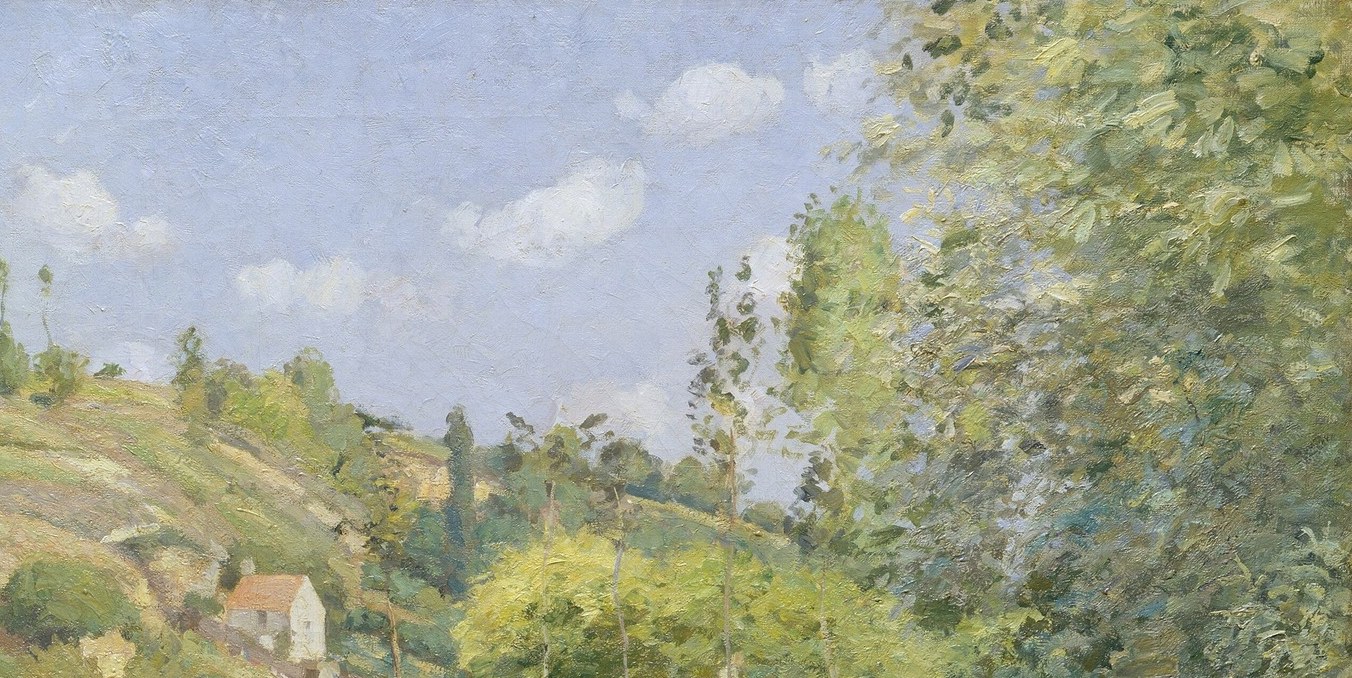
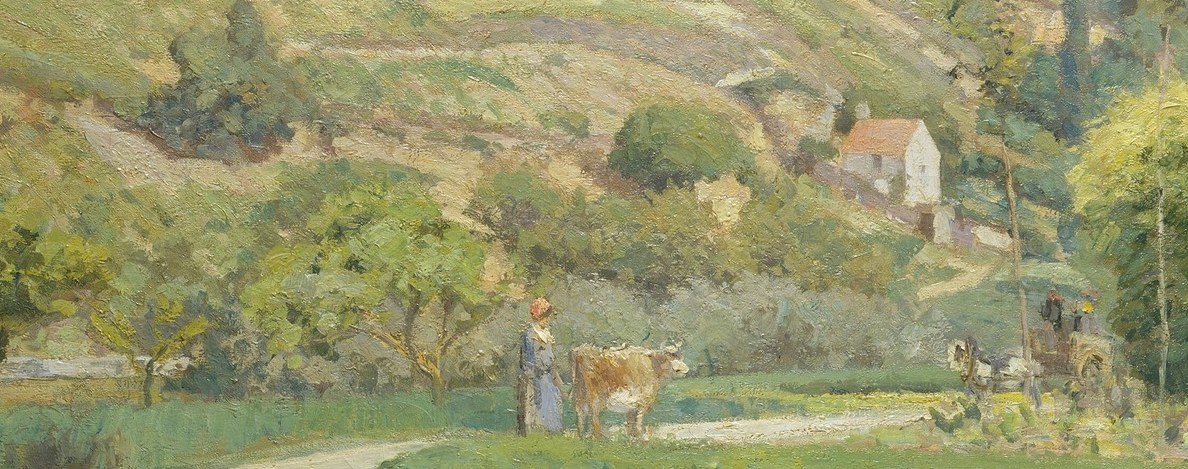
This is an oil-on-canvas landscape by Camille Pissarro, painted in 1874 and now in the collection of the Metropolitan Museum of Art. It shows a cowherd on a road in the hamlet of Valhermeil, near Pontoise. The same year Pissarro finished this, he helped organize the first-ever Impressionist exhibition in Paris.
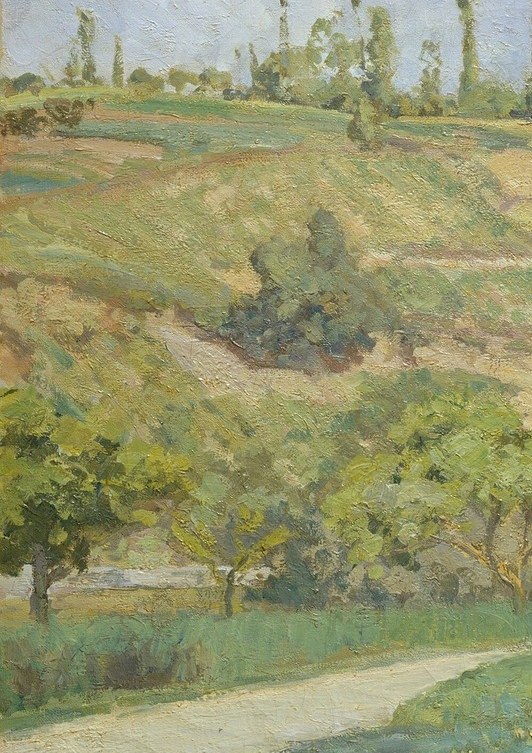
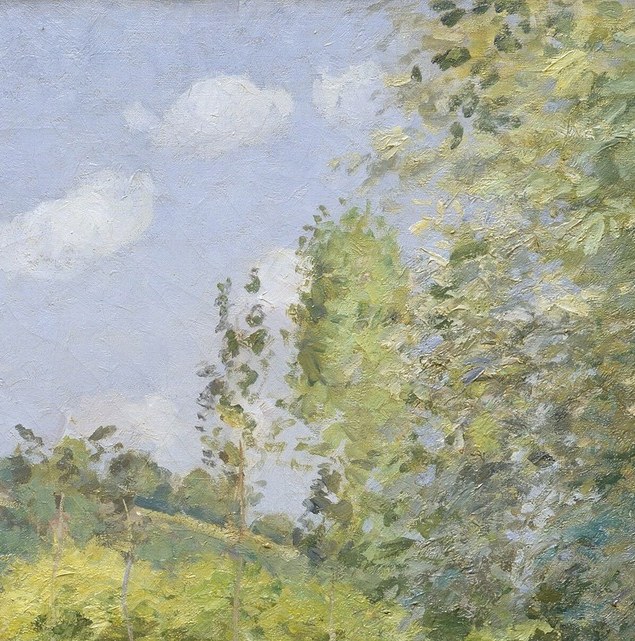
Look first at the meadow on the right. From a distance it reads as solid green pasture. Move closer (or zoom the image) and the meadow dissolves entirely into discrete strokes of paint. The camera reveals what the gallery wall hides: Pissarro was not blending colors. He was placing them side by side and letting your eye do the mixing.
Pissarro was the 'dean of the Impressionists.' Older than Monet, Renoir, or Cézanne, he was the one who held the group together. His philosophy was that a peasant belonged in the landscape the way a tree does, not as its owner, but as part of its ecology. The road in this painting is a real path worn by real feet, in the Oise valley where he lived for decades.
The foreground grass is the best place to see the trick bare. Thick strokes of yellow-green sit right on top of a darker layer, still visible underneath. No outlines, no smooth transitions, just paint, applied fast and left alone. That is what 'broken brushwork' actually looks like.
#arthistory #impressionism #pissarro
Details
Transcript
A dirt road curves through a French hamlet. Pissarro painted this in 1874, the year Impressionism was born. His goal: show light itself, not just a landscape. Now look at the grass. Your eye says 'meadow.' The camera says 'layers of broken strokes, not blended.' He laid thick yellow-green over darker underpainting, wet into wet.