Artwork
A Cowherd at Valhermeil, Auvers-sur-Oise
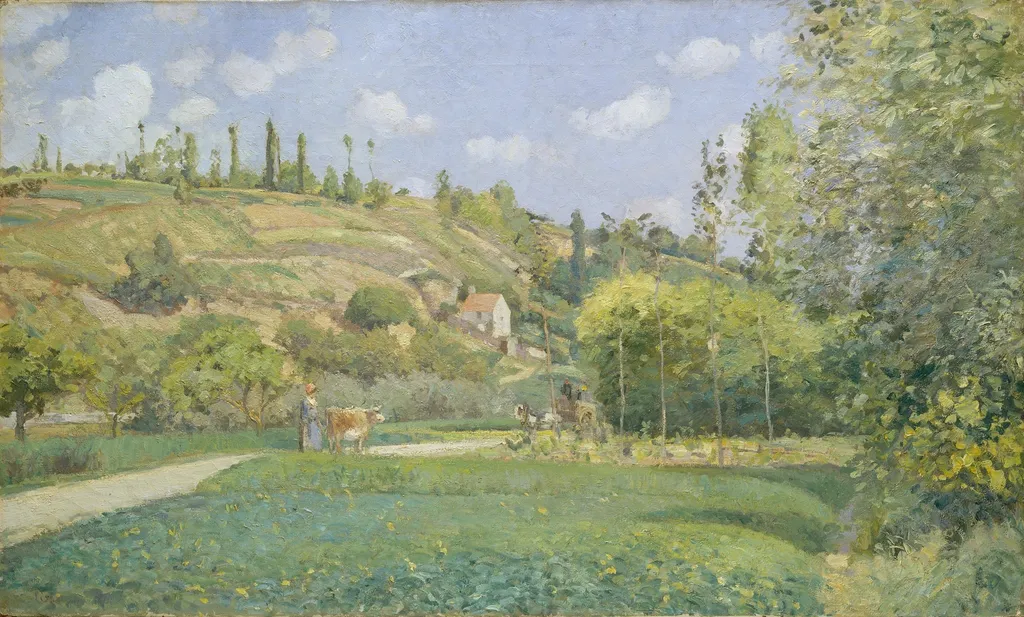
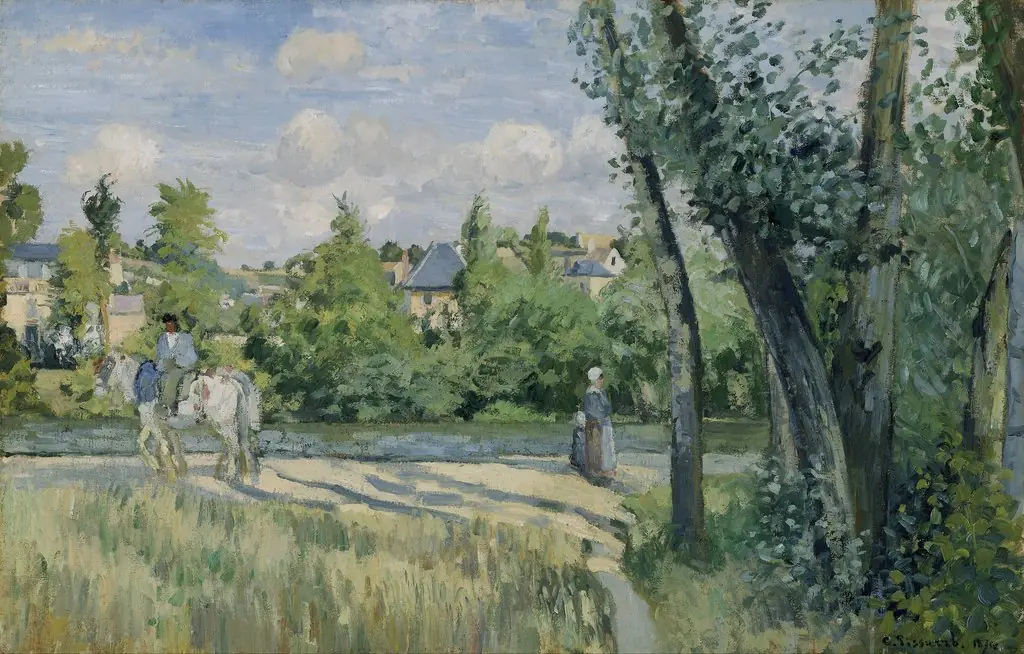
A Cowherd at Valhermeil, Auvers-sur-Oise is an oil painting by the Impressionist artist Camille Pissarro. It dates from 1874 and is held in the collection of the Metropolitan Museum of Art.
About this work
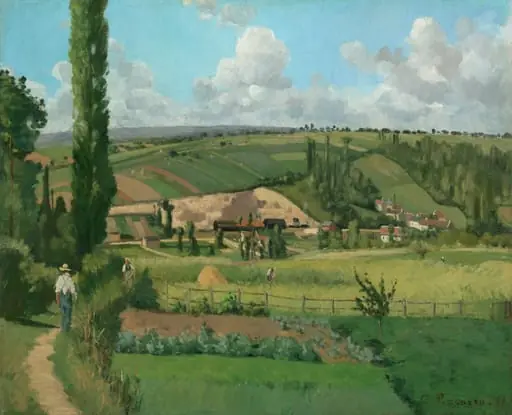
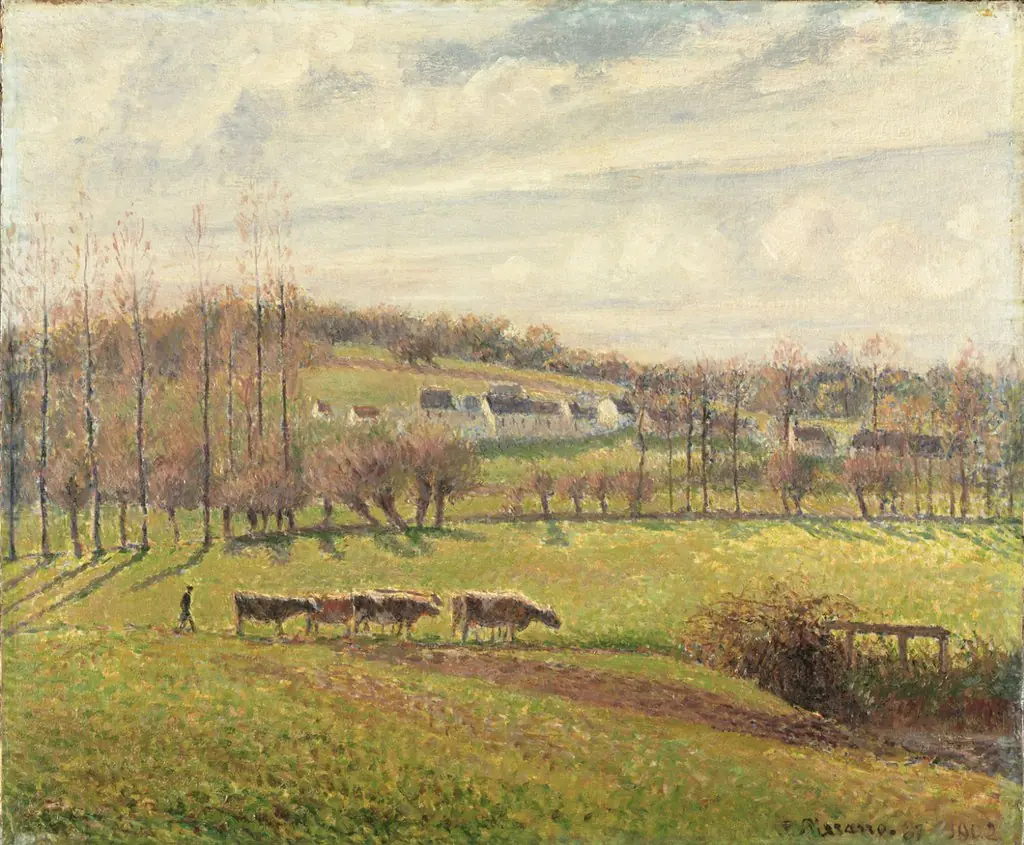
A dirt road winds through the hamlet of Valhermeil toward Auvers-sur-Oise, where a cowherd leads animals past a red-roofed house Camille Pissarro painted again and again. He made this version in 1874, the year of the first Impressionist exhibition, using broken brushwork and a lighter palette while staying rooted in the rural Oise valley.
Subject & Meaning
The scene reflects his admiration for pastoral simplicity and the harmonious relationship between people, animals, and the landscape.
The canvas shows a young woman in a simple dress leading a cow along a country road that links the hamlet of Valhermeil to Pontoise, with a modest farmhouse and trees in the background. The composition exemplifies Pissarro’s sustained interest in everyday rural life; he painted several works in this area between 1873 and 1882, often focusing on villagers moving through the countryside. The scene reflects his admiration for pastoral simplicity and the harmonious relationship between people, animals, and the landscape.
By depicting a modest cowherd in a recognizable local setting, the work symbolizes the dignity of agricultural labor and the timeless character of the French countryside.
Technique & Style
Camille Pissarro executed A Cowherd at Valhermeil, Auvers-sur-Oise in 1874 using oil paint on a canvas support measuring 54.9 by 92.1 cm. Stylistically, the work is an Impressionist landscape painted with light brushstrokes, a technique that reflects Pissarro's proximity to Paul Cézanne, who was working nearby in Auvers-sur-Oise at the time. Unlike Cézanne's unpopulated landscapes from this period, Pissarro's composition is animated by human and animal figures, integrating a cowherd, cattle, and a horse-drawn wagon into the rural scenery. The painting captures everyday pastoral life along a road leading through the countryside.
When Pissarro revisited this exact landscape in 1881, his evolved technique, featuring contrasting colors and cross-hatched or comma-like brushwork, demonstrated his shift toward Neo-Impressionism, contrasting with the lighter handling seen in this 1874 work.
History & Provenance
Camille Pissarro created this oil on canvas painting in 1874. Initially titled Gardeuse de vache sur la route du Chou, Pontoise in the 1939 catalogue raisonné, the work was later retitled to reflect the actual road depicted, which connects the hamlet of Valhermeil to Pontoise. The painting's ownership chain began with collector Jean-Baptiste Faure, who bequeathed it to his son Maurice in 1914.
Maurice's widow sold the work to the galleries Durand-Ruel and Georges Petit in February 1919. Paul Rosenberg acquired it in 1925, and dealer Wildenstein obtained a share in 1928. Wildenstein subsequently negotiated its sale to Arthur K. Salomon in New York in 1939.
Edna H. Walter Sachs became the owner in 1945 and donated the painting to the Metropolitan Museum of Art in 1956.
The painting A Cowherd at Valhermeil, Auvers‑sur‑Oise is held by the Metropolitan Museum of Art in New York, where it entered the collection through a 1956 donation by Edna H. Sachs. Its accession is recorded as part of the museum’s European Paintings holdings. The work was created in 1874, the year of the First Impressionist Exhibition, linking it to that historic moment.
Its provenance traces a chain of owners from Pissarro to Jean‑Baptiste Faure, then to Maurice Faure, Durand‑Ruel, Wildenstein, Arthur K. Salomon, and finally to Edna H. Sachs before the museum acquisition.
Context
A Cowherd at Valhermeil, Auvers-sur-Oise (1874) is situated within Pissarro’s sustained engagement with the rural landscapes around Pontoise and Auvers-sur-Oise between 1873 and 1882, a period marked by his return from London and Cézanne’s parallel residency nearby. Executed the year of the First Impressionist Exhibition, the work reflects Pissarro’s enduring interest in pastoral motifs and inhabited rural scenes, distinguishing his approach from Cézanne’s more sparsely populated compositions. Critics note how the painting’s light, broken brushwork and inclusion of a vachère align it with Impressionist plein-air practice, while its later stylistic evolution toward Neo-Impressionism is evidenced in the 1881 pendant La côte du Valhermeil, Auvers-sur-Oise, which employs contrasting color and cross-hatching.
The painting’s shifting titles across catalogues, from the erroneous “route du Chou” to later geographic specificity, highlight scholarly efforts to stabilize its iconography and provenance, culminating in its current designation and presence in the Metropolitan Museum of Art since 1956.
Overview
A Cowherd at Valhermeil, Auvers-sur-Oise is an oil on canvas painting created by the Danish-French artist Camille Pissarro in 1874. This work captures a scene from the rural hamlet of Valhermeil, situated within the Oise valley in France. The painting is held in the collection of the Metropolitan Museum of Art, offering a glimpse into Pissarro's sustained engagement with the landscapes surrounding his home.
Own this work as a print
Artist & collection