Aeneas Takes Leave of Dido by Andrea Schiavone
Andrea Schiavone’s "Aeneas Takes Leave of Dido," painted in 1555, captures one of the most poignant moments from Virgil’s Aeneid: the departure of the Trojan hero Aeneas from Dido, the Queen of Carthage, and their unborn child. This oil painting, held in the Kunsthistorisches Museum, depicts the stark tension between personal affection and divine destiny.
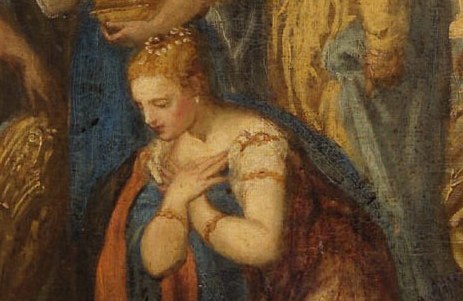
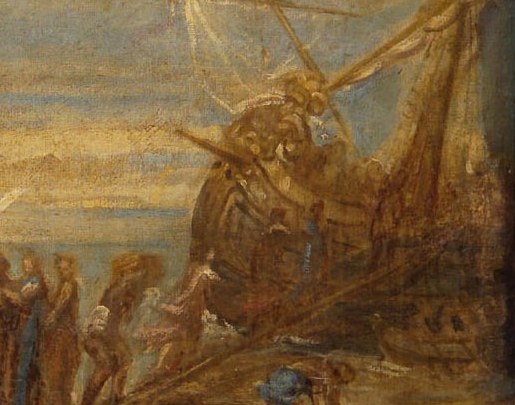
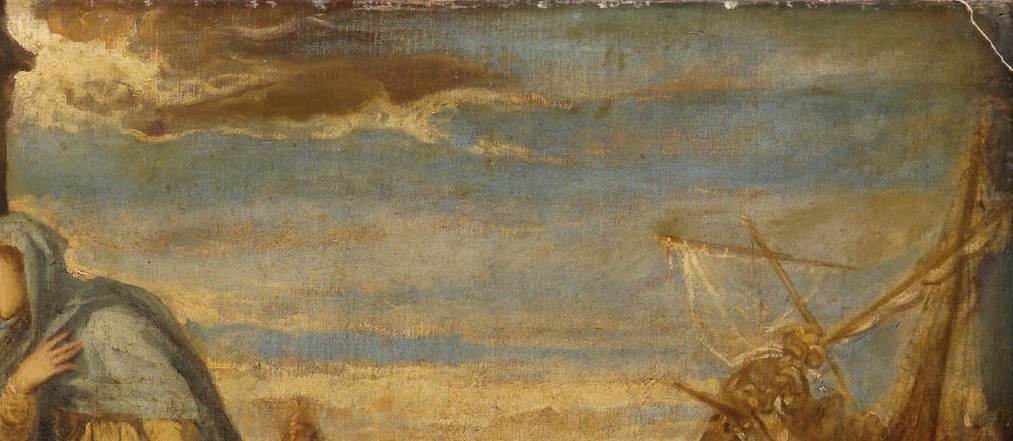
Look closely at Dido’s anguished face and kneeling posture, clutching at Aeneas, who gestures resolutely towards his waiting ship. The dramatic sky and the figures disembarking on the shore emphasize the inevitability of his departure, mirroring the emotional turmoil of the scene.
Schiavone, also known as Andrea Meldolla, was a Dalmatian artist active primarily in Venice. His work blends Mannerist elements, with elongated figures and complex poses, with the rich coloristic traditions of Venetian painting, notably influenced by Titian. This particular piece showcases his ability to convey profound human emotion within a grand mythological narrative.
What does this painting tell us about the power of duty versus love?
Details
Transcript
This is Aeneas, leaving Dido and their unborn child. His mission from the gods demands he journey on. Her hands grip his, a last desperate plea. But his ship is already waiting on the horizon. Dido's face tells the story of duty's cruel demand. A moment of heartbreak, painted in 1555.