Bearded Man with a Beret by Lievens, Jan
Jan Lievens was twenty-three years old when he painted Bearded Man with a Beret, a small oil on panel from around 1630 now in the National Gallery of Art in Washington D.C. The man you see is not a portrait of an individual but a tronie: a character study meant to explore a state of being. Lievens and his friend Rembrandt, then sharing a studio in Leiden, both painted tronies as a way of mastering human expression. What makes this one extraordinary is how fully a young man imagined old age.
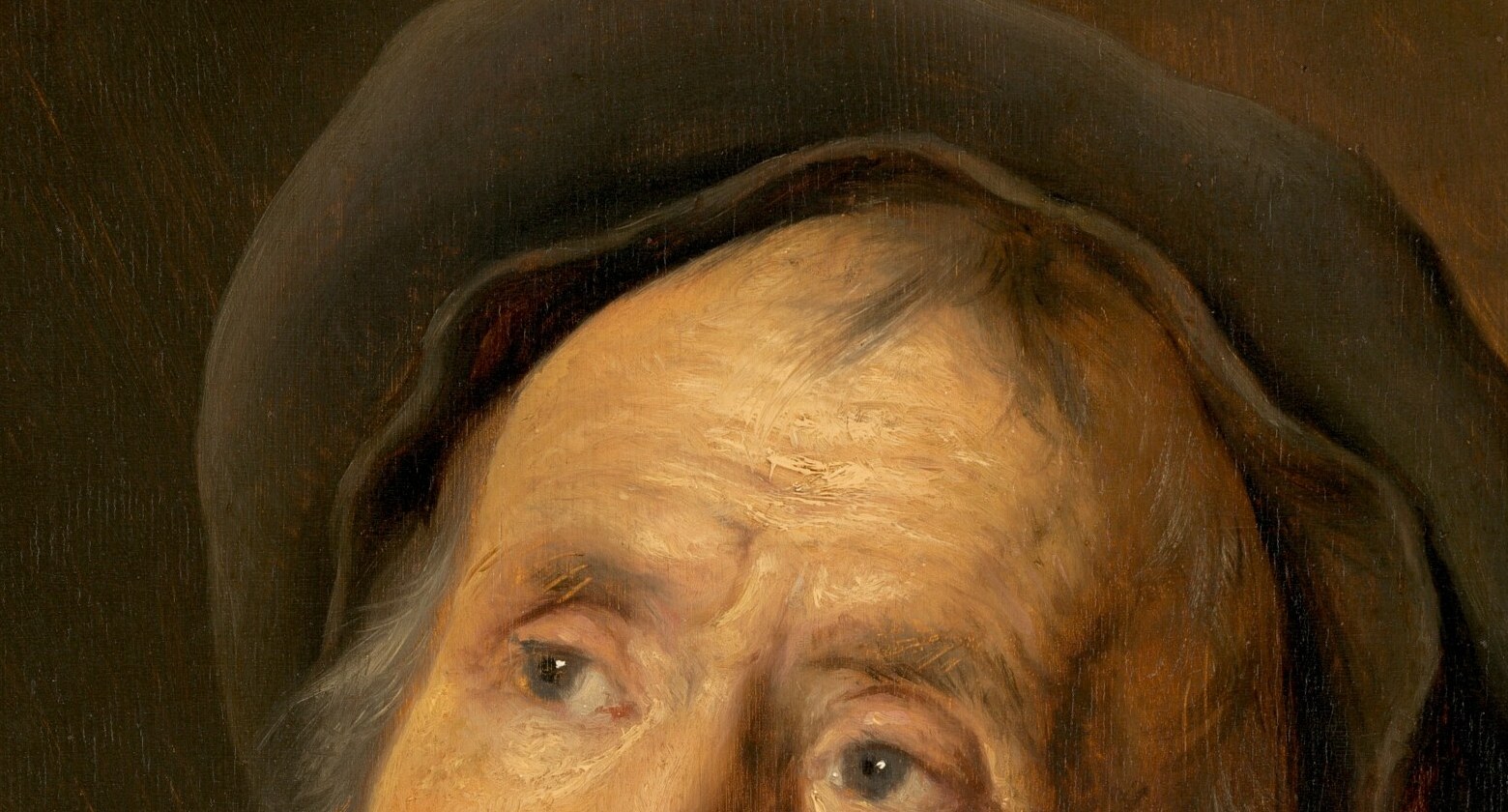
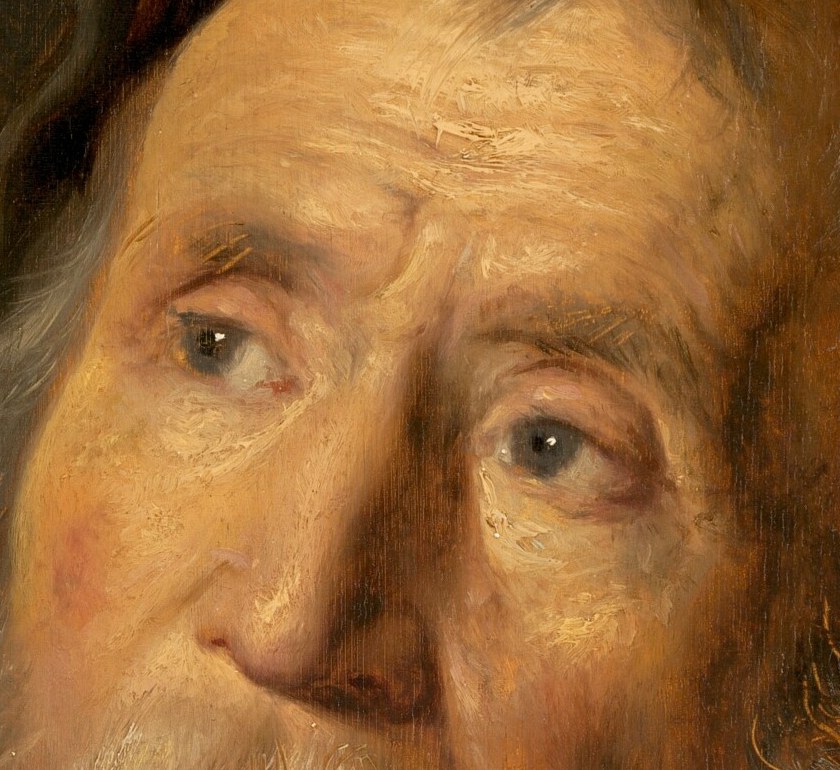
Look at how the old man's eyes lift up and to the left. They do not meet ours. The gaze is inward, and the slightly parted lips beneath the mustache give the face the quality of unspoken thought, as though he might speak or sigh. Lievens uses chiaroscuro dramatically here: the left cheek and nose catch a bright, warm light, while the right temple and cheek fall into near-total shadow. That raking highlight on the nose bridge is not a blend but a single confident stroke of impasto, an act of painterly nerve.
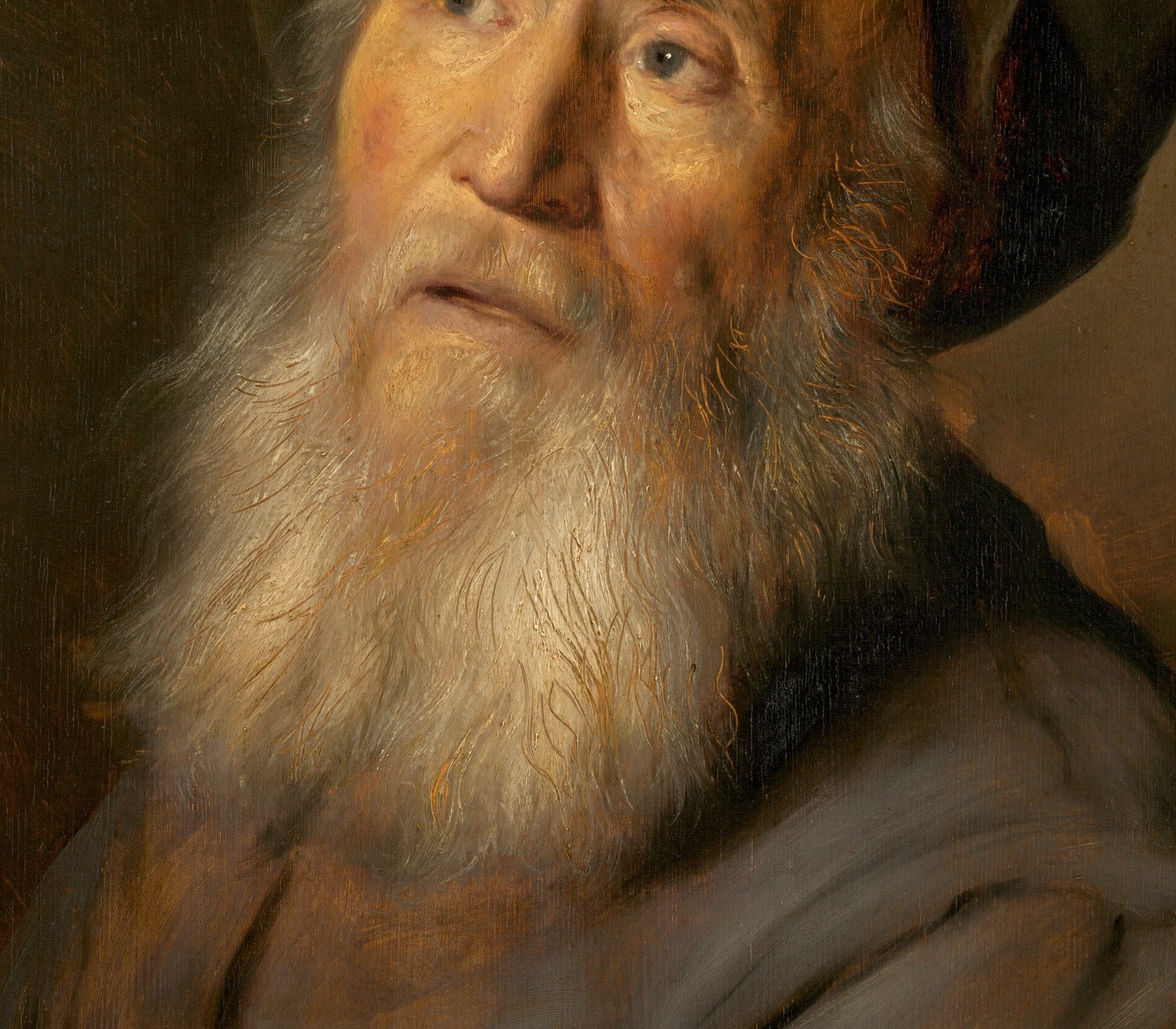
The beard is the other great technical achievement. Its cascading white mass covers nearly a third of the panel, and Lievens renders individual hairs in the highlights with extraordinary patience. The loose, sketchy robes below the collar are deliberately under-painted, forcing your attention upward to the meticulously modeled face. This was the formula: pure focus on the interior life a face could carry.
Lievens left the Amsterdam studio, and his career took him to London, Antwerp, The Hague, and Berlin. He is far less known now than the friend he once competed with as an equal. But in this small panel, painted before any of that happened, the talent is undeniable. What do you think this man is looking toward?
Details

Transcript
He was 23 when he painted this. A young man's deep study of an old one. Look at the bridge of the nose. A single stroke of paint holds the light. He and Rembrandt shared a studio. They made each other better. This is not a portrait of a person. It is a tronie: a study of character. Lievens gave him eyes that look past us, toward something only he can see.