Houses on the Achterzaan by Claude Monet
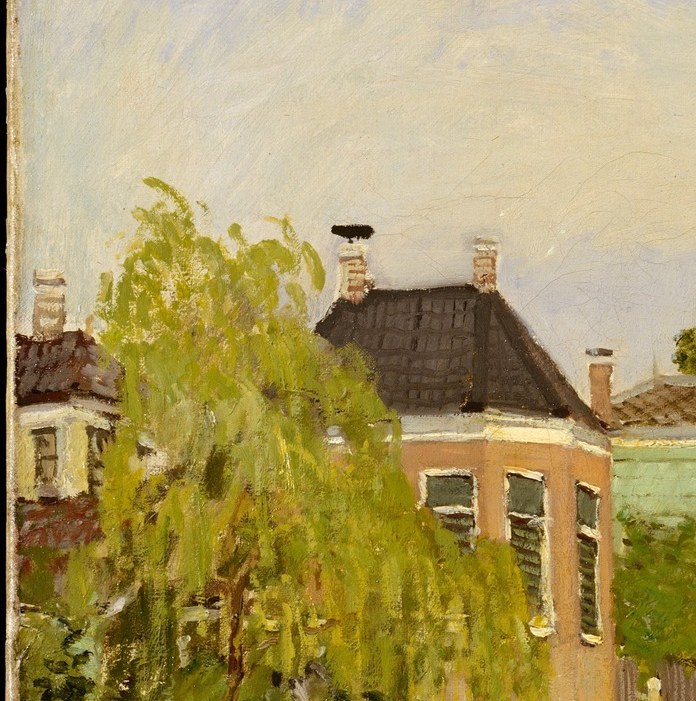
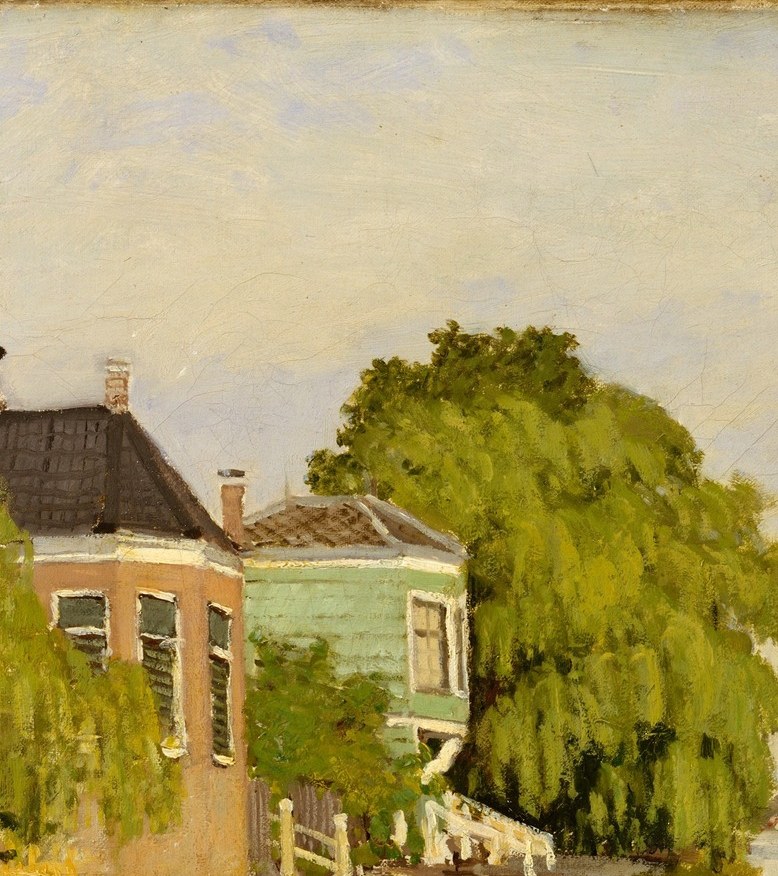
Houses on the Achterzaan is Claude Monet's 1871 view of a riverside in Zaandam, the Netherlands. He painted it from a dam, facing northwest across the water toward a row of garden houses. It lives at the Metropolitan Museum of Art.
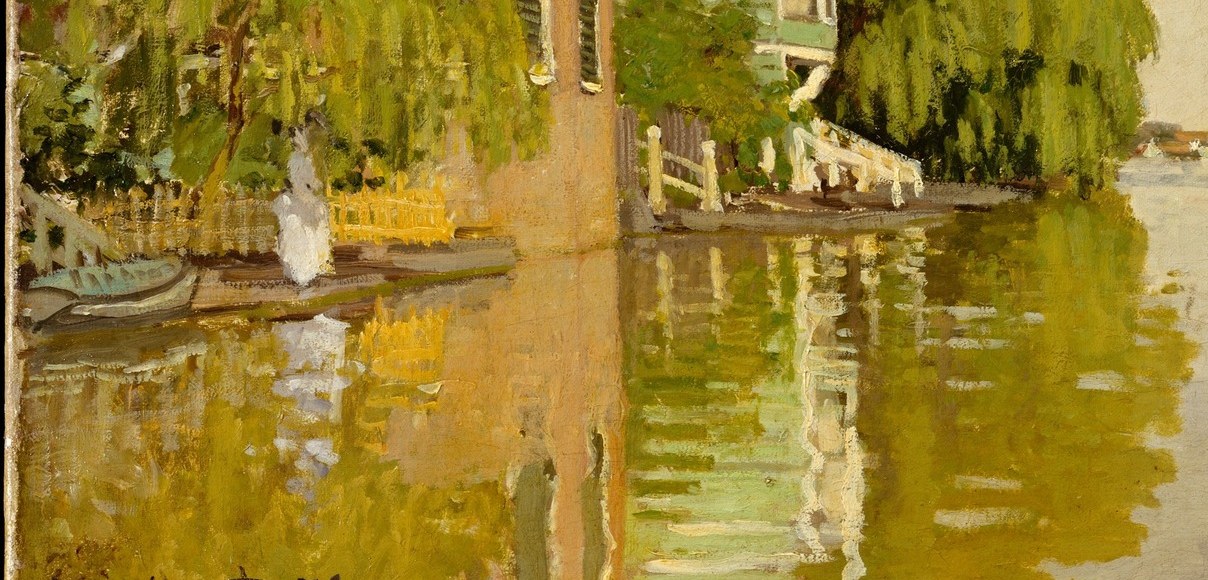
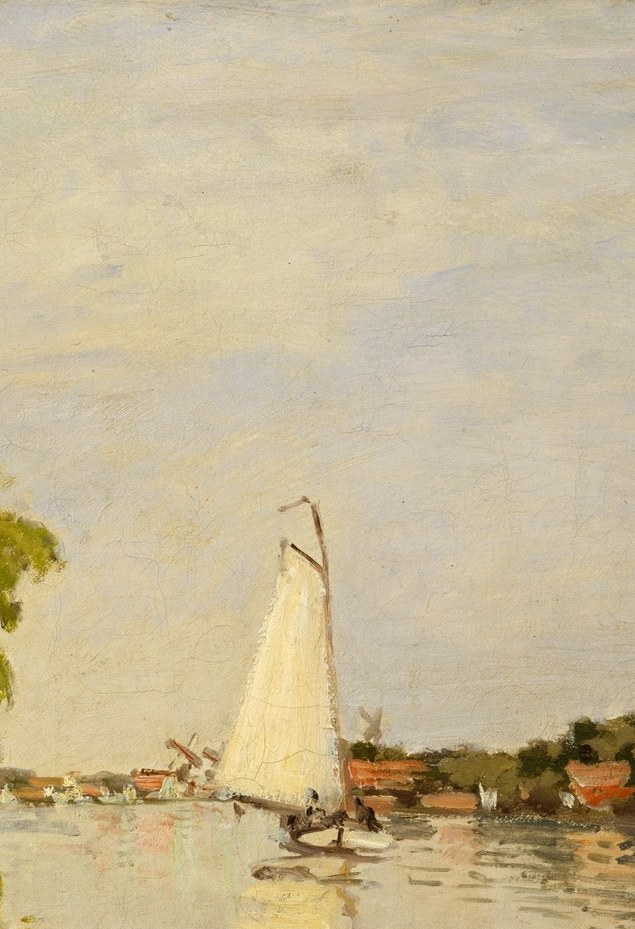
First, your eye lands on the cream-yellow house and the tall sailboat. The real action, though, is in the water itself. Compare the crisp architecture above the bank with the trembling strokes directly below it, and you can watch the moment Impressionism is being invented in a liquid mirror.
Monet arrived here with his family in the summer of 1871, crossing the border after the upheaval of the Franco-Prussian War and the Paris Commune. He stayed four months and painted nearly two dozen canvases, fascinated by the light and the tight wooden architecture of the Zaan region. This painting is a document of one of the first times he worked on foreign soil, calibrating his eye against a new sky.
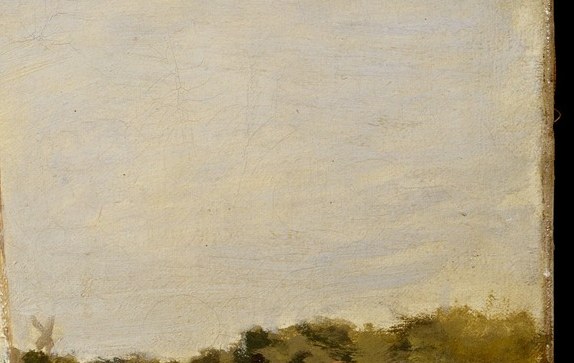
But the detail most people scroll past is hidden on the far right. Past the boat, past the willows, low on the horizon, there is a second town. Rooftops, church spires and ship masts sit in silhouette. The quiet riverbank isn't quiet at all, a whole working city is going about its day just across the water. Next time you look, let your eye drift to that distant skyline and the painting opens right up.
Details
Transcript
It looks like a quiet afternoon on a Dutch river. Monet came here in 1871, fleeing war and looking for peace. The water holds a perfect mirror of the house and willows. But look past the sailboat, into the far distance. There, on the horizon: a second town. Rooftops and ship masts. The rest of Zaandam is watching.