Madonna and Child Enthroned with Four Saints and Eighteen Angels [middle panel] by Puccio di Simone
View the artwork: Madonna and Child Enthroned with Four Saints and Eighteen Angels [middle panel] →
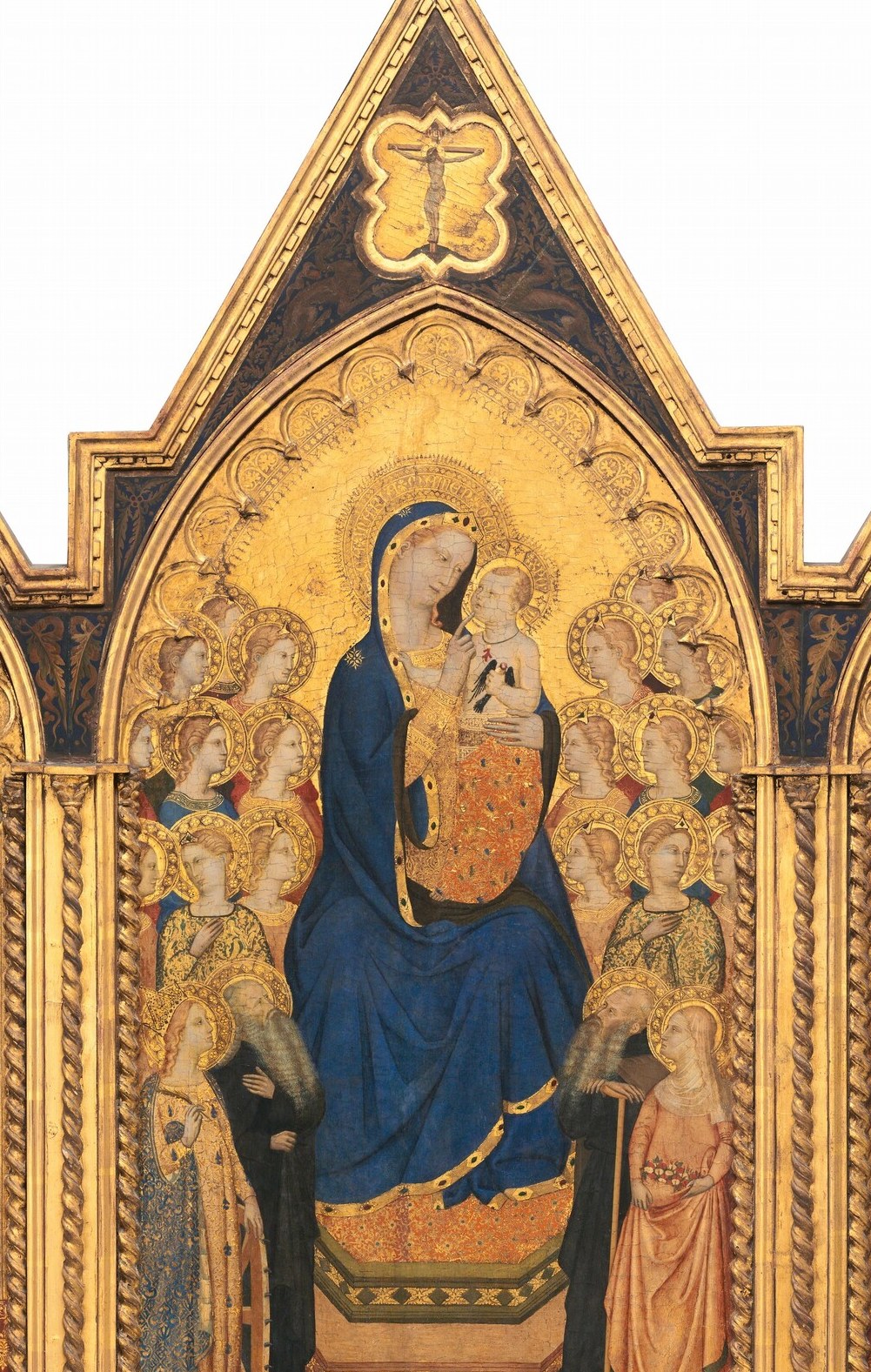
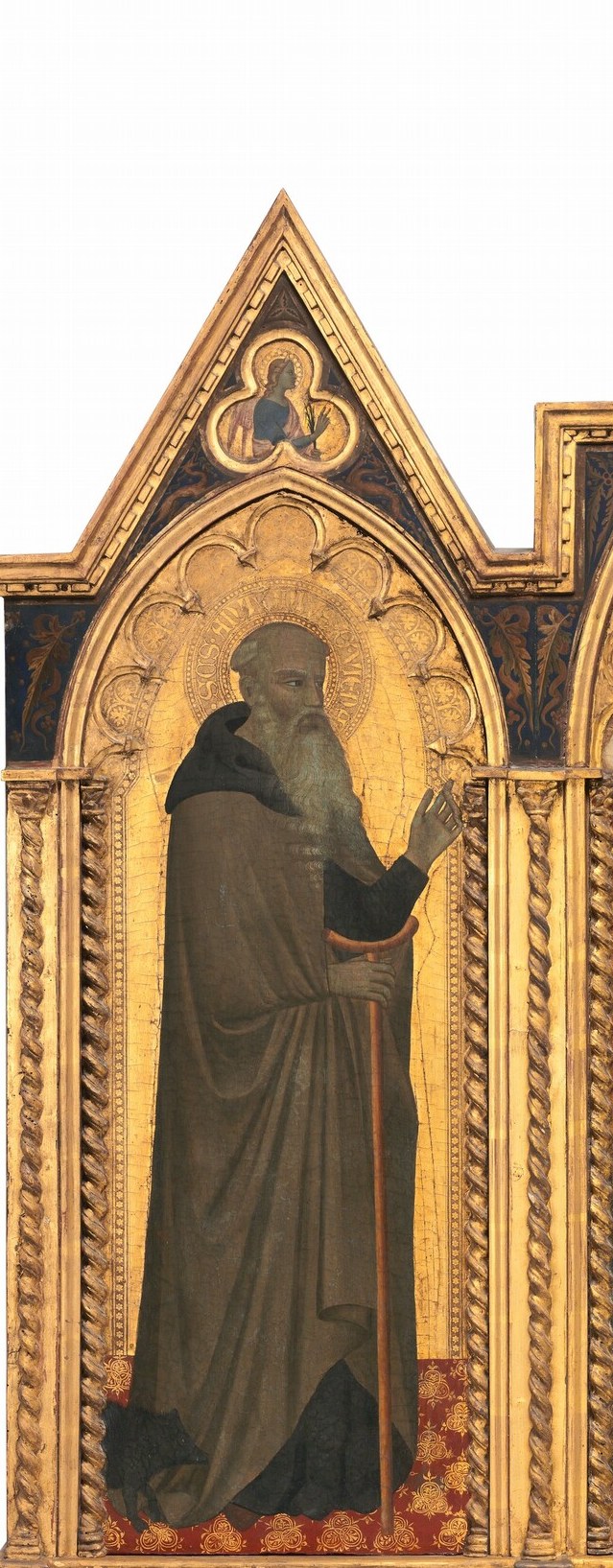
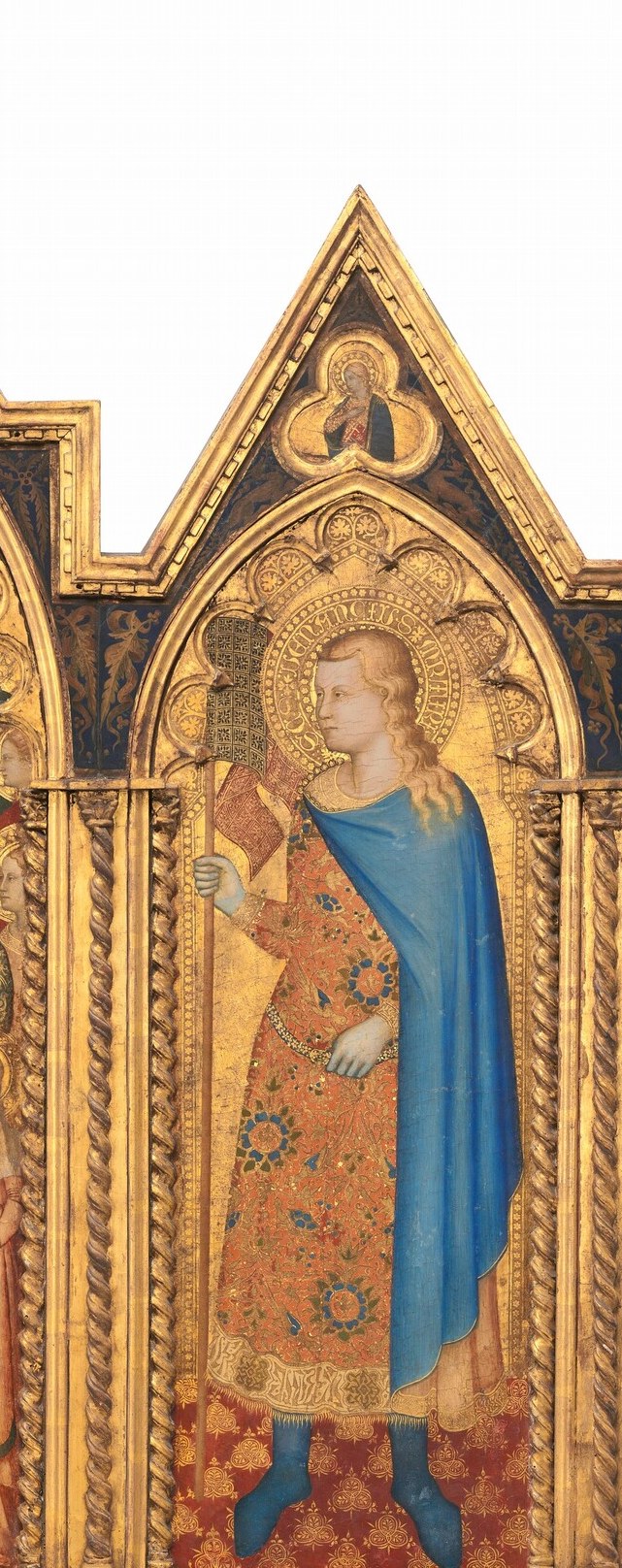
This is the center panel of a triptych painted in 1354 by Puccio di Simone, a Florentine follower of Bernardo Daddi. It was commissioned for the high altar of a church in Fabriano, Italy, and now hangs in the National Gallery of Art. The scene is at once heavenly and intimately human.
Your eye goes first to the golden glow of the Madonna's halo and the stacked tiers of angels. But the real surprise is between her pointing hand and the Child's fingers. She gestures toward him playfully, a rare and tender human moment inside a supreme formal image. He, in turn, clutches a small bird.
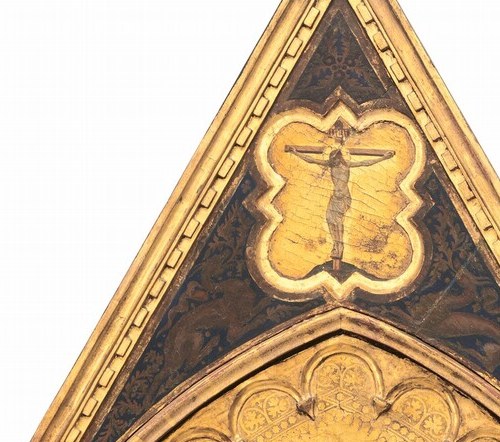
That bird is almost certainly a goldfinch. In medieval symbolism, the red spot on its head was understood as a mark of Christ's future Passion, a drop of blood foretelling the crucifixion. Hidden in plain sight within this joyful infancy scene is a quiet, unavoidable prophecy.
The altarpiece was a collaboration between Puccio and the Marchigian painter Allegretto Nuzi, and its attribution was only settled in 1959 by the scholar Roberto Longhi. An inscription along the base names the patron who commissioned it: Fra Giovanni of the Hospitallers of Saint Anthony. A named human story anchors an image of eternity.
The Madonna plays, the Child holds the future, and we are left to hold both realities at once. What other details do you notice in the golden glow?
#arthistory #medievalart #nationalgalleryofart
Details

Transcript
At first glance, a glowing Madonna and Child. Her halo is pure gold leaf. She looks down, not at us. Scholars note her pointing hand is a playful gesture. It's a rare flash of maternal warmth in a formal throne image. But look closely at what the Child is holding. A tiny goldfinch. Its red face was a symbol of the Passion. A playful moment holding a prophecy of suffering.