The Willows by Monet, Claude
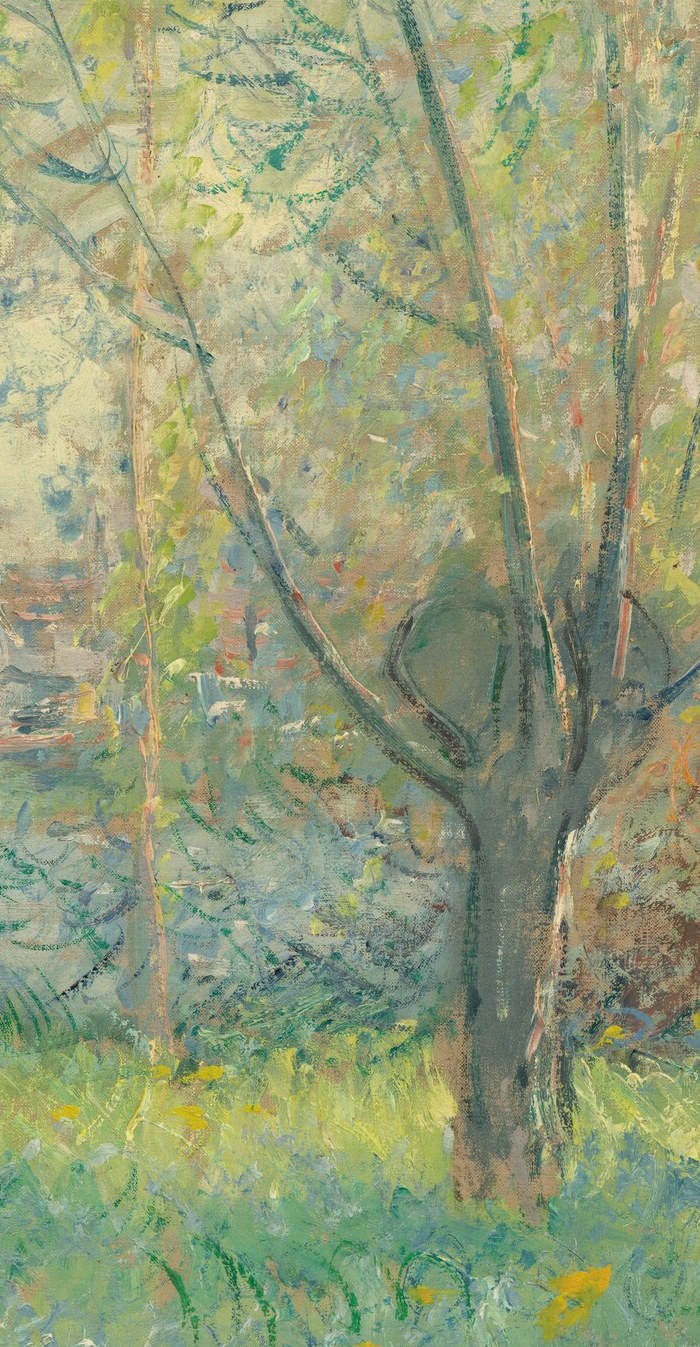
This is Claude Monet's "The Willows," painted in 1880 and now held in a private collection. The peaceful meadow, the soft sky, the quiet cluster of distant houses, none of it hints at the artist's reality that year.
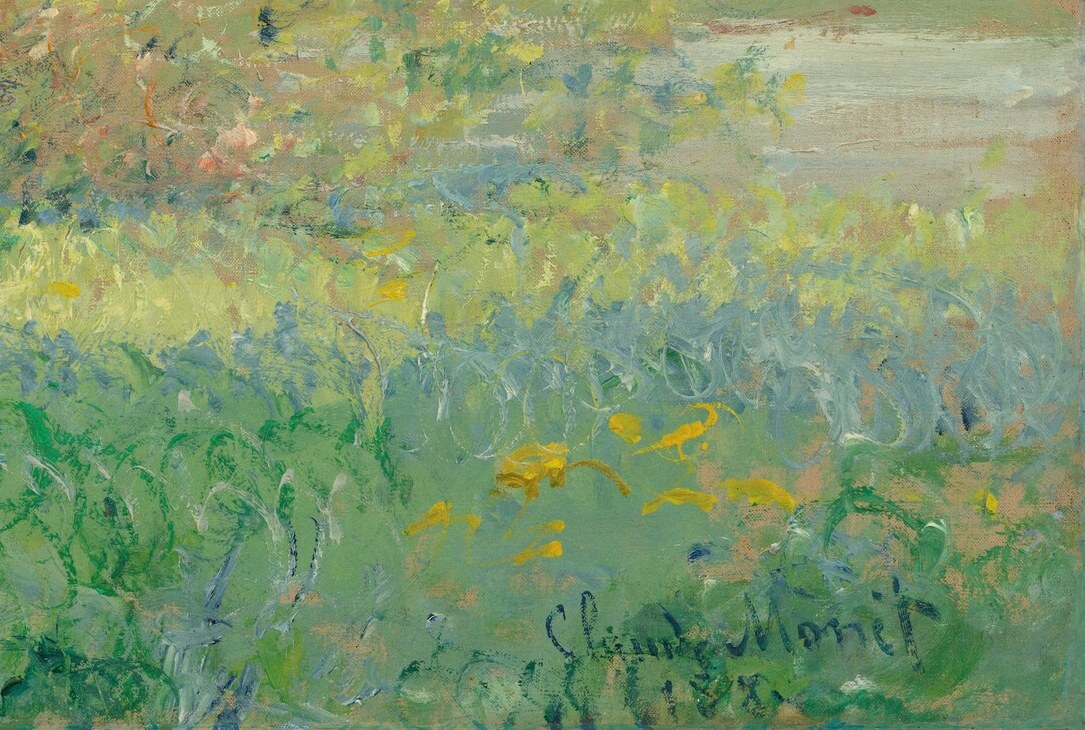
Look closely at the two bare willow trunks dominating the foreground. They are stripped, spindly, and surrounded by a lush, living field of thick green grass and scattered yellow wildflowers. The contrast is stark. The brushstrokes are rapid and urgent, as if he were trying to capture the light before it vanished.
Monet was forty years old and nearly destitute. His wife, Camille Doncieux, had been his model since the 1860s, she appears in "Women in the Garden" and many of his early works. By 1879 she was dying of what was likely pelvic cancer, and Monet's letters to friends begged for money to pay for medicine and food. He painted almost manically through her illness. After her death on September 5, 1879, Monet sat beside her body and painted her face, later telling a friend that he was horrified at himself for being unable to stop analyzing the colors of death on her skin.
Camille had been nineteen when they met. She bore his first son before his family accepted her. She endured years of poverty with him. And when she died, the art world had still not fully accepted him. This painting of willows, probably completed the year after, holds all of that, not as a narrative, but as a feeling. A quiet afternoon in a meadow that knows nothing of your grief.
What do you see in the two bare trees?
Details


Transcript
It looks like a peaceful afternoon in the French countryside. But the year was 1880, and Claude Monet was broke. His wife Camille was gravely ill. He could not afford doctors. He painted these scattered flowers while caring for her. Look at the two bare trees. Stripped of everything. Camille died that September, at just thirty-two. Monet painted her face on the deathbed. He could not stop.