Washerwoman near Trouville by Boudin, Eugène
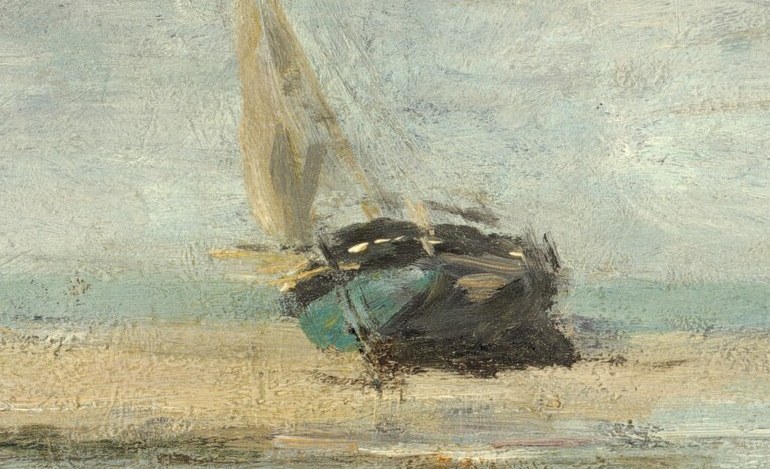
Eugène Boudin painted "Washerwoman near Trouville" around 1874, on a wooden panel no bigger than a laptop screen. The scene is a Normandy beach, and the subject is everyday labor: two women washing clothes near beached boats. It lives now as a quiet landmark of early Impressionism.
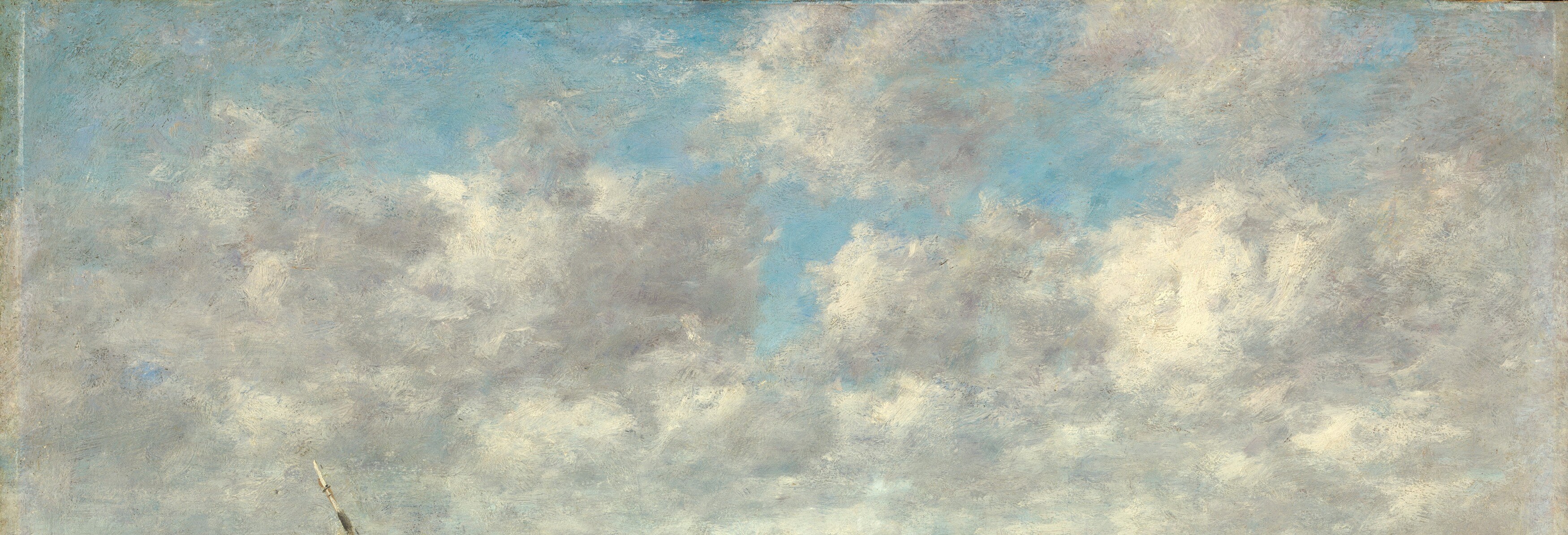
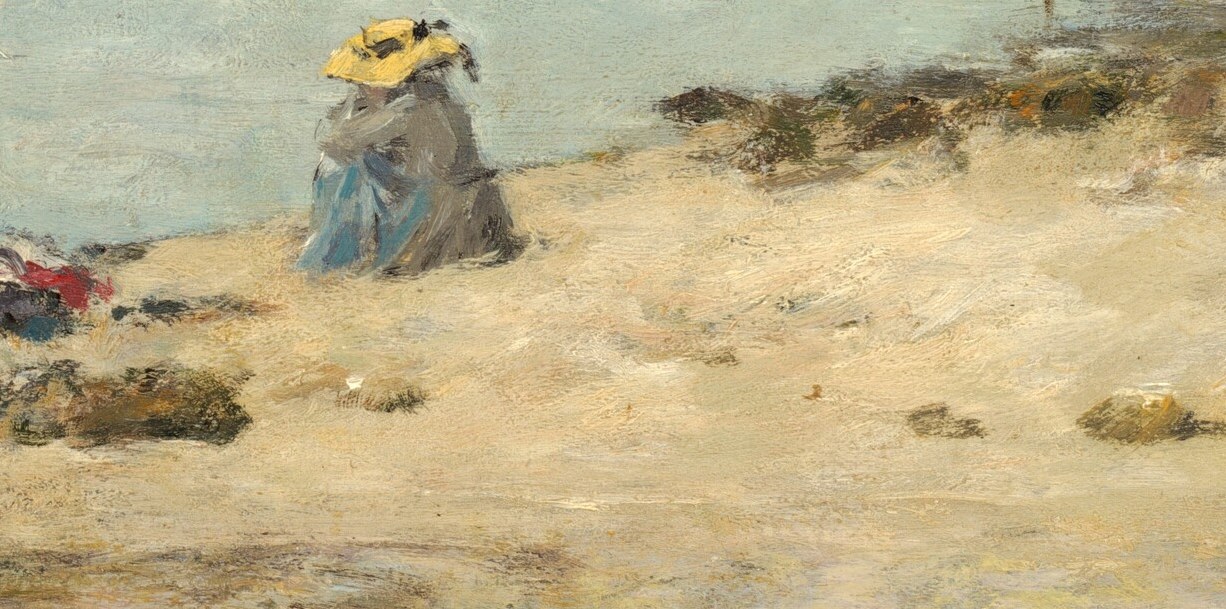
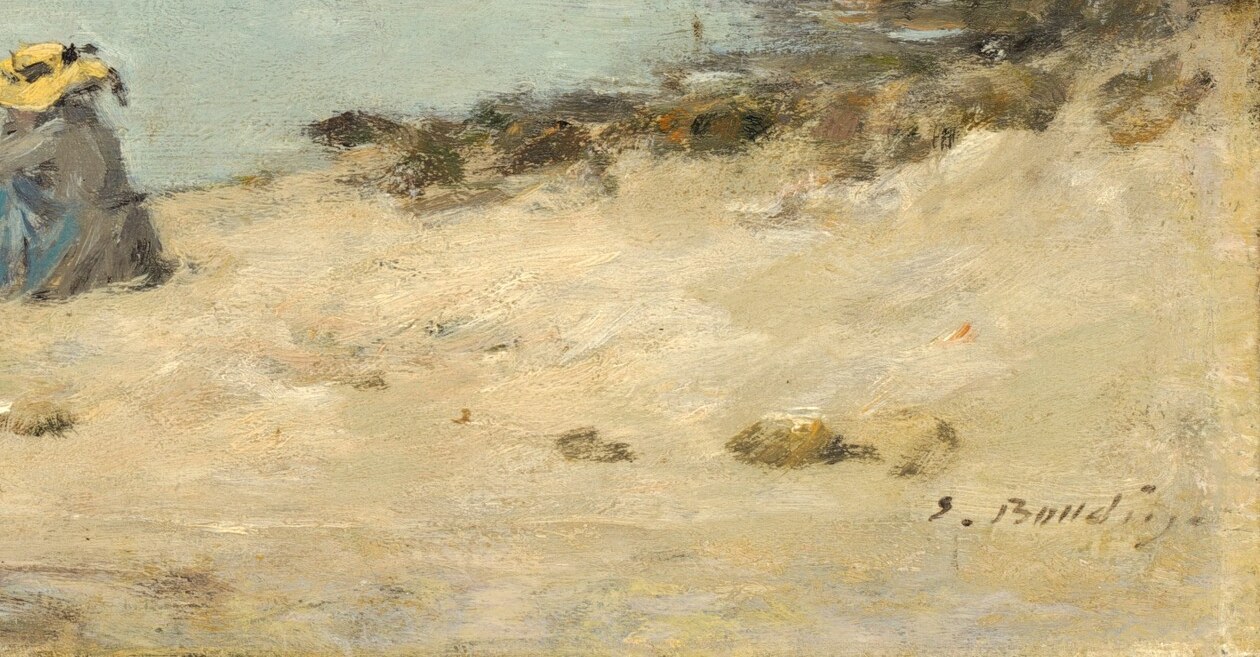
Look first at the sky. What reads as a vast, moody cloud cover is mostly bare wood, with a few dry strokes of gray and white dragged across the grain. The water below is the same economy, paint pulled sideways, leaving the horizon to dissolve into mist. Boudin leaves the board naked in places, letting the warm tone of the wood read as wet sand.
The figures are barely described: a seated woman bent to her work, a standing companion in a yellow hat, painted with just enough weight to anchor the scene. The brushwork is fast, outdoor, observational. You can see the speed in every stroke.
Boudin was among the first French painters to work consistently outdoors. Corot nicknamed him the "King of the Skies." He taught a young Monet to paint en plein air, and you can feel that influence moving through this little panel, not a grand subject, but a true one, and a masterclass in knowing what to leave out.
Details
Transcript
It looks like a whole sky, full of moving air. Now look at how little paint actually made it. A few dry, dragged strokes. That is the whole cloud. The water works the same way. Wet paint pulled sideways. He leaves the wooden board bare to stand for wet sand. The women are painted less, not more. Just enough to be solid. Corot called him the King of the Skies. His trick was knowing exactly when to stop.