Wapping by Whistler, James McNeill
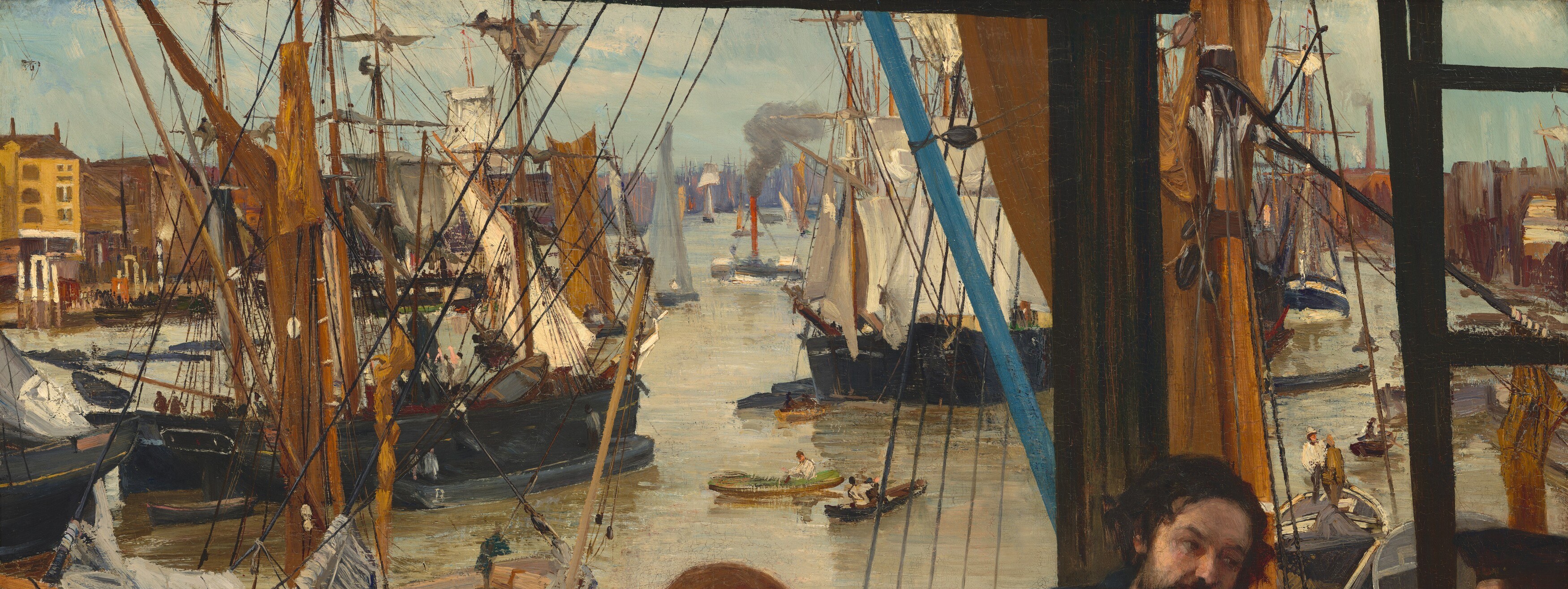
James McNeill Whistler's *Wapping* (1860-1864), an oil painting in the National Gallery of Art, embodies his philosophy of "art for art's sake," prioritizing aesthetic qualities over narrative or moralizing content. He was an American expatriate known for rejecting sentimentality in favor of refined composition and technique.
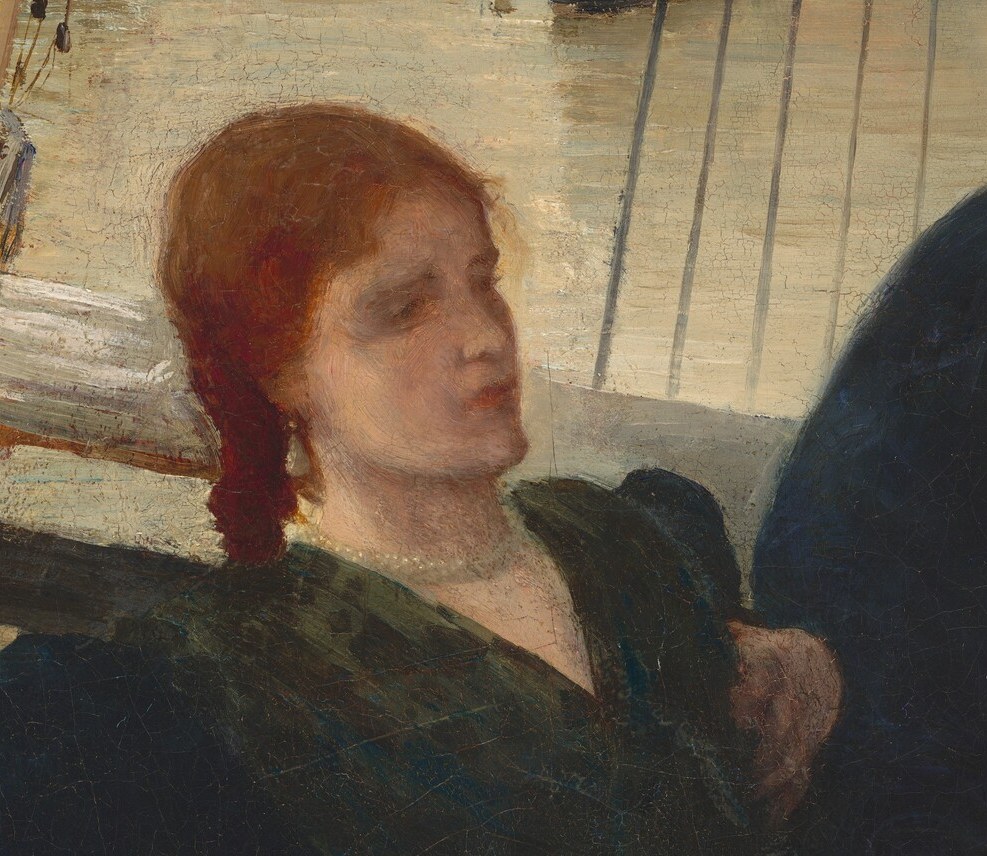
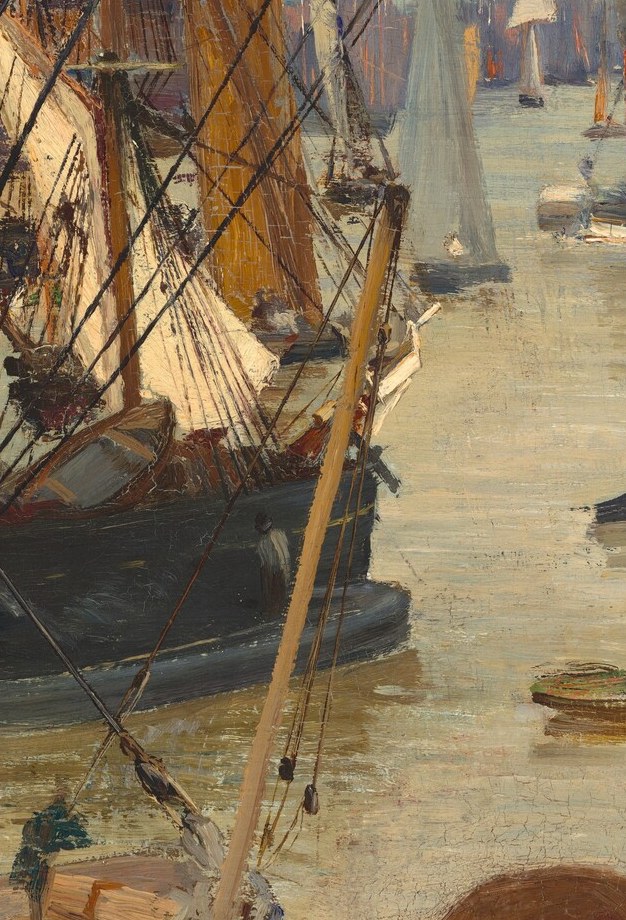
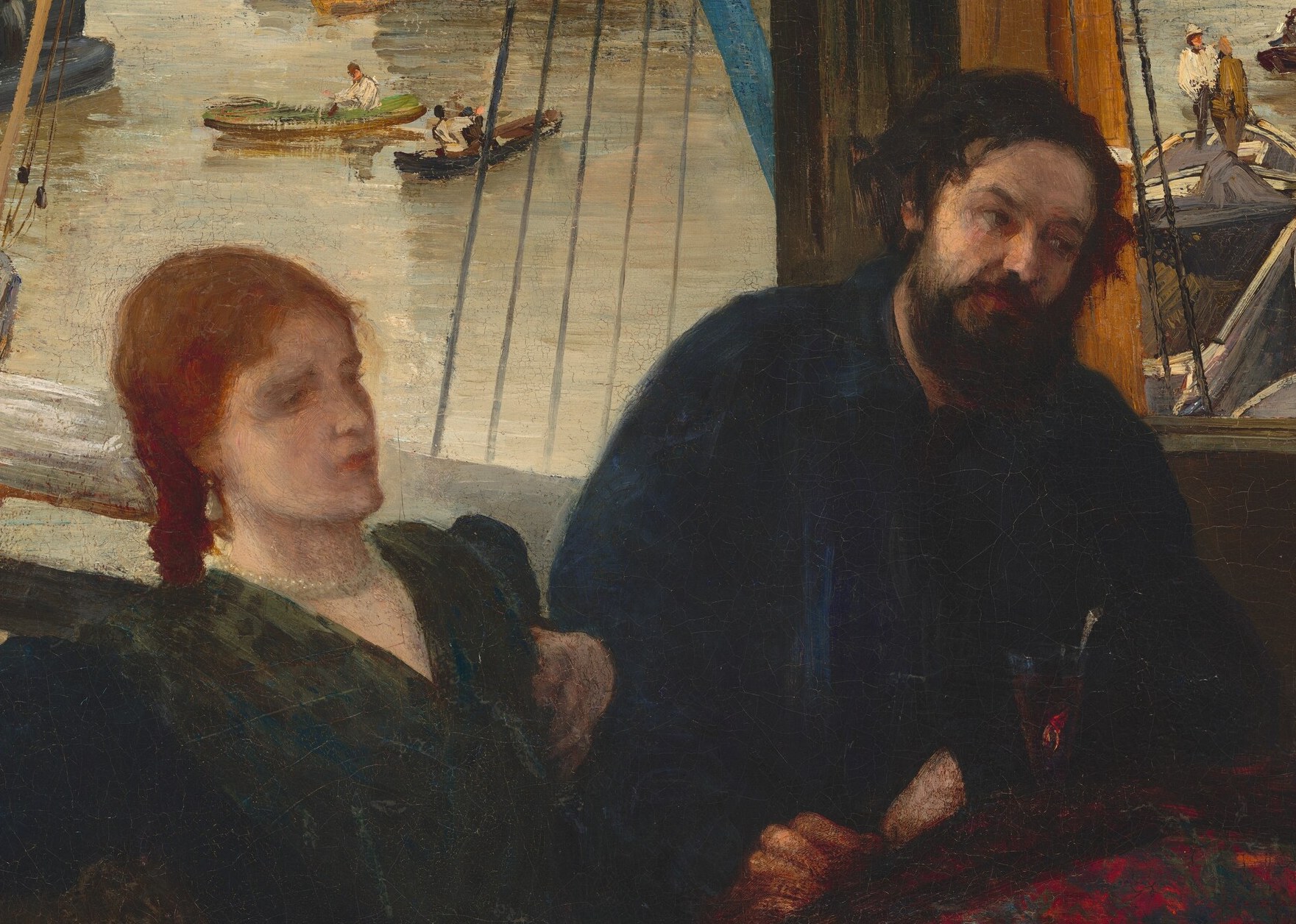
Observe the lively activity of the London docklands, captured with loose, almost sketchy brushstrokes that convey movement and life. The woman's red hair stands out as a distinct color accent against the painting's darker palette, highlighting Whistler's deliberate use of color.
Whistler’s distinctive butterfly signature, subtle yet recognizable, appears on *Wapping*. This personal emblem became synonymous with his work and aesthetic principles, symbolizing both his delicate artistic touch and his famously combative public persona.
Whistler’s influence extended to the art world and culture of his time, as he championed art that prioritized visual experience. What details in *Wapping* draw your eye most?
Details
Transcript
This painter rejected sentimentality for pure composition. He sought "art for art's sake," focusing on beauty alone. Look at the woman's red hair, a distinct accent. The busy dock scene uses loose, almost sketchy brushstrokes. His personal signature is a butterfly with a stinger. It symbolized his delicate art and combative public persona.