La Salle Taking Possession of the Land at the Mouth of the Arkansas. March 10, 1682 by Catlin, George
George Catlin, famed for his empathetic portraits of Native Americans, also painted historical scenes that depicted moments of colonial expansion. This work, *La Salle Taking Possession of the Land at the Mouth of the Arkansas*, from 1847/1848, is an oil on canvas and can be found in a museum collection.
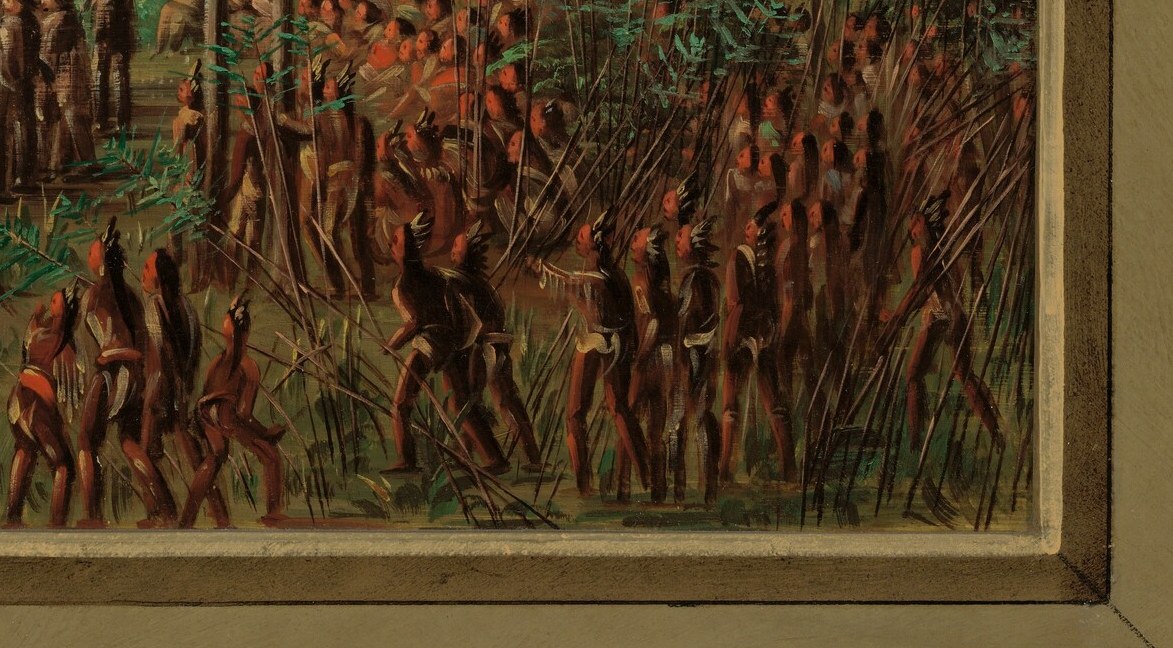
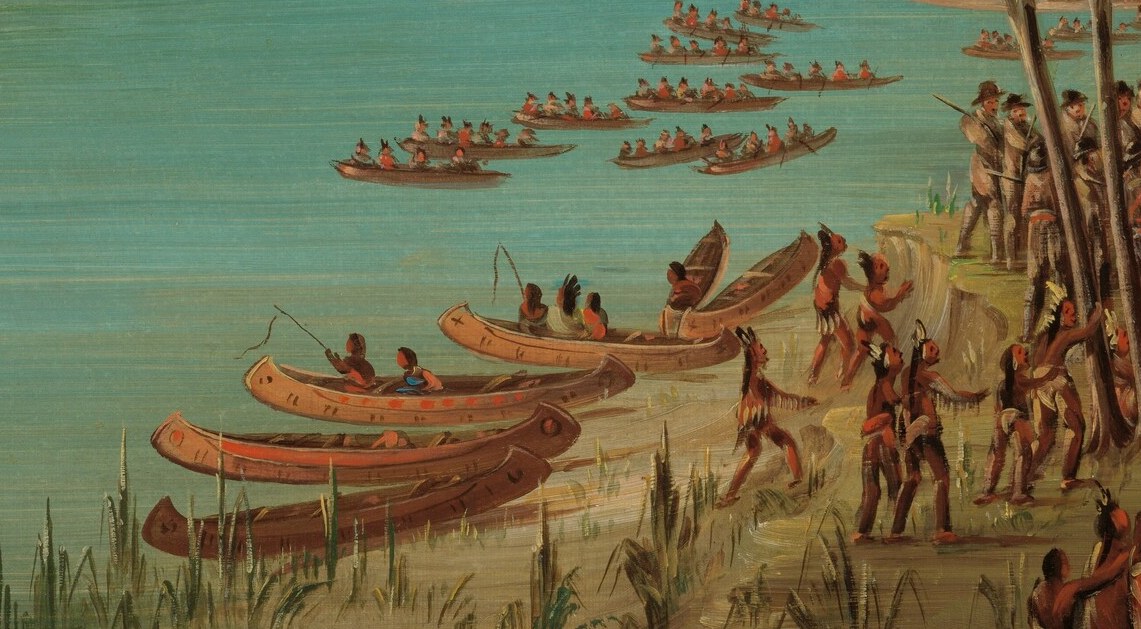
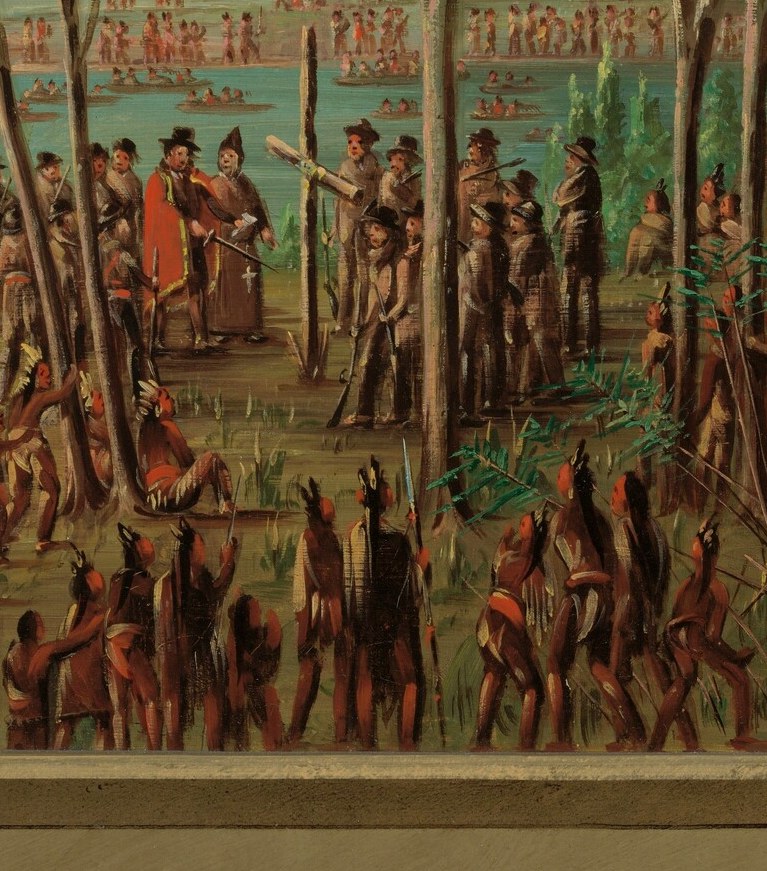
In the painting, the French explorer Robert Cavelier de La Salle is shown claiming territory near the Arkansas River's mouth in 1682. European explorers stand alongside him, while numerous Indigenous figures observe the event from the foreground and from canoes on the river.
Catlin, originally a lawyer, traveled extensively in the 1830s to document Indigenous cultures of the American West. Unlike many of his direct observational works, this painting was created years later, reconstructing a historical event from written accounts rather than firsthand experience.
The painting offers a glimpse into how historical narratives of territorial claims were depicted in the 19th century, reflecting the complex interactions between European expansion and already inhabited lands. What do you notice most about this historical scene?
Details
Transcript
George Catlin painted Indigenous life throughout the American West. But this painting, from 1848, reconstructs an earlier colonial event. In 1682, La Salle claimed this land for France. Indigenous figures observe La Salle and his explorers from the shore. Other Indigenous canoes approach, witnessing the moment. Catlin, a former lawyer, often depicted such historical narratives.