Omaha Chief, His Wife, and a Warrior by Catlin, George
George Catlin's "Omaha Chief, His Wife, and a Warrior" from 1861 is a group portrait, but it reads like a silent glossary of Plains Indian rank and identity. Painted late in the artist's career and held in the Smithsonian American Art Museum, it reflects his urgent, lifelong mission to document Native American life he was convinced would disappear.
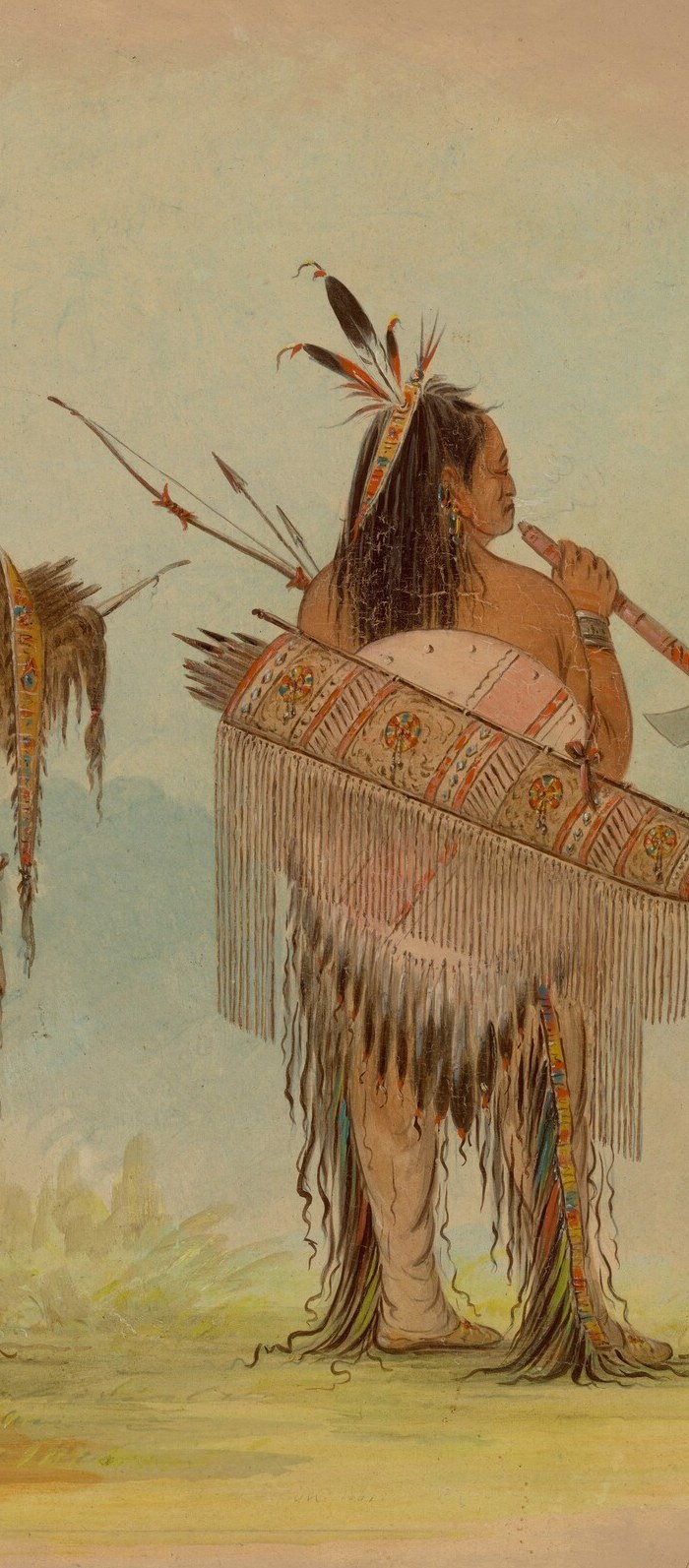
Start with the chief, standing center. The single tall eagle feather rising from his headdress is a precise statement: a war honor, earned and displayed. In his hand, an upright bow and arrows, an emblem of active leadership and the readiness to defend his people. Move right to the warrior. His shield bears painted designs that encode spiritual protection and clan symbolism, and his face paint sets him visually apart from the chief, marking a distinct station.
Catlin was a trained lawyer who abandoned the courtroom for the frontier. In the 1830s he made five extended trips west, painting hundreds of portraits and scenes. This late work distills his method: he removed all landscape distraction, placed his subjects in a European studio-style line, and let their clothing and objects speak. The chief's chest plate mixes traditional materials with trade beads, a quiet record of a people already adapting to new economic forces.
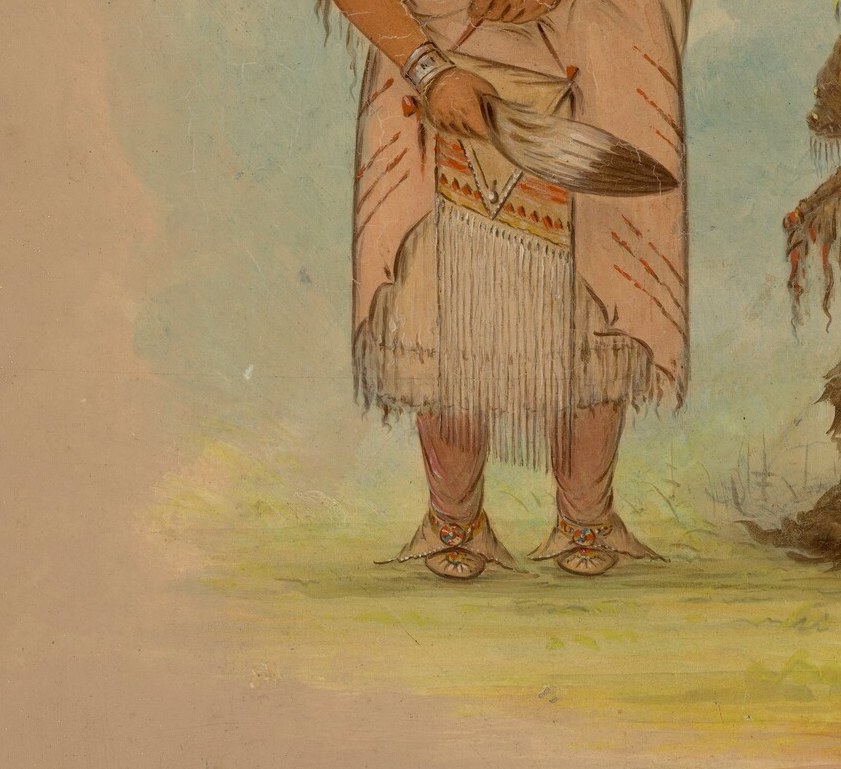
The bundle the wife holds at her side is easy to miss. It may be a bag or an infant carrier, a functional object of domestic life that Catlin treated with the same ethnographic care as a war shield. The whole painting is a code. Each feather, bead strand, and painted hide is a data point. Read together, they describe not just three individuals, but the structure of an Omaha community.
Details

Transcript
They posed for the painter in formal stillness. Look at the tall feather above the chief's head. This plume is a war honor. It marks a life of earned danger. The bow and arrows he holds upright signal active authority. The warrior on the right carries a shield painted with sacred symbols. His face paint and feathers distinguish him from the chief. The wife holds a bundle at her side, an object of daily life. Catlin painted this in 1861 to capture a world he thought was ending.