Adoration of the Magi from Seven Scenes from the Life of Christ by http://www.wikidata.org/.well-known/genid/e9a0f302549667a83ba63ebf5e45d942
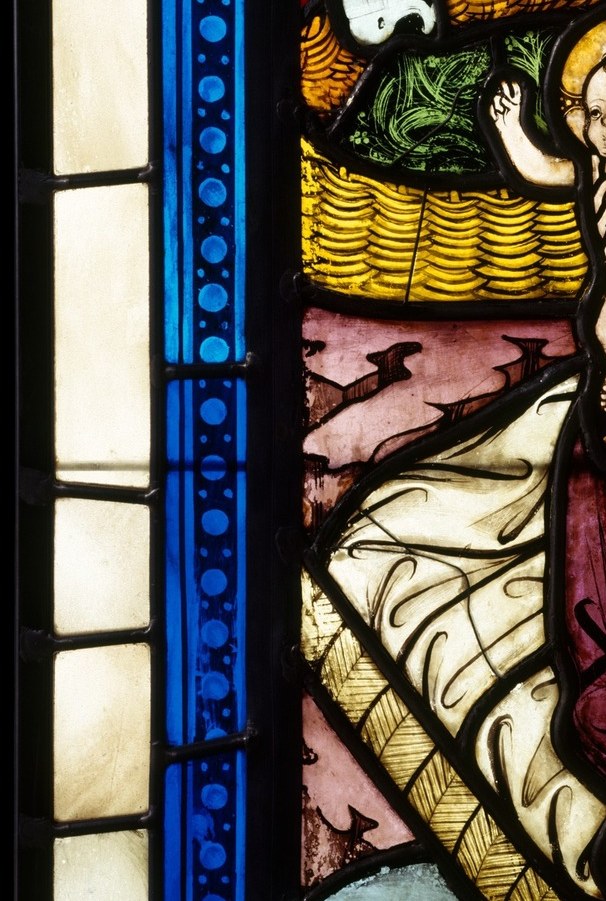
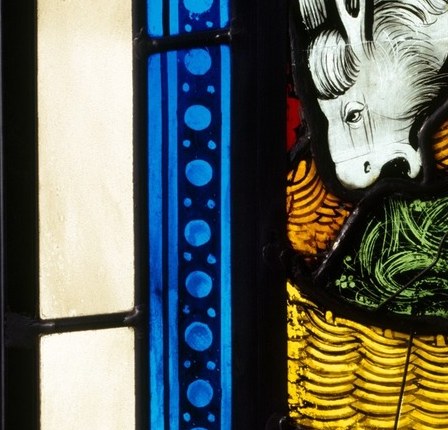
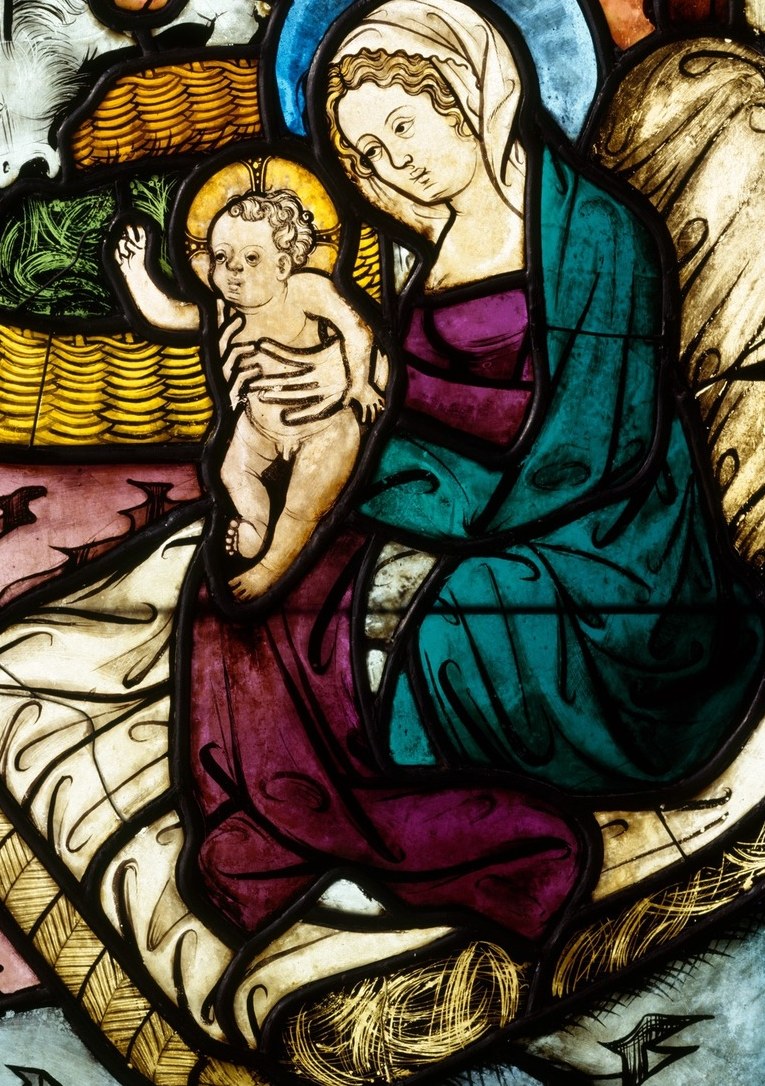
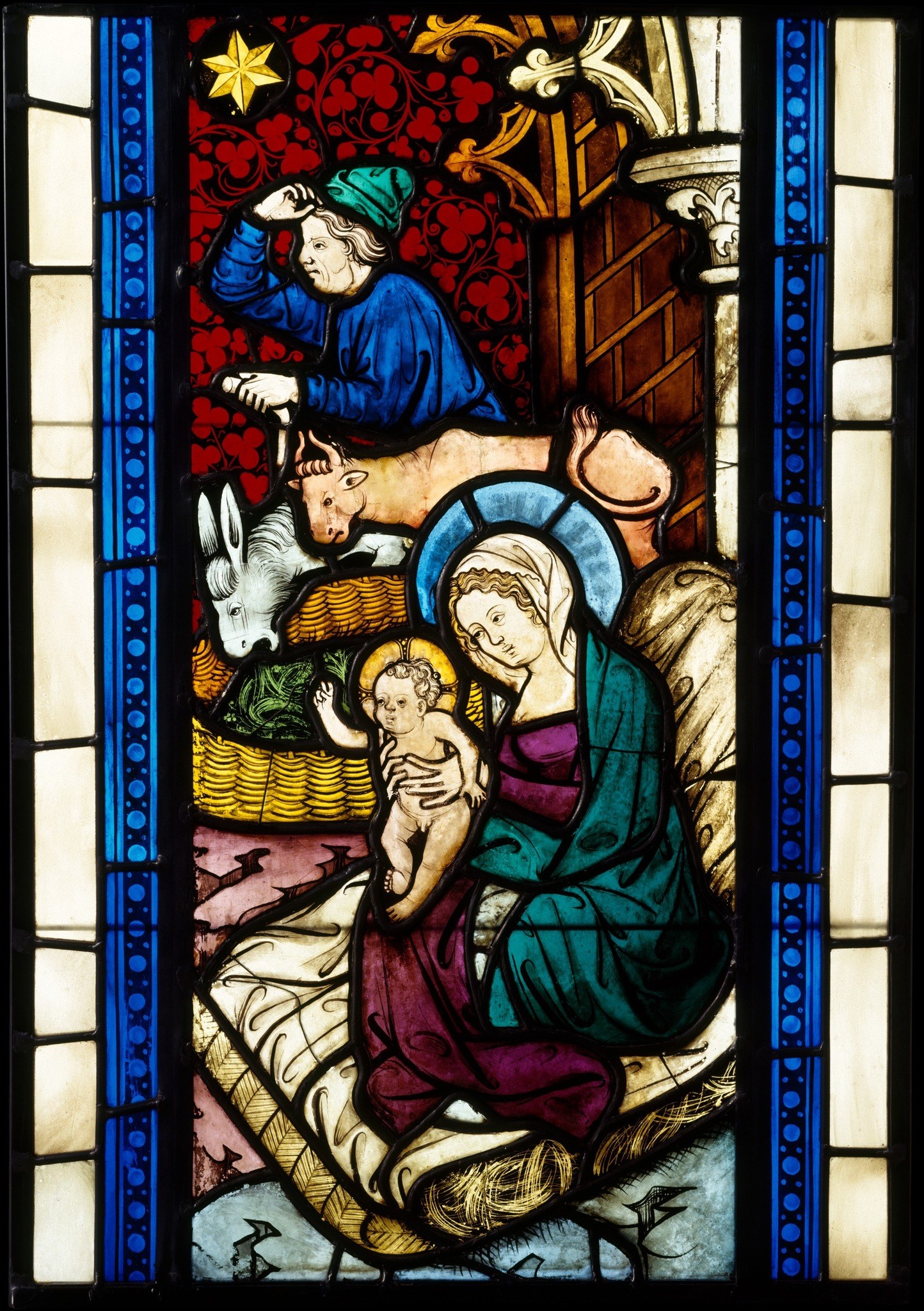
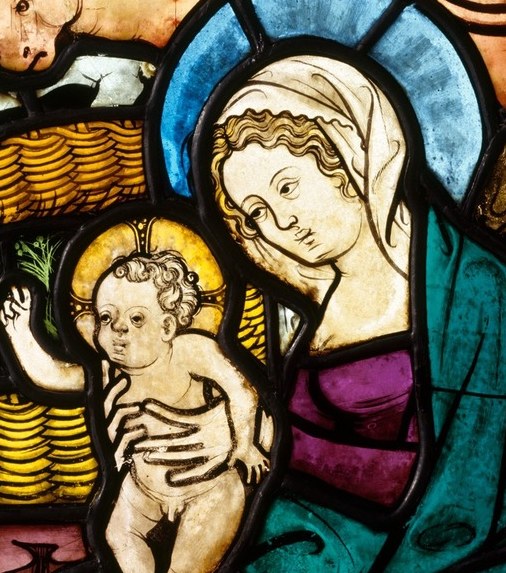
This is the Adoration of the Magi, a stained-glass panel from Lorraine, France, made around 1390. It belongs to a series called Seven Scenes from the Life of Christ. The panel shows one of the Magi kneeling before the Virgin Mary and the Christ Child, with Saint Joseph nearby and the Star of Bethlehem shining above. What makes it extraordinary is not only its age but the story of how it survived the twentieth century.
Look at the deep blue of Mary's mantle. That color required costly cobalt, a statement of both wealth and theology: blue was the color of the Queen of Heaven. Then look at the black lines running through the composition. Those are lead caming lines, the structural skeleton of a stained-glass window. They are not hidden; they are part of the design, placed by the glazier to direct your eye across the luminous narrative.
During World War I, as artillery fire crept toward the church in a Lorraine village, a master glazier named Grosdidier acted. He dismantled the fragile panels piece by piece. He wrapped the glass in newspaper and carried it under his coat across German lines to safety. A fifteenth-century Madonna and her child, saved by a man who understood that glass and lead could hold something worth risking a life for.
Centuries after it was made to teach a biblical story, the panel became part of a quieter, stranger story of devotion, one man carrying light through a war.
Details
Transcript
A king kneels in the straw before a newborn. He has removed his gold crown. The panel is made of stained glass, painted with light. World War I reached the church it was made for. A glazier named Grosdidier took it apart ahead of the shelling. He wrapped the pieces in newspaper and hid them under his coat. He carried Mary's face past German lines to save it.