Flowers and Fruit by American 19th Century
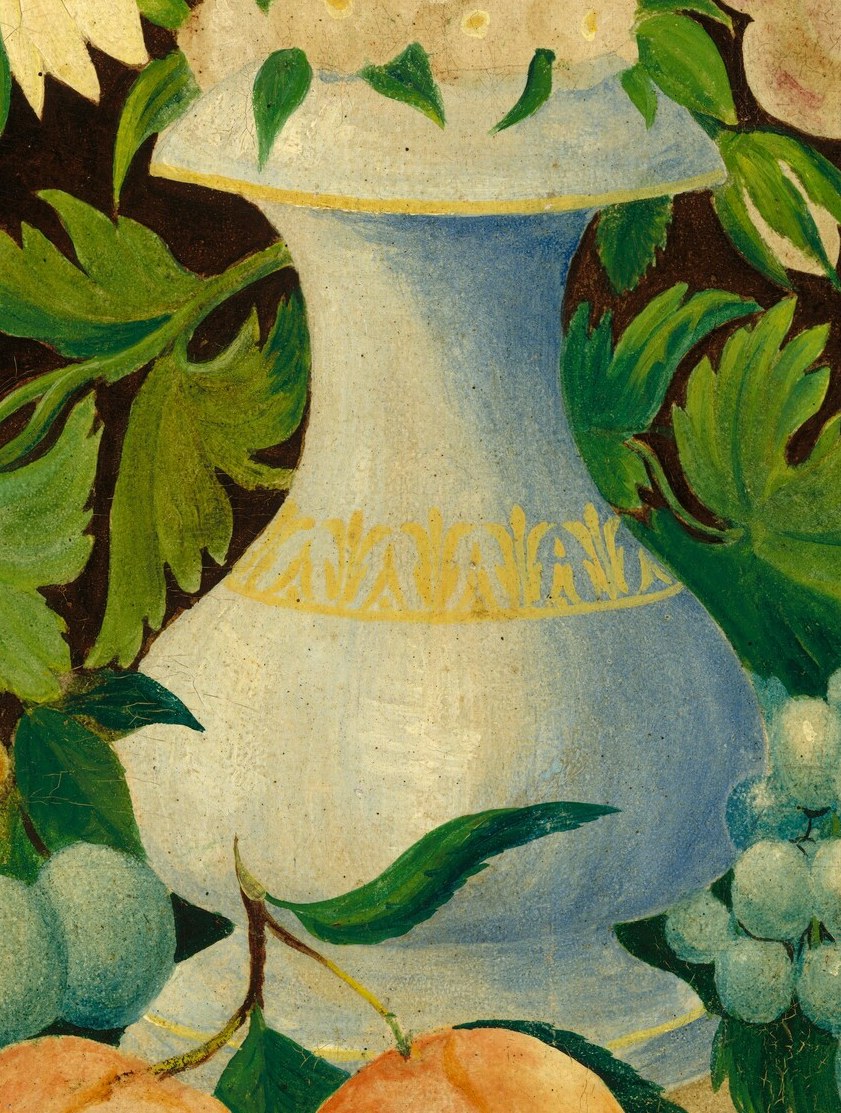
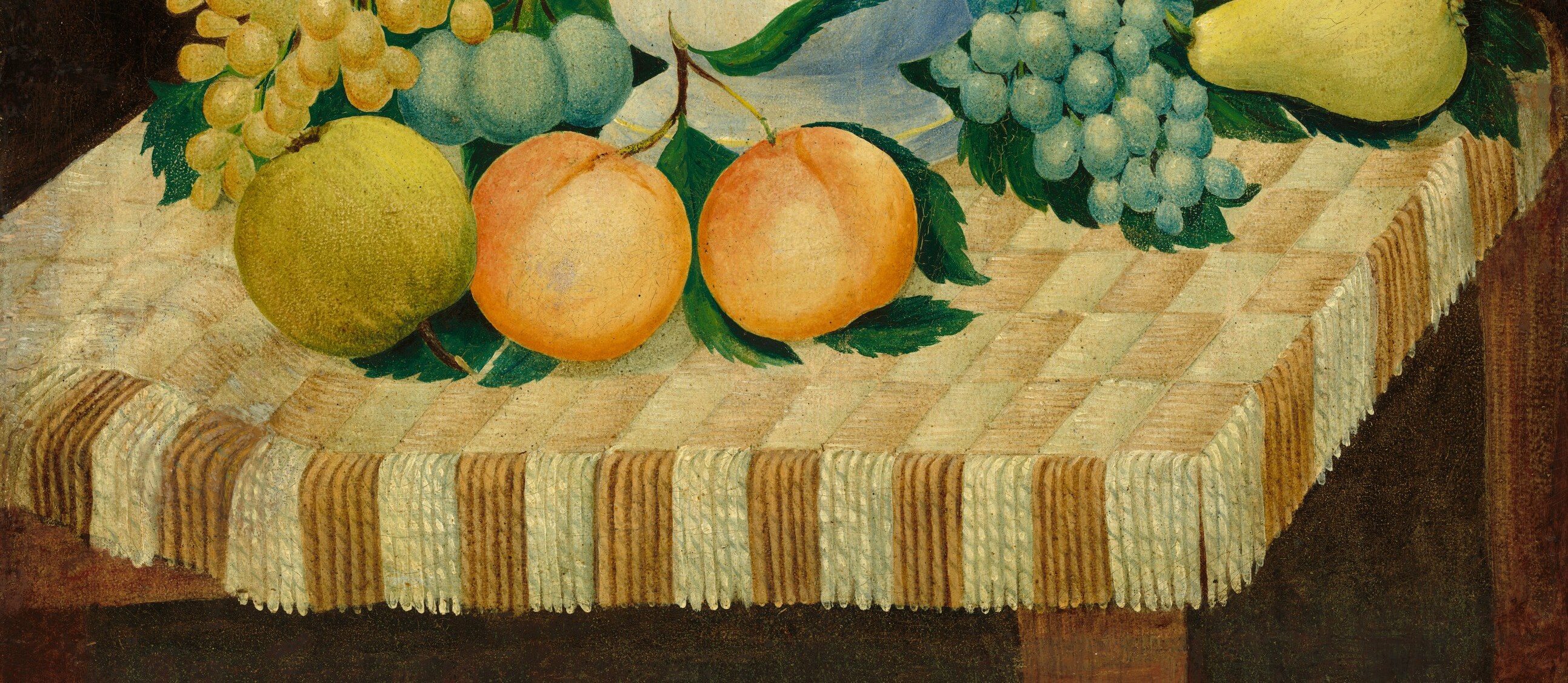
This is "Flowers and Fruit," an oil painting from around 1870 by an unknown 19th-century American artist. At first glance, it is a simple domestic still life: a white vase of flowers beside a spread of ripe fruit on a checkered cloth.
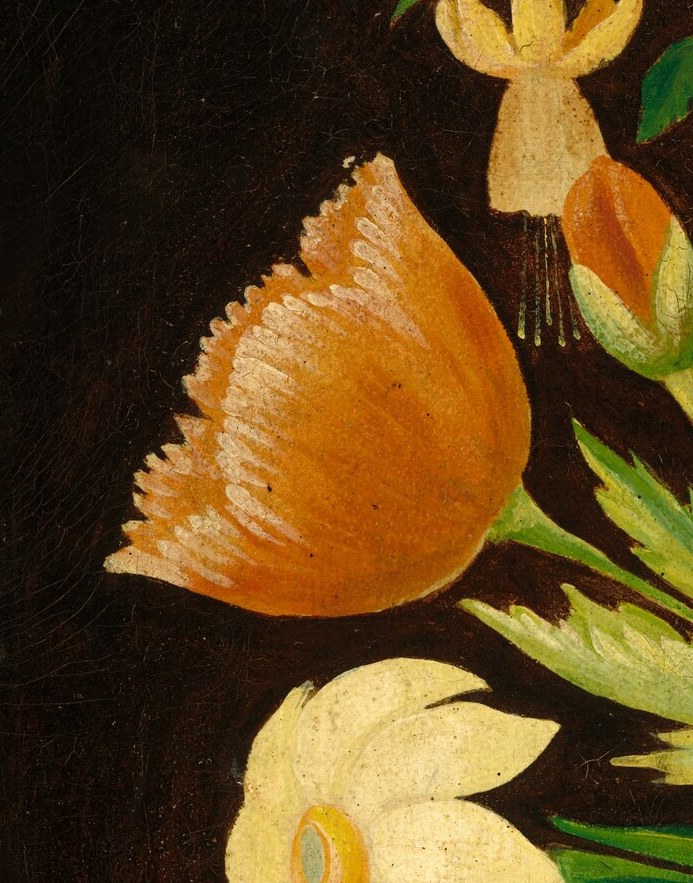
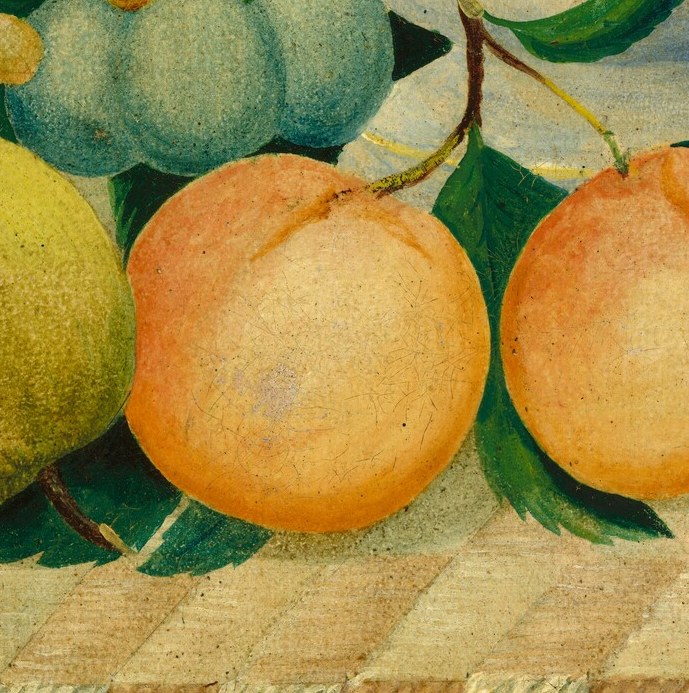
But the painting is a decoder puzzle. Each object carries a specific meaning. The drooping orange tulip, a flower more valuable than gold at one point in history, warns that extreme wealth is fleeting. The flawless peaches speak of perfection that a single bruise or hour can destroy. Even the cheerful white daisies are already softening at the petals' edges.
This visual language of coded objects, often called the "language of flowers," was widely understood by Victorian-era audiences. A bouquet or a bowl of fruit was not merely decoration; it was a quiet philosophical statement on mortality, morality, and the passage of time. The artist balances this weight with a lightness of touch, using loose, almost impressionistic brushwork on the tablecloth to suggest a fleeting moment captured in real time.
It all points to a single, gentle reminder: life is generous and beautiful, and precisely for that reason, it must not be taken for granted. What object in this painting do you notice first?
Details
Transcript
A lavish bouquet. Ripe fruit. It looks like a celebration of plenty. But 19th-century viewers knew this was a coded message. The orange tulip on the left has already begun to droop. Tulips were the most expensive flower. Their fall whispers: all wealth fades. The peaches are perfect. But a bruised peach rots in a single afternoon. And the white daisies? Pure, simple, and already wilting at the edges. The code adds up to this: life is abundant, beautiful, and impossibly short.