Fruit Still Life with Chinese Export Basket by Peale, James
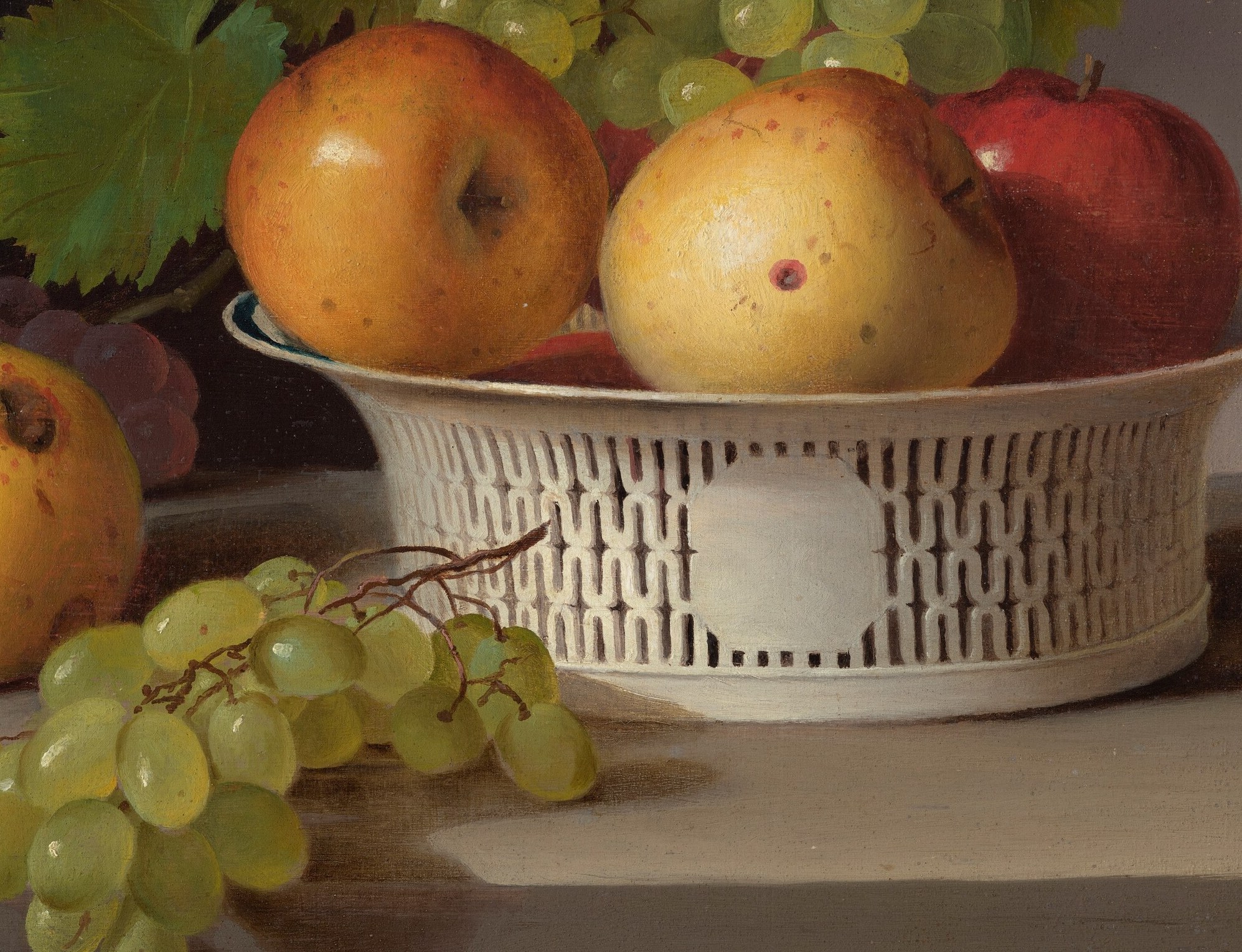
This is Fruit Still Life with Chinese Export Basket, painted by James Peale in 1824. It hangs in a quiet place in American art history, but what it witnesses is anything but quiet: the moment American households began filling with objects from the other side of the planet.
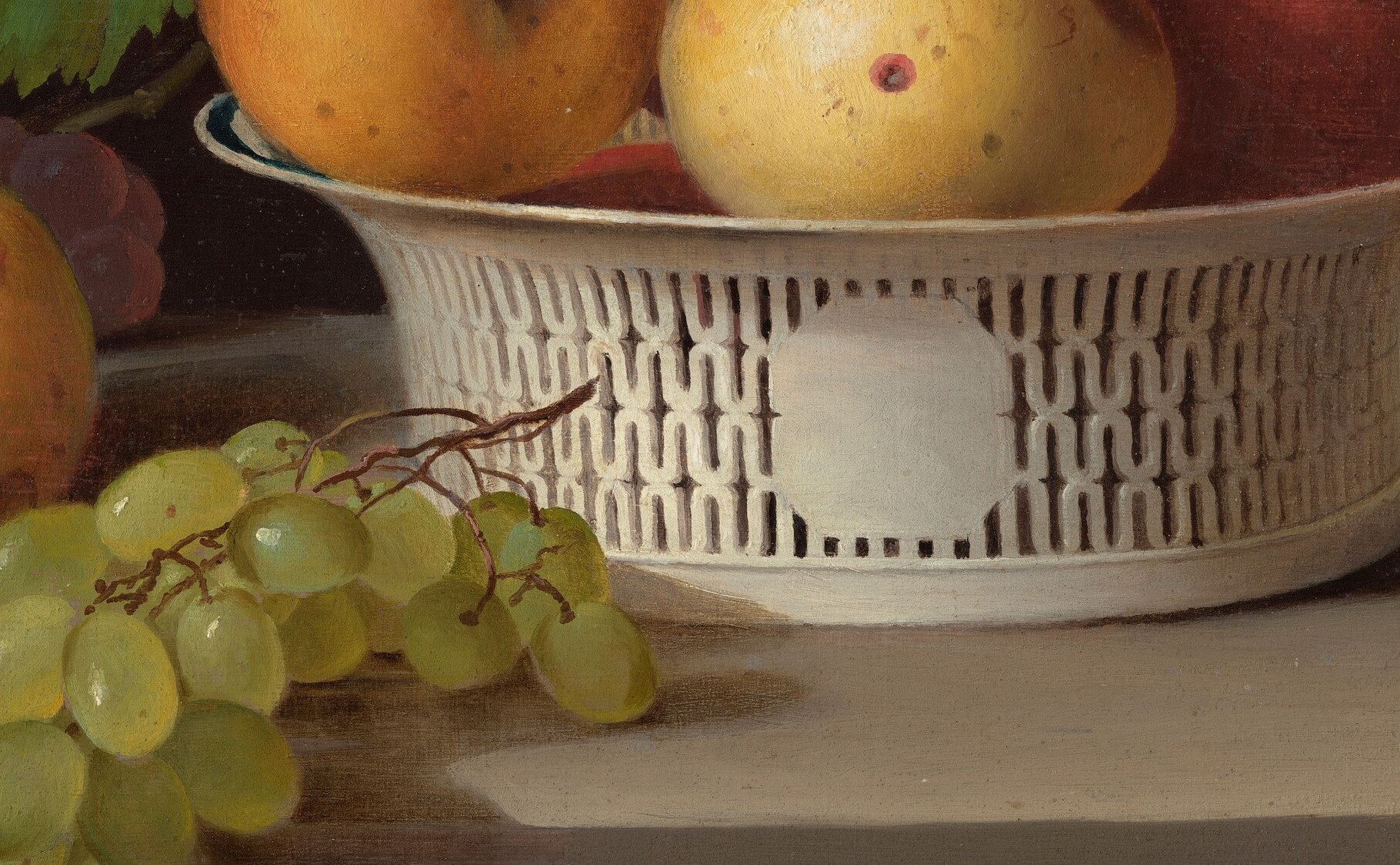
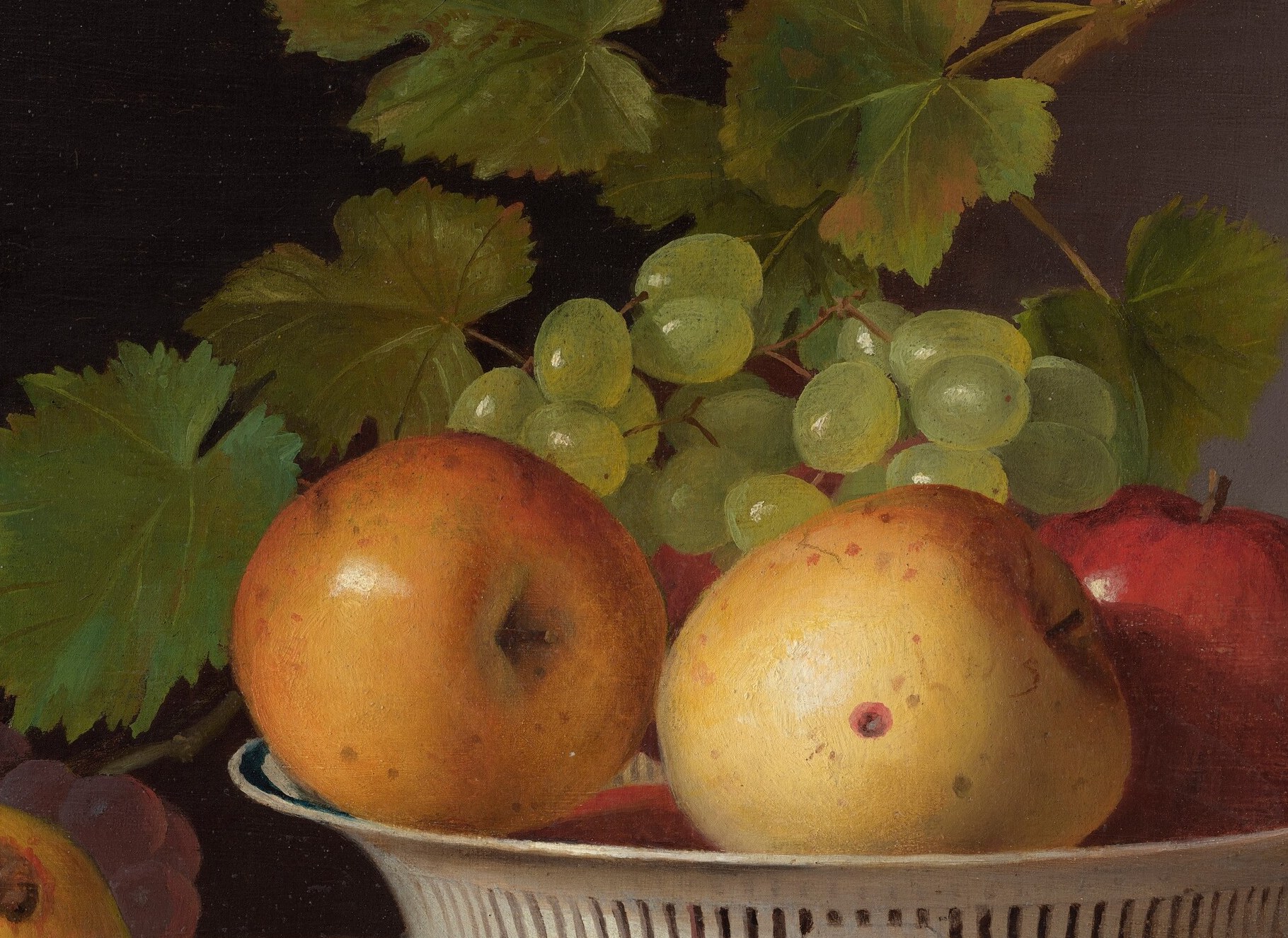
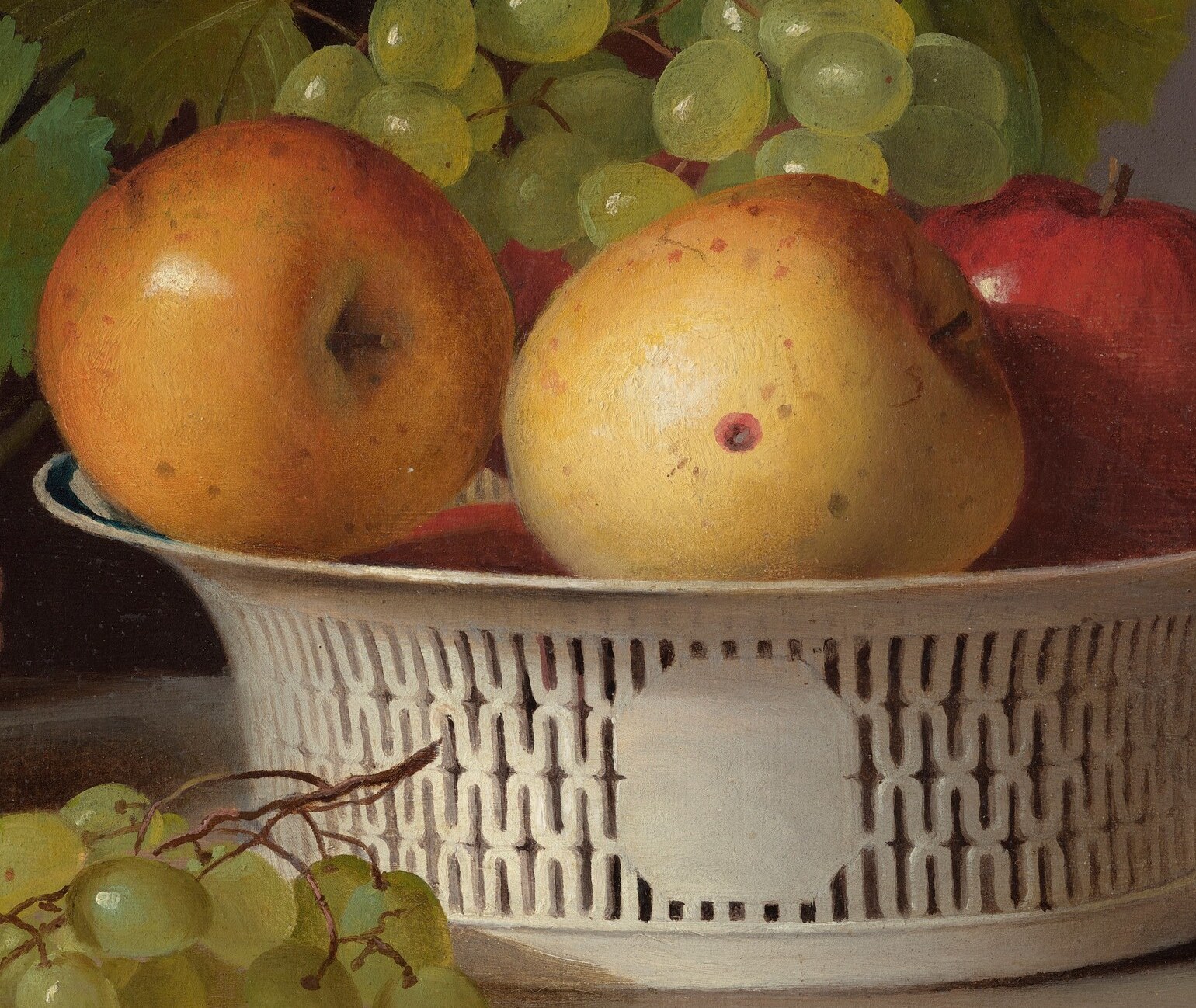
Look first at the basket itself. That open lattice body is Chinese export porcelain, laboriously reticulated by hand in Canton and shipped across the Pacific to Philadelphia. Then look at what it holds: American peaches and grapes, each one painted with its own distinct blush and translucent highlight. Peale is showing you two worlds meeting on one table.
James Peale was a member of the extraordinary Peale family of artists, long known for miniature portraiture. He turned seriously to still life late in life. This panel, painted in his final year, was his last word: a careful record of light on fruit skin and porcelain, made with the patience of a man who had spent decades teaching his eye to see.
The painting captures a Federalist-era truth without saying it aloud. The Chinese basket was a luxury import, a sign of worldly taste. The fruit inside it was local and seasonal. Together they mark a household confident enough to reach across oceans, and domestic enough to grow its own peaches. That tension, between faraway and homegrown, is exactly what Peale left us.
Details
Transcript
Philadelphia, 1824. A new nation is trading with the world. The basket is Chinese export porcelain, pierced by hand in Canton. It arrived in an American port, carrying status as much as goods. The fruit it holds grew in Pennsylvania orchards. James Peale painted every blush, every translucent grape, from life. He spent his final year on this small panel, and died soon after. The porcelain and the peaches still sit together, an ocean crossed.