The Wolf Hunt by Paulus Potter
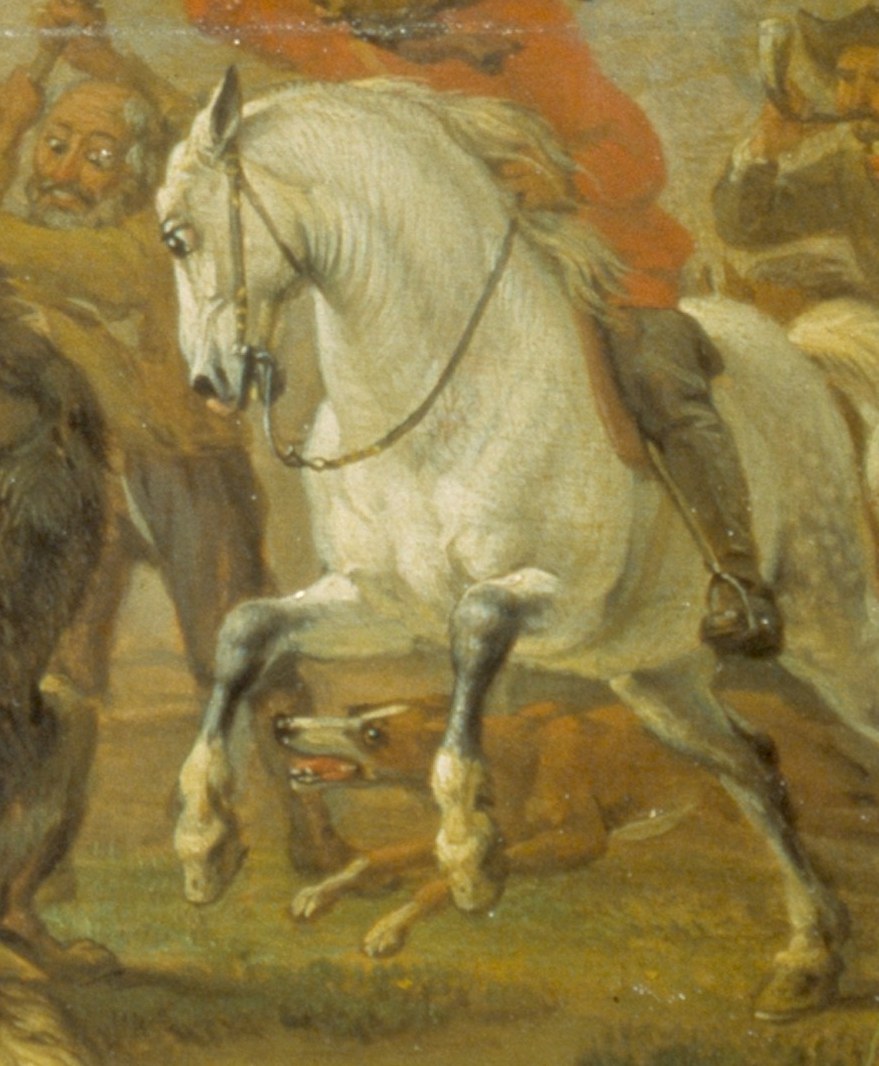
Paulus Potter, a Dutch Golden Age painter, created 'The Wolf Hunt' around 1650, capturing a dynamic and chaotic confrontation between humans and a powerful wolf. Housed in the State Hermitage Museum, this oil painting exemplifies Potter's specialization in animal subjects.
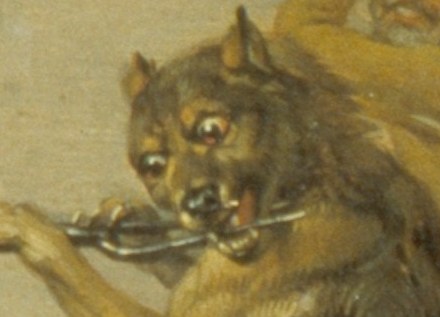
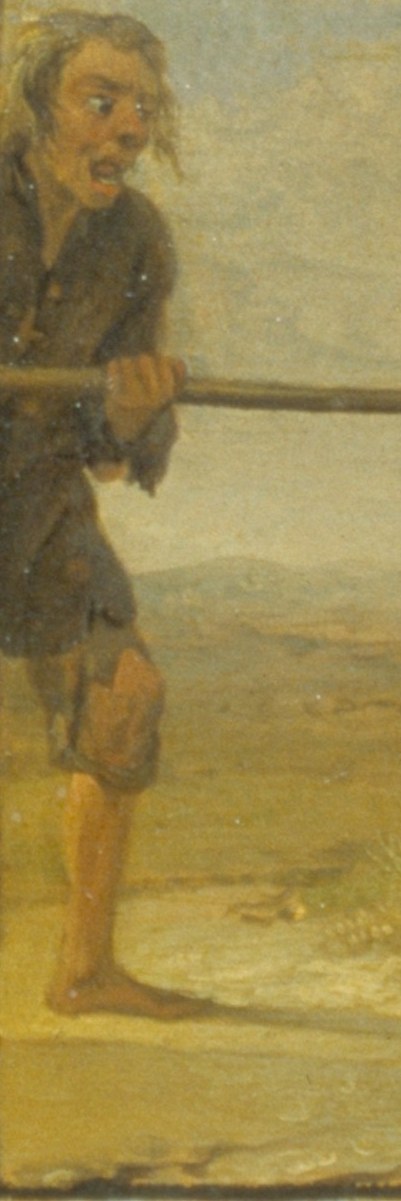
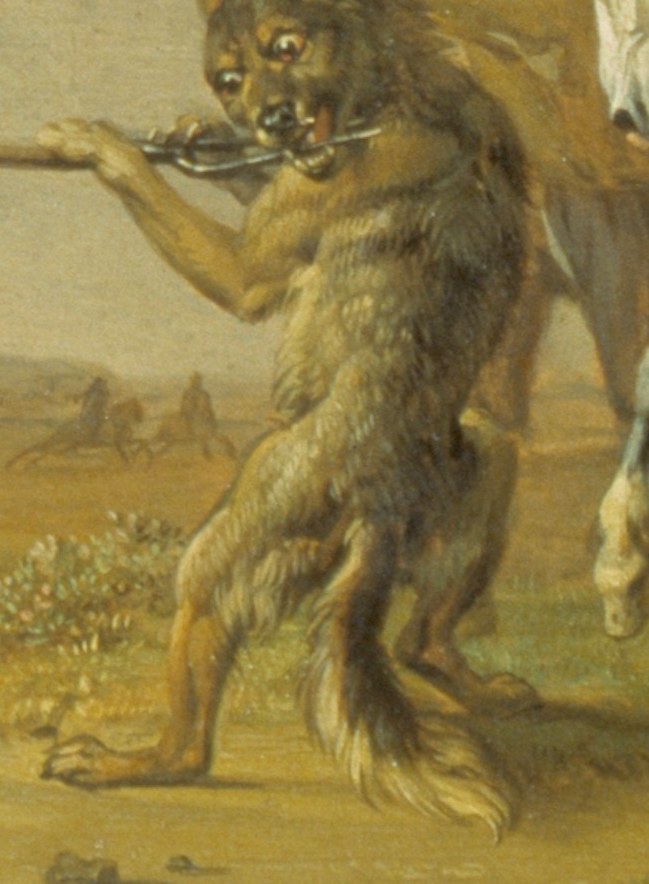
Look closely at the wolf's snarling head; its bared teeth and wide eyes convey a raw, primal fear and aggression. The men, armed with poles and swords, are depicted with expressions of urgency and fear, desperate to subdue the formidable animal.
Potter's career was remarkably brief, as he died from tuberculosis at just 28 years old. Despite his short life, he was prolific, producing around 100 paintings, often featuring animals from a low vantage point, giving his creatures a sense of immediacy and power.
His work stands as a testament to a young artist's intense vision, bringing life and drama to the natural world. What feelings does this intense struggle evoke in you?
Details
Transcript
This painter lived only 28 years. Yet he made 100 paintings of animals and landscapes. Look at the wolf, trapped but fighting back. Its wide eyes and bared teeth show primal fear and aggression. The men, with swords and poles, are desperate to subdue it. This intense drama was created by a very young artist.