A Miracle of Saint Benedict by French 15th Century
This 15th-century painting, "A Miracle of Saint Benedict," depicts a remarkable event, likely from the saint's life. Painted around 1480 by an unknown French artist, this oil on oak panel is housed in a prominent museum.
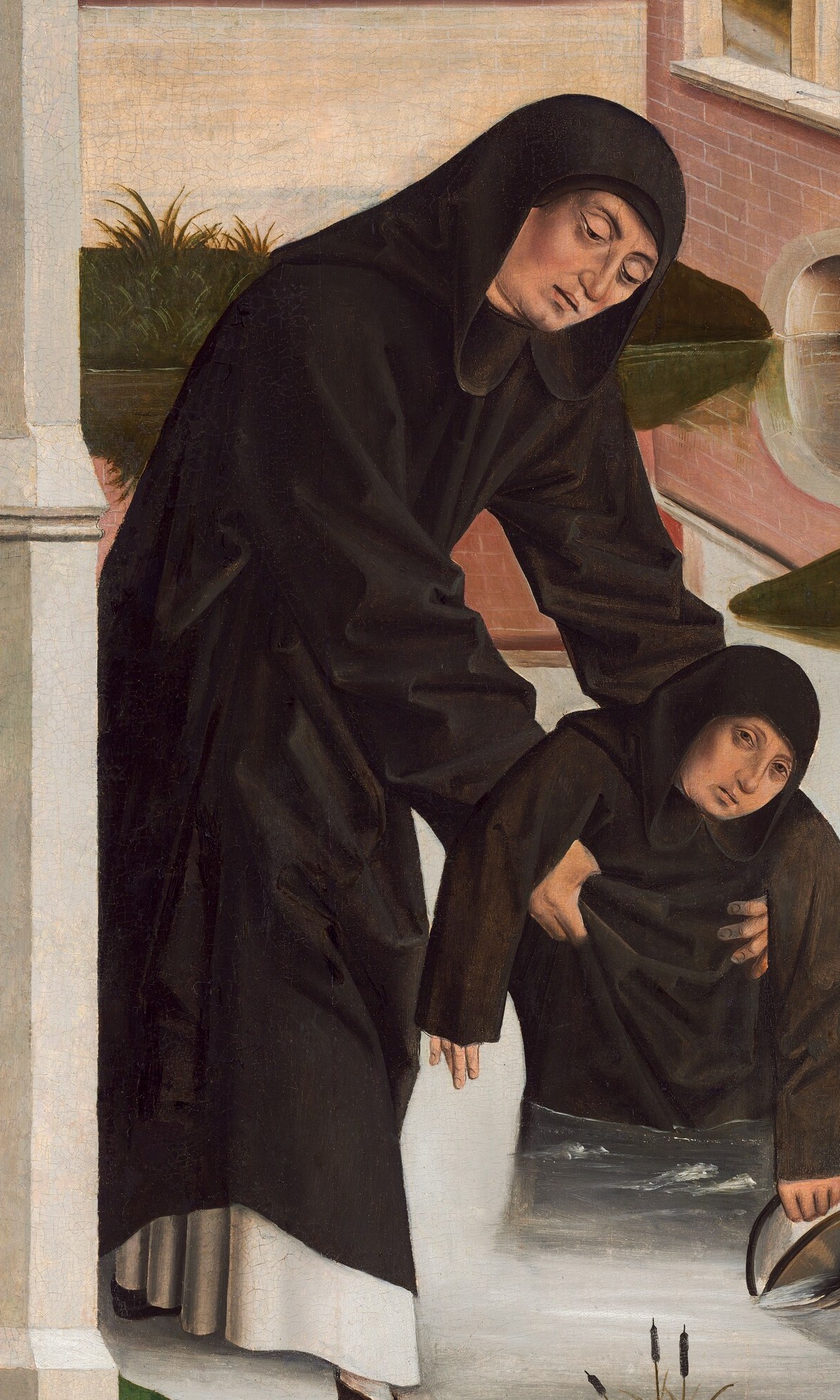
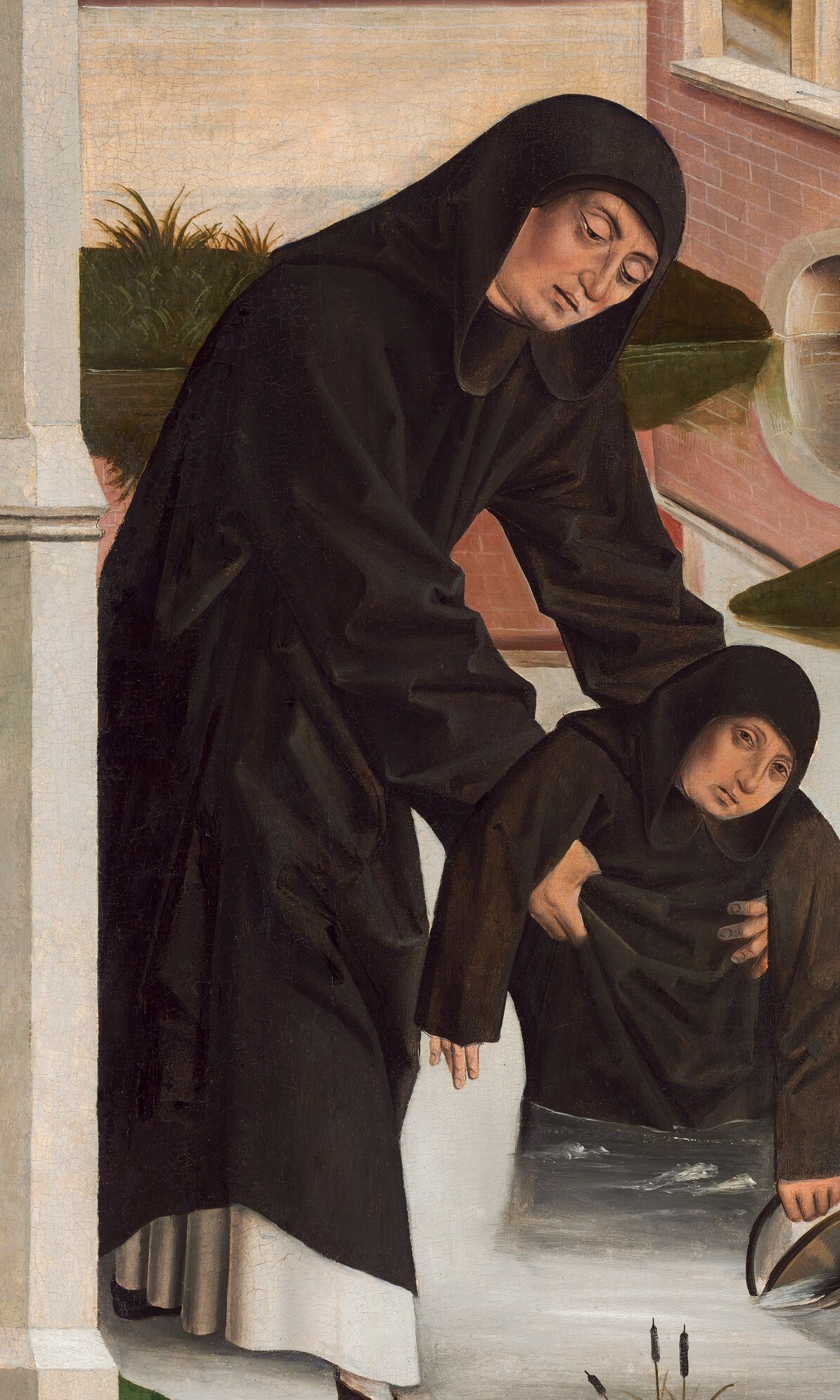
Most viewers focus on the dramatic rescue unfolding in the right panel, where one woman pulls another from a turbulent body of water, all while Saint Benedict observes serenely from his interior setting. The artist used a technique called glazing, applying thin, translucent layers of paint to achieve deep colors and subtle tones.
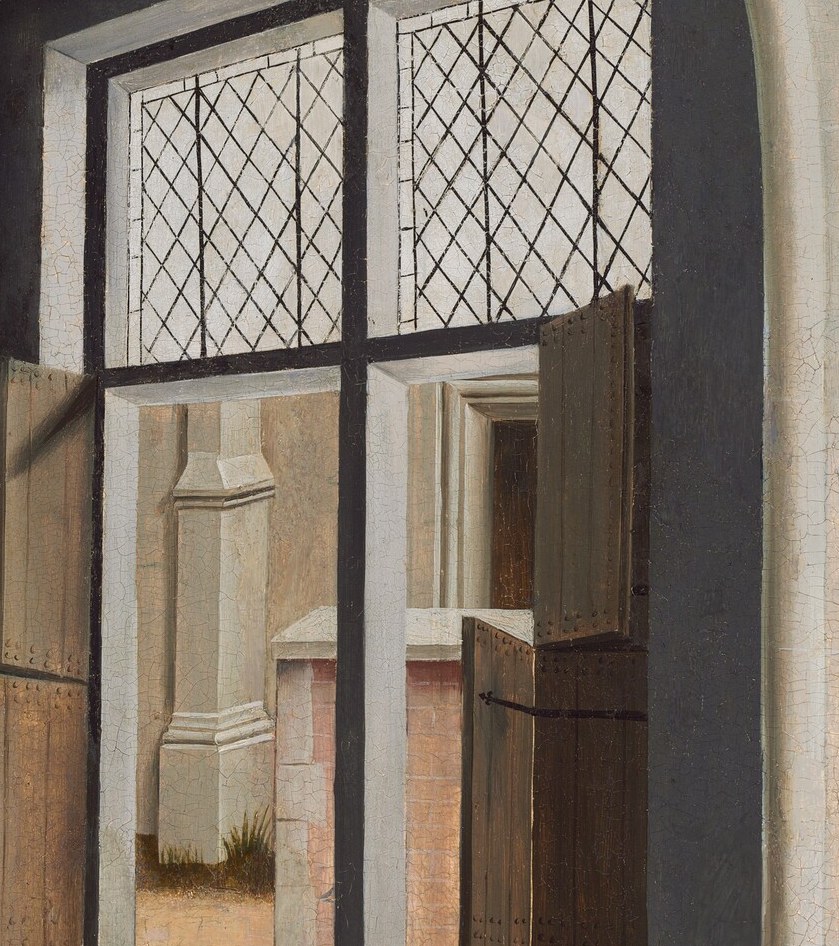
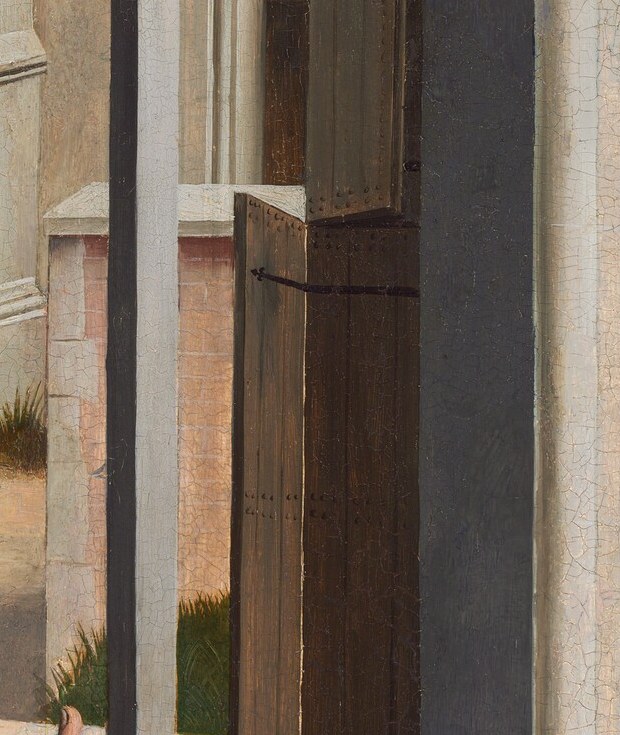
But the true hidden detail is in the small diamond-paned window to Saint Benedict's left. While the other panes reflect light, this particular pane subtly mirrors the very miracle happening outside, a clever visual trick by the artist to connect the two scenes.
Did you spot this tiny reflection on your first look?
Details
Transcript
This 15th-century painting tells the story of a miracle. Saint Benedict, identified by his halo, watches the scene. On the right, a woman rescues another from the water. The painting uses glazing, thin layers of oil paint. Now, look closely at this windowpane. It's the only one that reflects the miracle outside.