明/清 佚名 李遠(僞款) 仿夏珪江山清遠圖 卷|Landscape by After Xia Gui
Landscape, a handscroll in ink on silk, is an anonymous Ming or Qing dynasty imitation of the great 13th-century master Xia Gui. It lives at the Met.
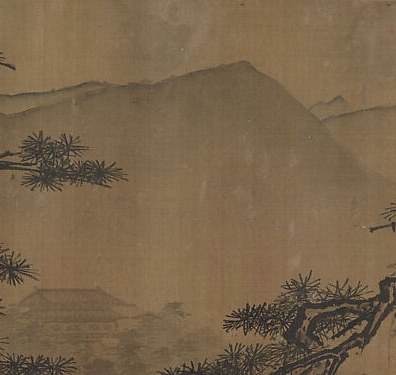
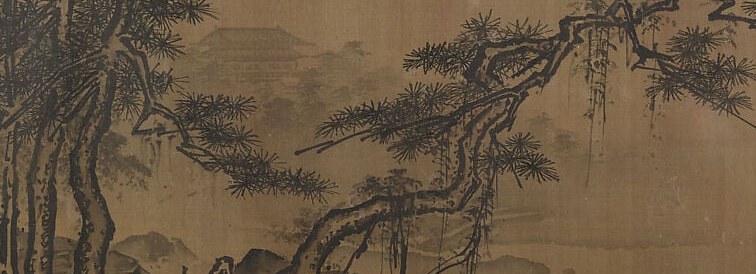
The scroll organizes a vast view around two kinds of emptiness. The water that recedes into the mist and the sky above it are raw, unpainted silk. That bare ground IS the image. The illusion of infinite depth is produced entirely by what the painter chooses not to touch.
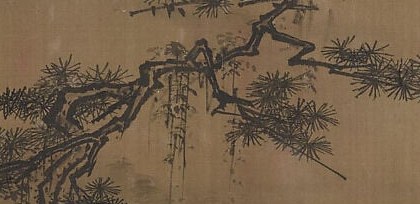
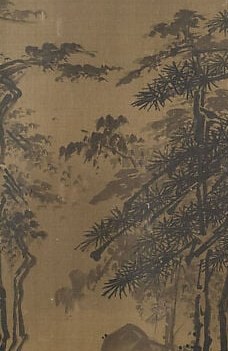
Xia Gui's original works were celebrated for their sparse, one-corner compositions and generous negative space. This later artist, working perhaps four or five centuries afterward, followed the master's structure faithfully but filled nearly every inch with dense, meticulous brushwork. The twisted pine trunks are a forest of individual bristle marks; the rocky outcrops are built from layered axe-cut texture strokes. The taste had shifted from suggestion to description.
Look at the barely-visible trees on the far shore, dissolving into haze. Then look at the dark, sharp shoreline in the foreground. The whole illusion of atmosphere hangs between those two edges. A question worth sitting with: if you were copying a masterpiece, would you have been able to leave the silk alone?
Details

Transcript
This scroll pretends to be a century older than it is. It copies a master named Xia Gui, who painted around 1200. Xia Gui's real trick was what he did not paint. This water is raw silk. No ink at all. And this sky: also just untouched material. The emptiness is what makes the distance feel vast. But this imitator, centuries later, could not resist filling the frame.