The Muse: History by Jean Baptiste Camille Corot
Jean-Baptiste-Camille Corot's *The Muse: History*, painted in 1865, is more than a classical portrait. This oil painting at The Metropolitan Museum of Art invites viewers to uncover its quiet depths.
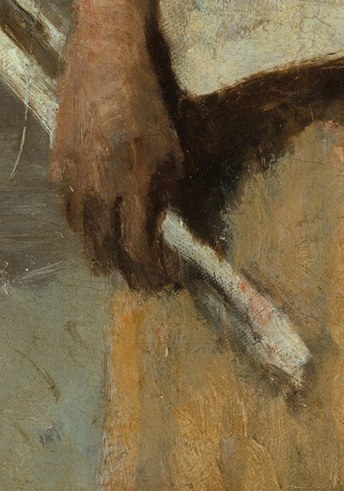
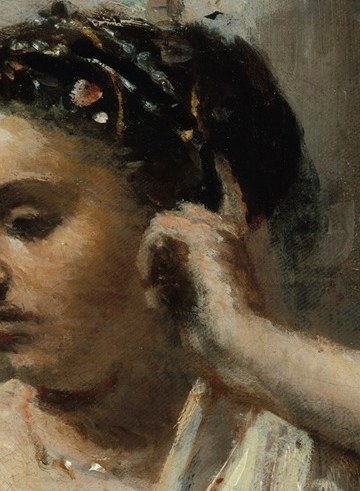
At first glance, a contemplative woman dominates the scene, personifying History with her hand raised to her ear, listening intently to the echoes of the past. She holds rolled scrolls, symbolic of historical documents.
But a careful look reveals a subtle, almost ethereal figure in the background. This faint, shadowy presence, intentionally painted by Corot, adds a layer of mystery, suggesting forgotten narratives or the specters of time itself. Corot, known for bridging classical traditions and early Impressionism, infused his work with such nuanced details.
What stories do you imagine this hidden figure represents?
Details
Transcript
This woman personifies History, listening to the past. Her hand to her ear emphasizes her focused attention. She holds scrolls, ancient records of events. But look closely, there is someone else here. A faint, ghost-like figure emerges from the shadows. Corot painted this subtle presence, perhaps a forgotten story.