Mountain Landscape with Bridge by Gainsborough, Thomas
Thomas Gainsborough painted 'Mountain Landscape with Bridge' around 1784, not because he needed the work, but because he needed the woods. He was a founding member of the Royal Academy and the most fashionable portrait painter in 18th-century London, a rival to Joshua Reynolds. Yet he famously called his clients 'the curs'd Faces' and spent his free hours in his head, composing landscapes like this one, which he painted for his own satisfaction rather than for exhibition or sale.
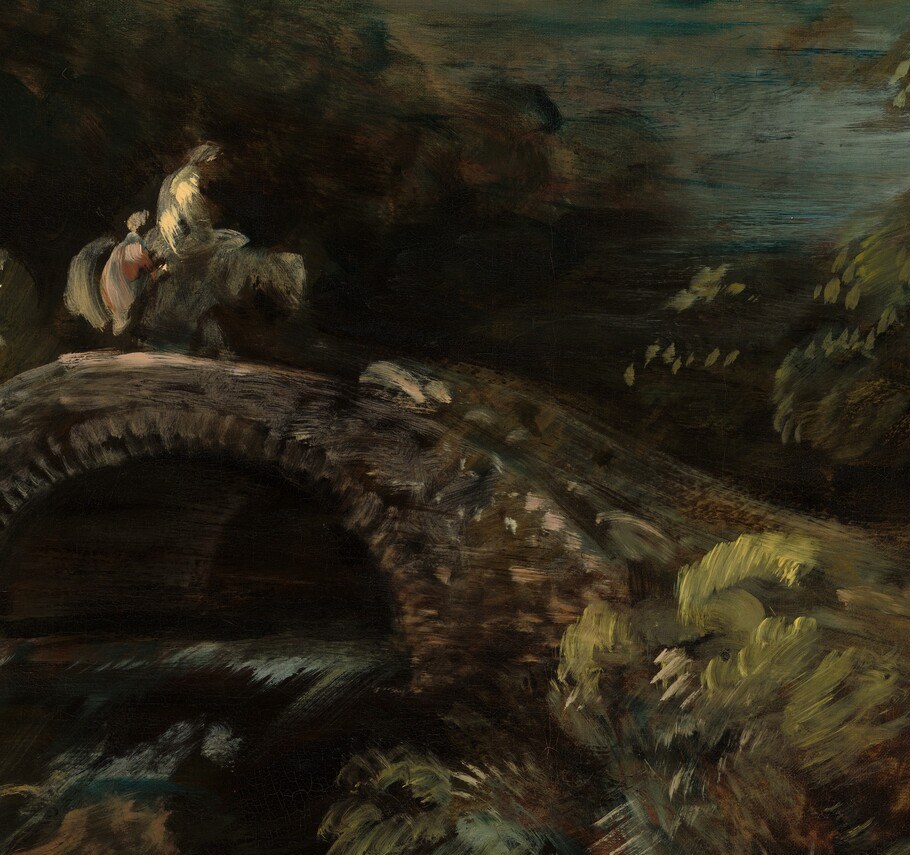
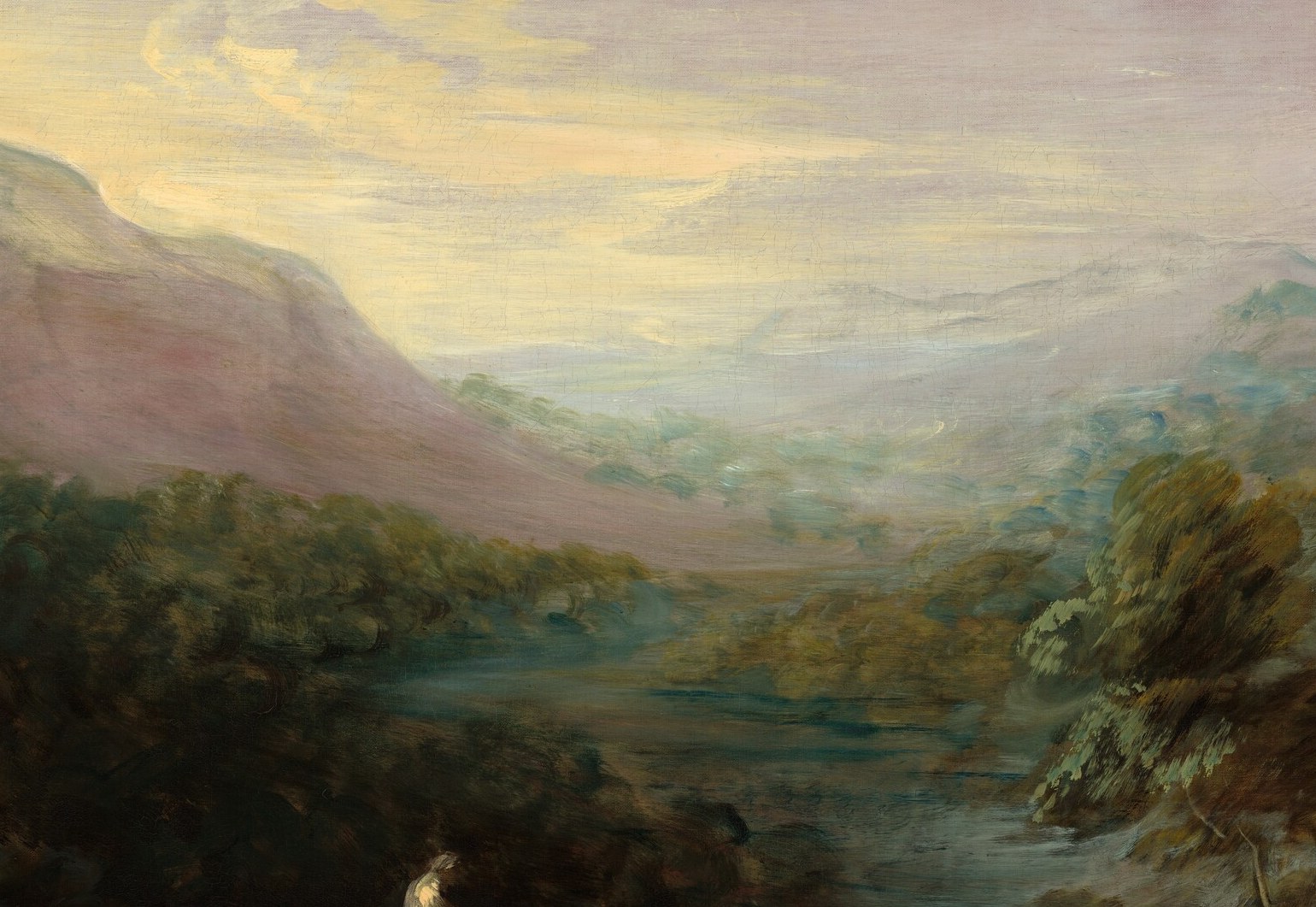
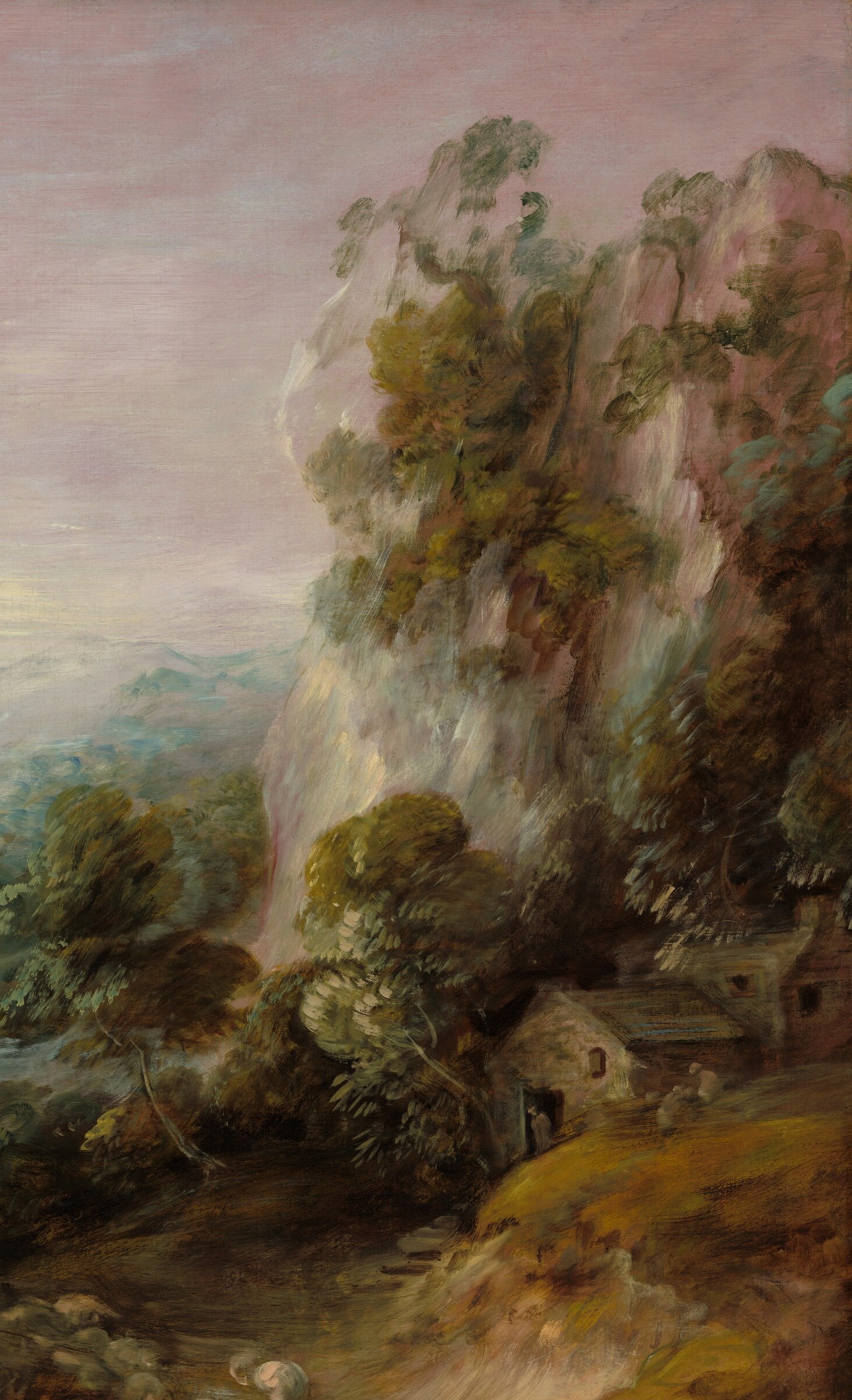
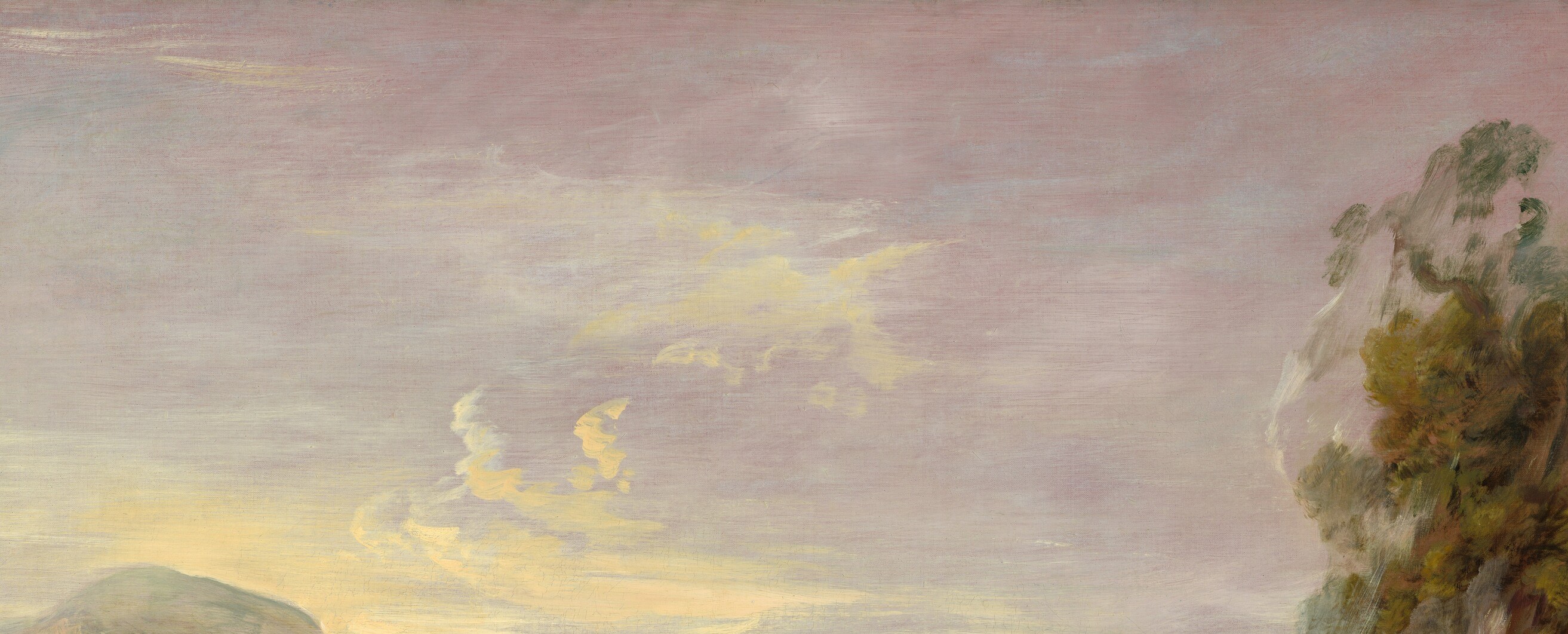
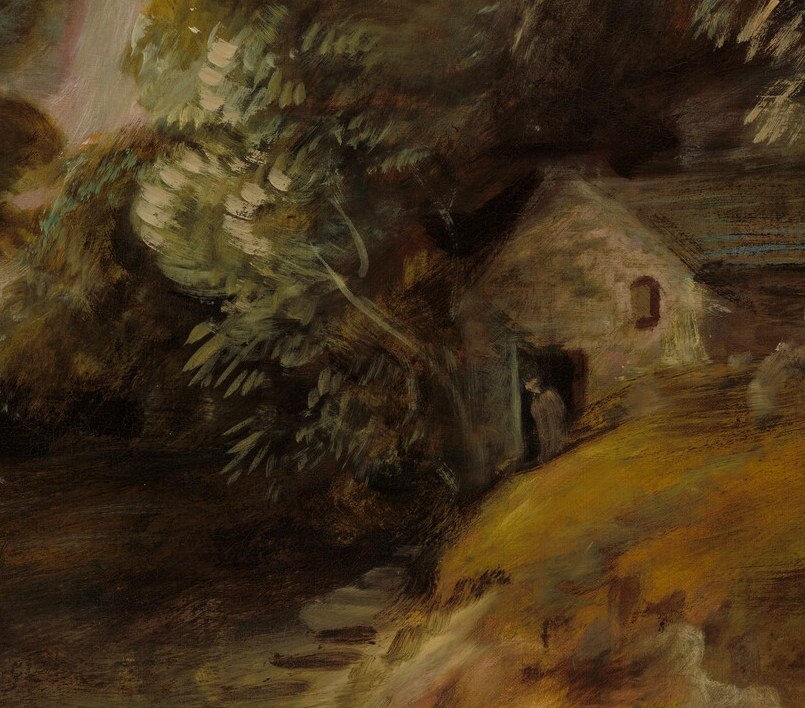
The painting pulls you through a warm, hazy valley, across a stone bridge, and toward a distant mountain. Gainsborough's signature light, a pale gold-lavender glow, fills the upper canvas and catches the river below. The dense mass of trees on the right acts as a theatrical curtain, pushing your eye into the scene. Tucked against the cliff on that same dark side, nearly swallowed by shadow, sits a tiny cottage you can miss entirely on a first look.
This is a picture of Gainsborough's own refuge. While his portraits of aristocrats paid the bills, landscapes let him work with a feather-light touch, almost like watercolor in oil. He was, alongside Richard Wilson, the originator of the British landscape tradition, proving that English scenery could hold its own against the Italian views that had dominated taste. The painting now lives in the collection of the National Gallery of Art in Washington, D.C.
Next time you see a crisp, formal 18th-century portrait, remember the painter might have been dreaming of a quiet river and a hidden cottage in the trees.
Details
Transcript
A stone bridge, a winding river, a golden sky. Two small figures cross into the valley. The artist painted this not for money, but for escape. Gainsborough was the most sought-after portraitist in England. He called his clients 'the curs'd Faces' and fled to landscapes like this one. Look for the cottage hidden in the shadow of the cliff. A human life, tucked away from the noise.