Klatsop Indians by Catlin, George
This is *Klatsop Indians*, painted by George Catlin between 1855 and 1869, now in the collection of the Smithsonian American Art Museum. Catlin was an American lawyer who taught himself to paint and, convinced that Native American cultures were on the brink of extinction, set out across the frontier five times in the 1830s to create a visual record of what he saw.
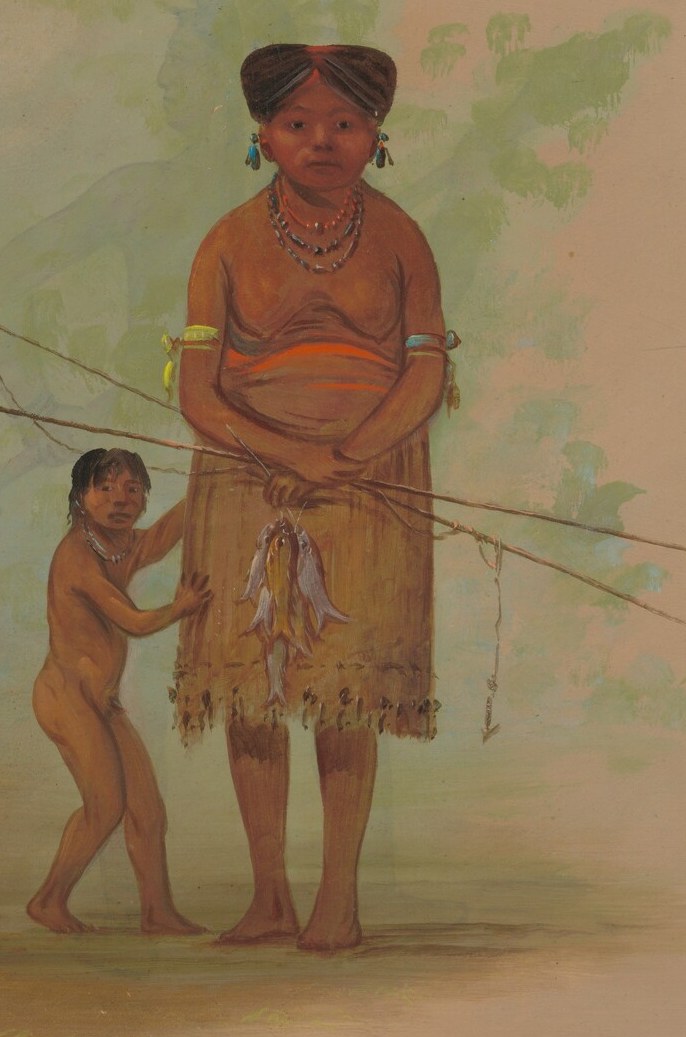
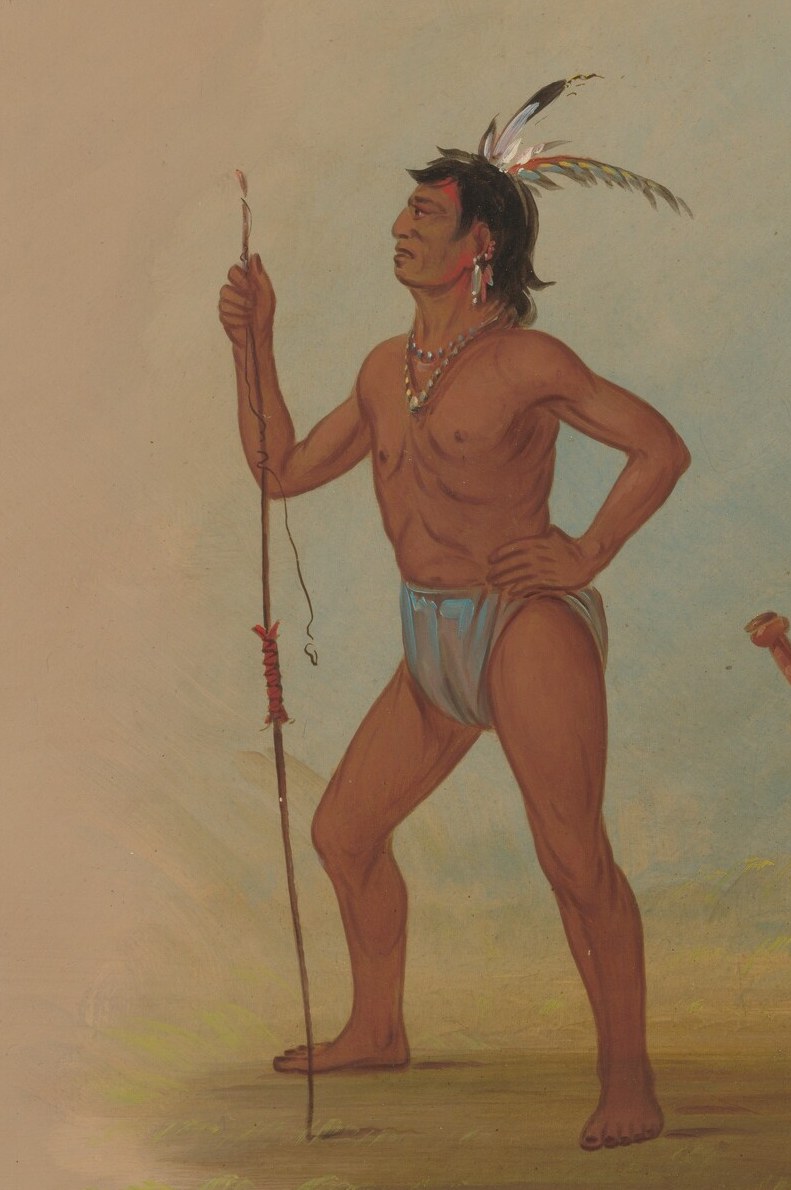
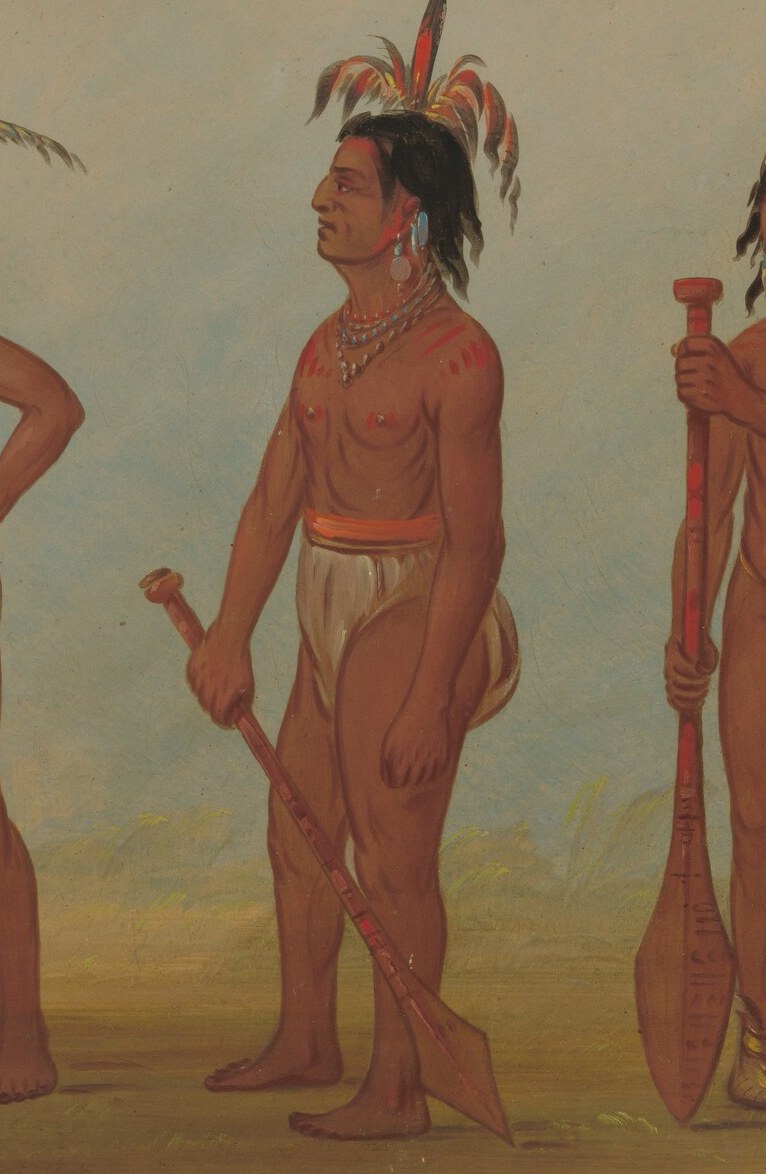
The painting arranges five figures in a line against a flat wash of green. Look closely at their individual markers of identity: the distinct feathered headdresses on the men, the woven plant-fiber skirt on one woman and a trade-cloth dress on the other, the beaded necklace, and the simple tools, a spear, a club, a paddle, and a bow. A child clings to one woman’s leg, grounding the scene in a specific, familial moment rather than an abstract ethnographic diagram.
Painted decades after his actual journeys, this work on card reflects Catlin’s ongoing commitment to his mission. His style is flat and documentary, characteristic of early American folk portraiture, where the priority was recording dress and posture with clarity, not creating an illusionistic scene. The number and signature in the corner suggest it was part of a larger inventory he kept of his subjects.
Look past the subdued colors and stiff poses. This is a family, standing together for a portrait in a time of immense pressure on their way of life. Catlin’s hand recorded them. What do you notice about how they chose to be seen?
Details
Transcript
George Catlin was a lawyer who taught himself to paint. In the 1830s, he made five trips into the American frontier. He believed Native American life was vanishing. Look at the detail in their adornment. Catlin painted this to record their culture exactly as he saw it. The bowler hat, the beaded necklace, the woven skirt. A generations-old community stands together in 1855. This is not an anonymous tribe. This is a family portrait.