Evocation of Roussel by Redon, Odilon
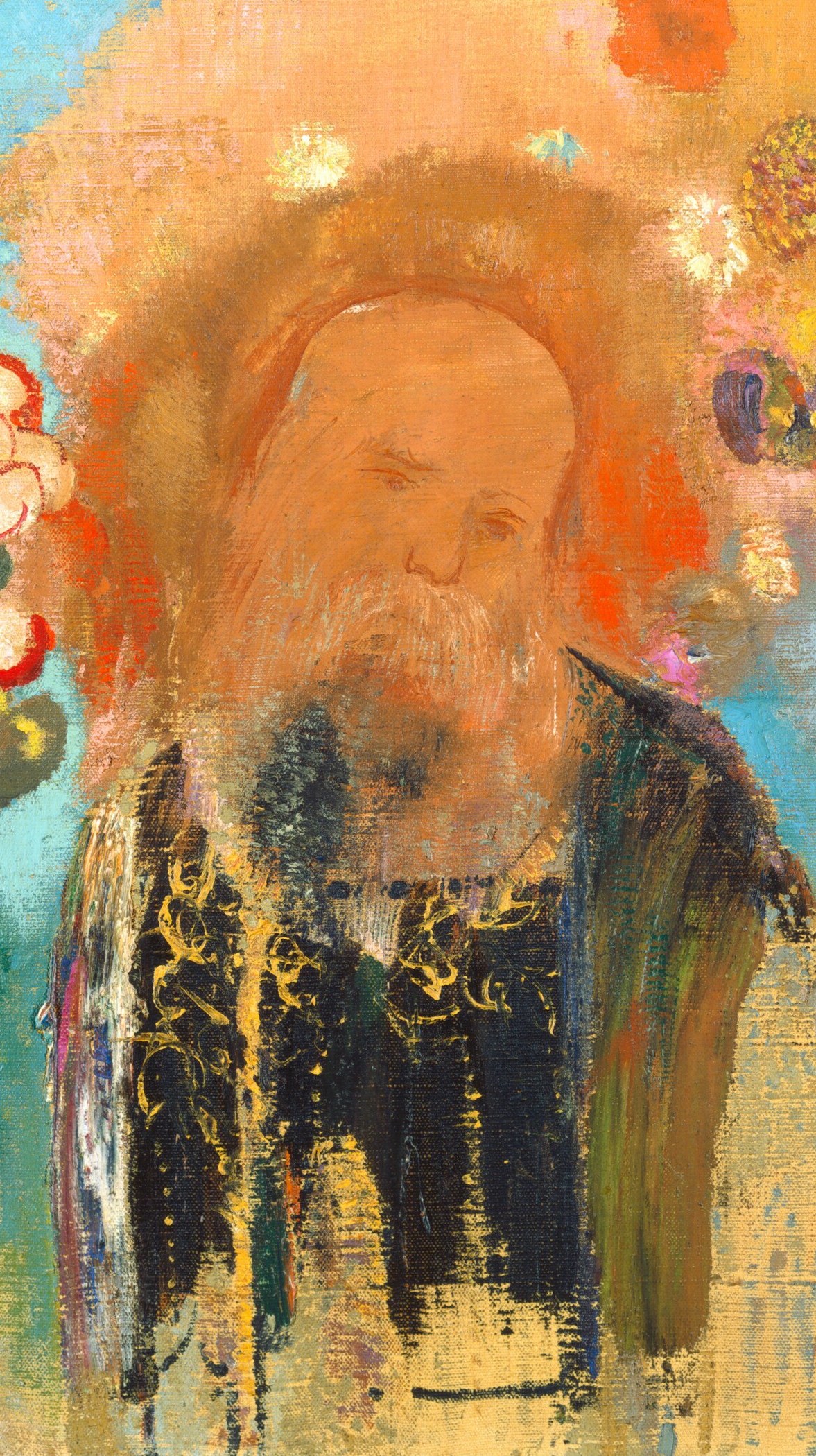
This is Odilon Redon's *Evocation of Roussel*, painted around 1912. For most of its life, viewers assumed the solemn, bearded figure drifting in a sea of luminous blossoms was the poet and critic Théodore Roussel. The title said so. But the title, it turns out, was a kind of mirage.
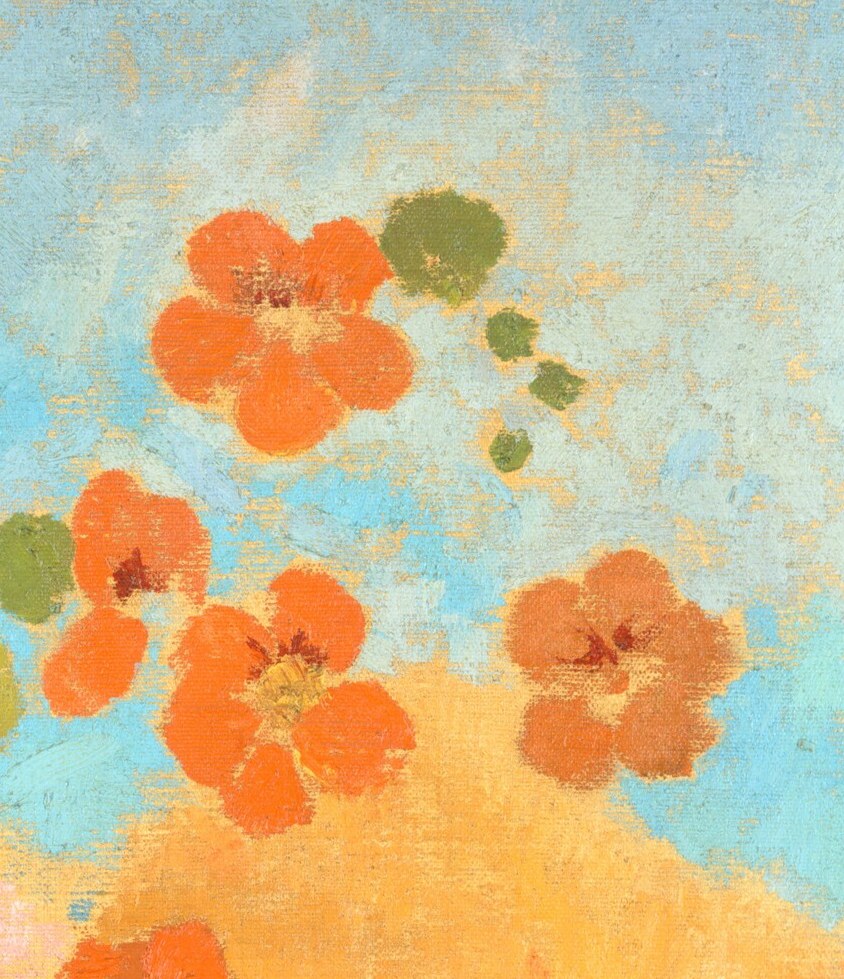
Look at the painting and you will see a man rendered in Redon's late, hazy style, his dark garment built from thick impasto strokes, his face framed by drifting orange and white flowers. The patterned gold collar is the only concession to ornament. Everything else is mood: soft, blended, almost dissolving. Redon was not trying to document a face; he was trying to evoke a presence.
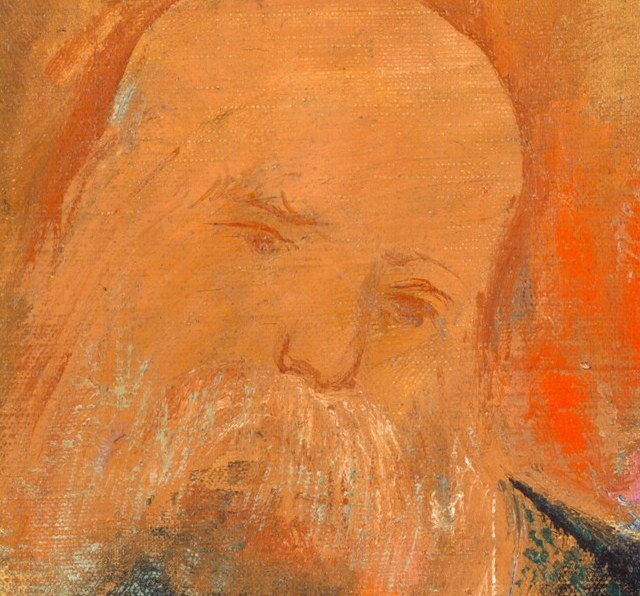
The problem was that Roussel and Redon never met. There is no record of a sitting, no correspondence arranging a portrait. Scholars who examined the work realized the sitter's features did not match known photographs of Roussel. The consensus now is that Redon borrowed the poet's name as a poetic cue, not a label. The face likely belongs to someone else entirely, a private figure whose identity Redon chose to protect inside the title of a different man.
The painting lives today as a double mystery: a portrait that is not a portrait, and a name that hides more than it reveals. Next time you see a title on a museum wall, ask yourself if it is an answer or another layer of the painting's dream.
Details
Transcript
A bearded man, lost in thought. But who is he? Golden blossoms drift across the canvas, weightless. For decades, the title promised an answer. Evocation of Roussel. But the poet Roussel had never sat for Redon. So art historians looked closer at the face.