River Landscape by Carracci, Annibale
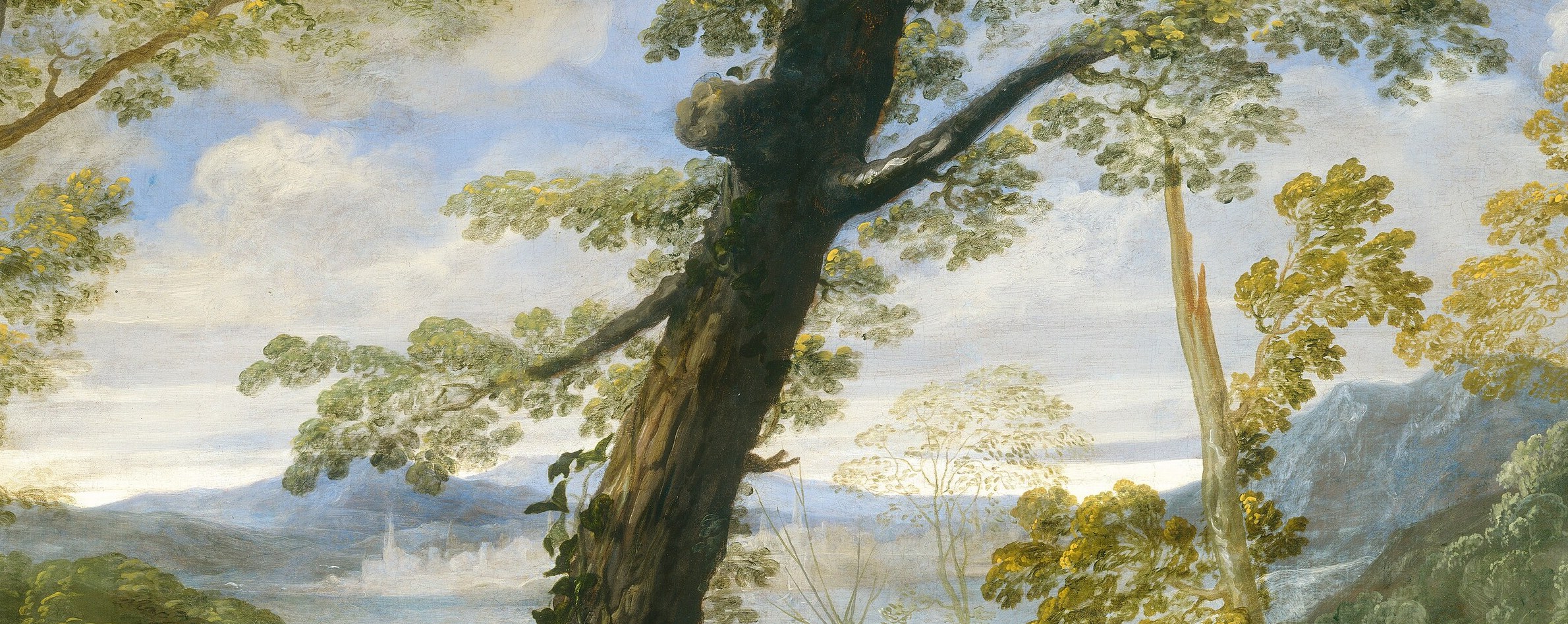
This is Annibale Carracci's River Landscape, painted in Italy around 1590 and housed today in the National Gallery of Art in Washington D.C. It looks quiet, but it represents a bet. Before the Carracci family began their experiments in Bologna, a canvas of this size and ambition almost always required a story from scripture or myth. A landscape could frame the action, but it could not be the action. Carracci asked patrons to accept something else: that a river, some reeds, and a distant mountain were a complete and valuable subject.
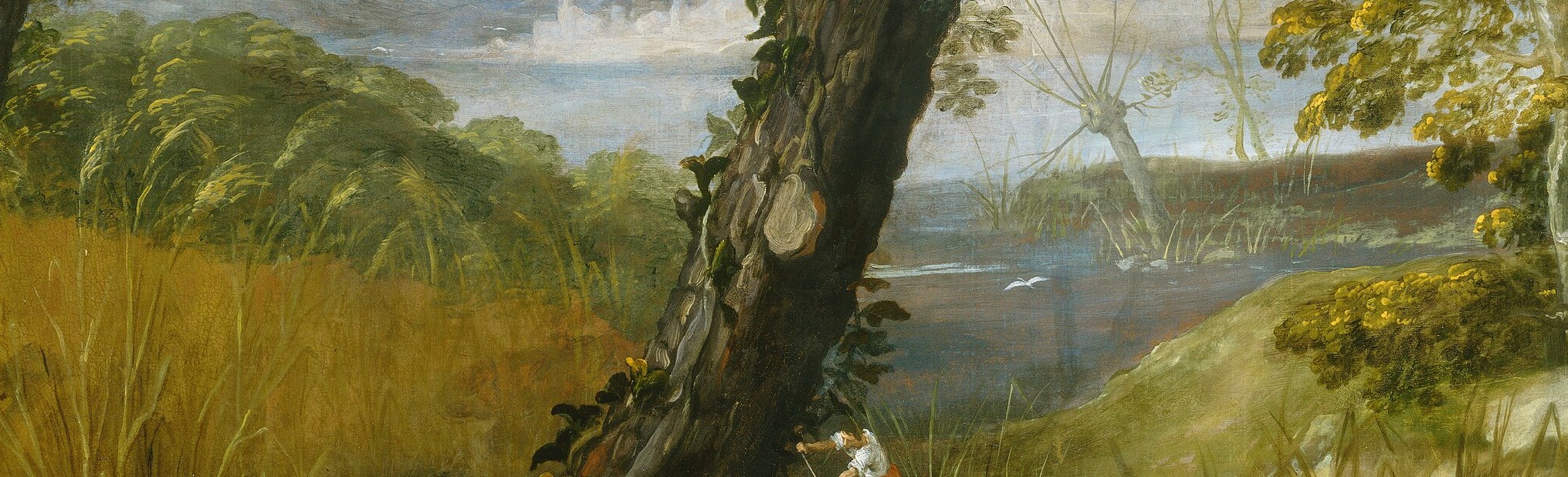
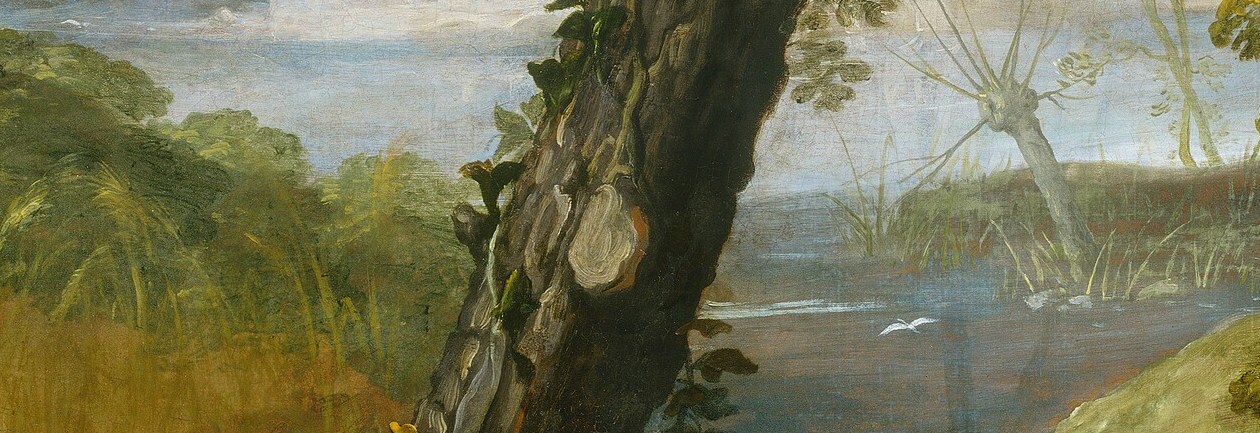
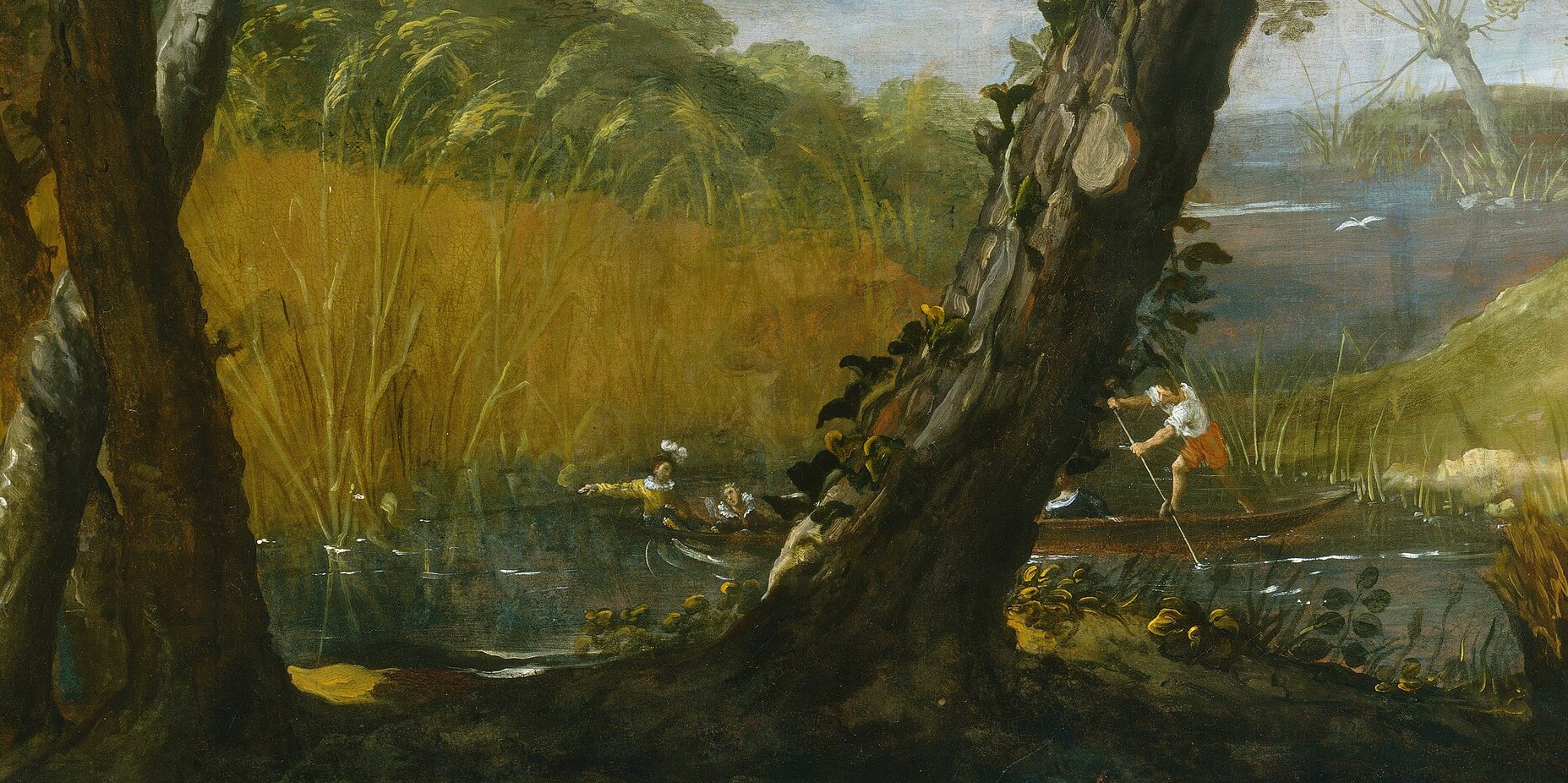
Let your eye follow the water. The dark trees on either side act like stage curtains, forcing your gaze toward the single bright slash of reflected light on the river. That small passage of near-white paint is the center of the entire composition. From there, the scene steps back in careful layers: the golden reeds in the middle ground, then the cool blue mountains, then the pale sky. Carracci is teaching the eye how to move through a landscape with no human drama to guide it.
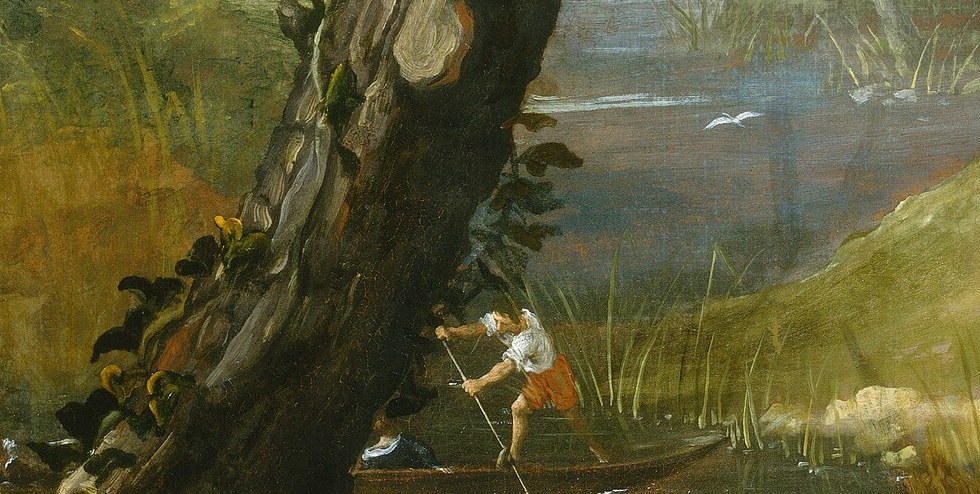
The painting belongs to a precise historical pivot. Around 1590, Annibale, his brother Agostino, and his cousin Ludovico were actively rejecting the artificial stylization of Mannerist landscape. They argued in sketches and conversations that real countryside, closely observed, was worth painting for its own sake. Annibale made two other works in this vein, Fishing and Hunting, both now in the Louvre. This one, with its tiny anonymous figures and its refusal to name a subject, is among the earliest Italian paintings to treat landscape as a portable, saleable genre rather than a palace room's decoration.
Every landscape you have ever paused to look at owes a small debt to this gamble. When did you last pay attention to the light on ordinary water?
Details
Transcript
Before this, a landscape was just a backdrop. The artist said: what if the countryside alone was enough? Look how the river pulls you in, past the dark trees. That bright strip of water is the whole engine of the painting. Those tiny figures are not saints or gods. They are just people. It was a risk. No story, no drama. Just a place. Buyers paid for biblical epics. He asked them to pay for a river.