October by Richards, William Trost
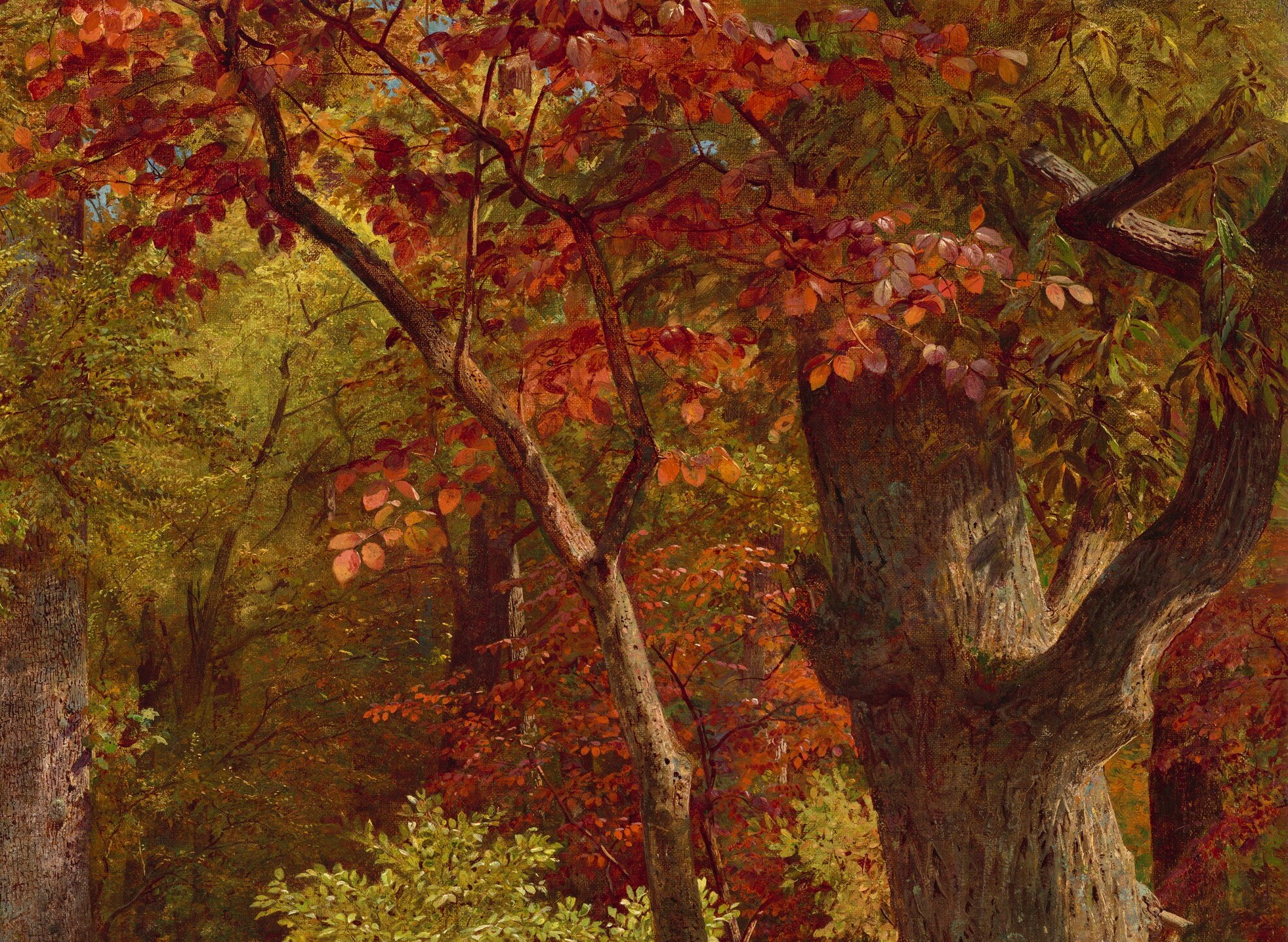
William Trost Richards's "October," painted in 1863, is a testament to meticulous observation and detail, now held at the Metropolitan Museum of Art. Rather than grand gestures, Richards focused on the precise rendering of every natural element.
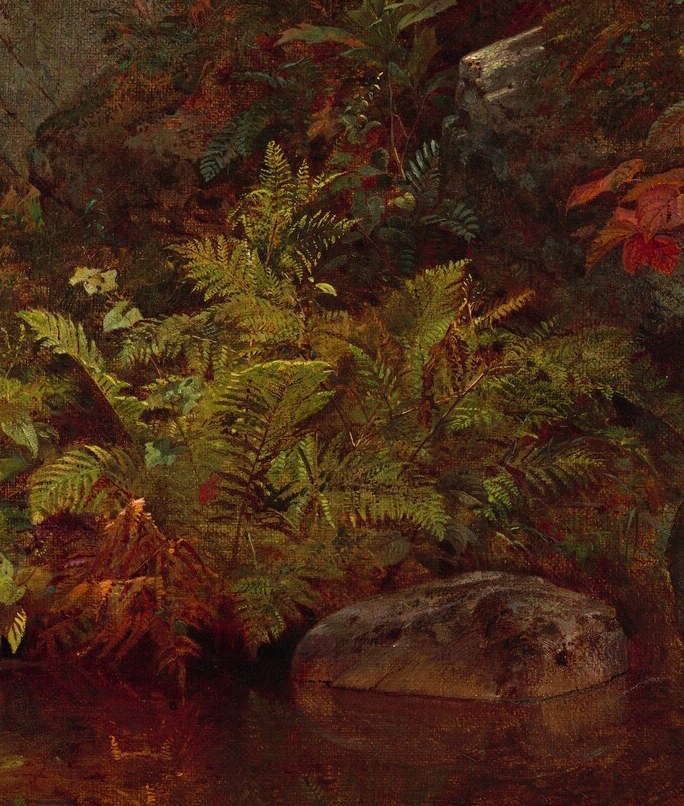
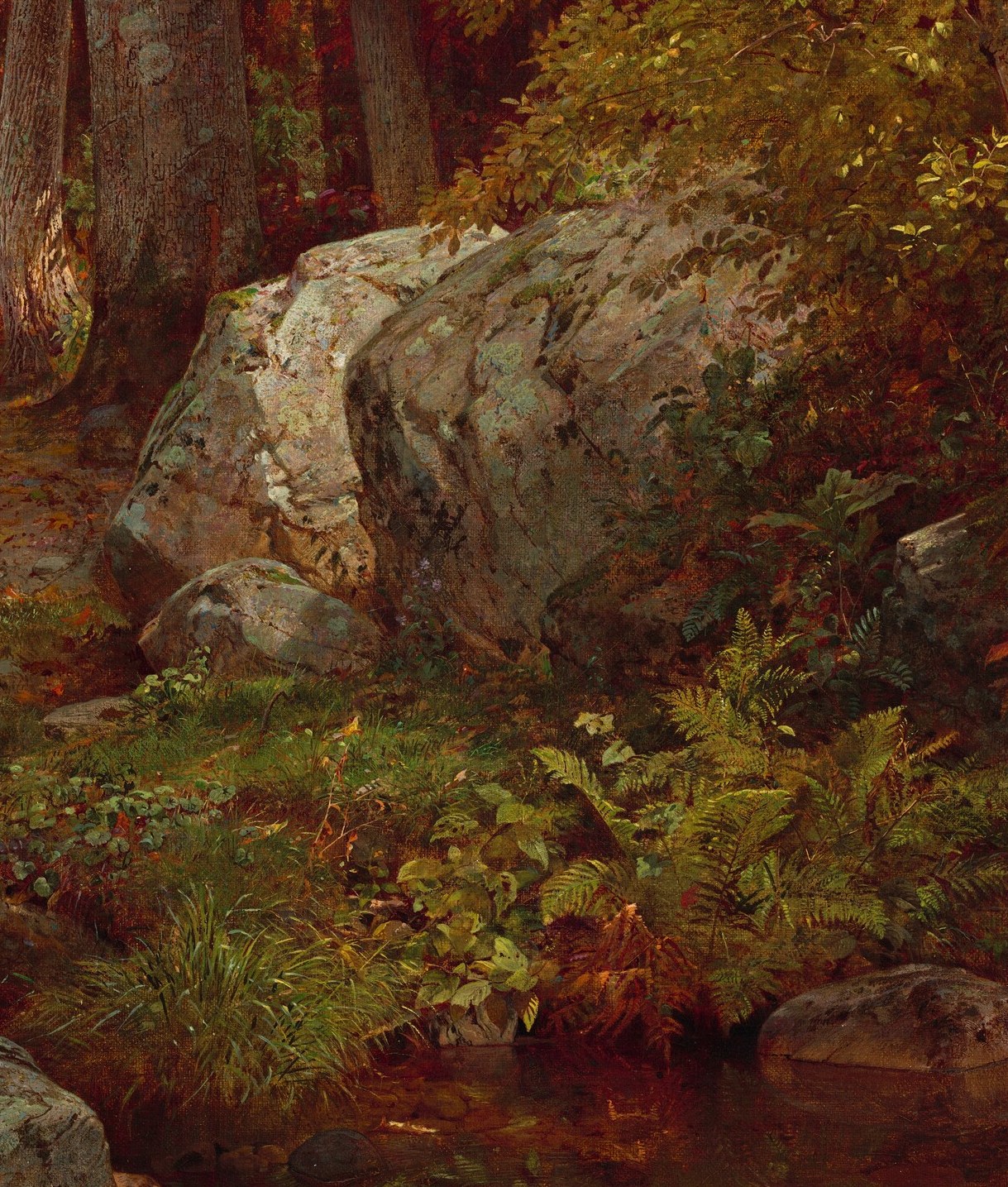
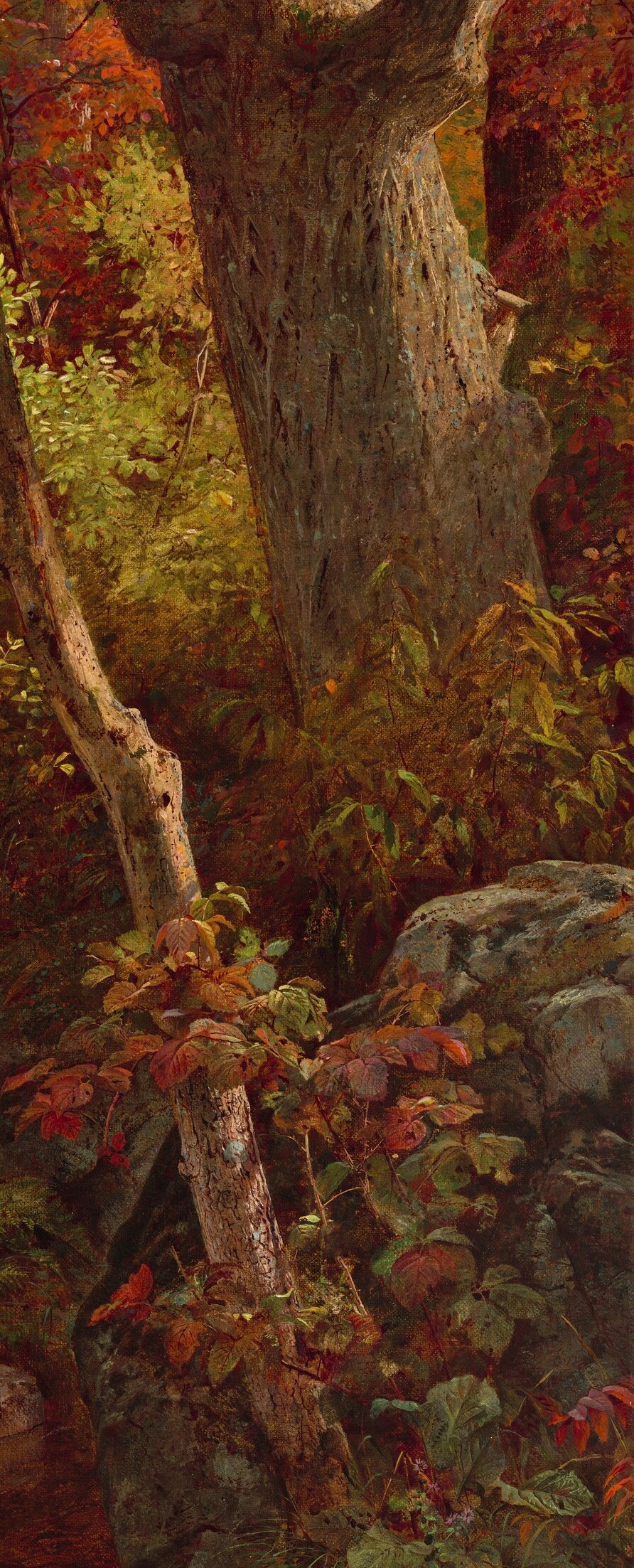
Take a moment to truly look: the individual leaves scattered on the path, the delicate fern fronds, and the texture of moss on the boulders all show his dedication. This painting invites a slow, deliberate gaze, revealing new intricacies with each viewing.
Richards was known for his highly realistic approach to landscape painting, often making countless preparatory studies in nature. His work captures the American landscape with an almost scientific accuracy, celebrating the beauty found in specific, tangible forms.
What small detail in a landscape most captures your eye?
Details
Transcript
This painter studied every leaf, every rock. He was a master of detail, almost scientific in his approach. Look closely at the fallen leaves on this path. Or the intricate fern fronds in the midground. Even the moss on these large boulders is precise. He built this scene from countless studies of nature.