The milking corner. by Anton Mauve
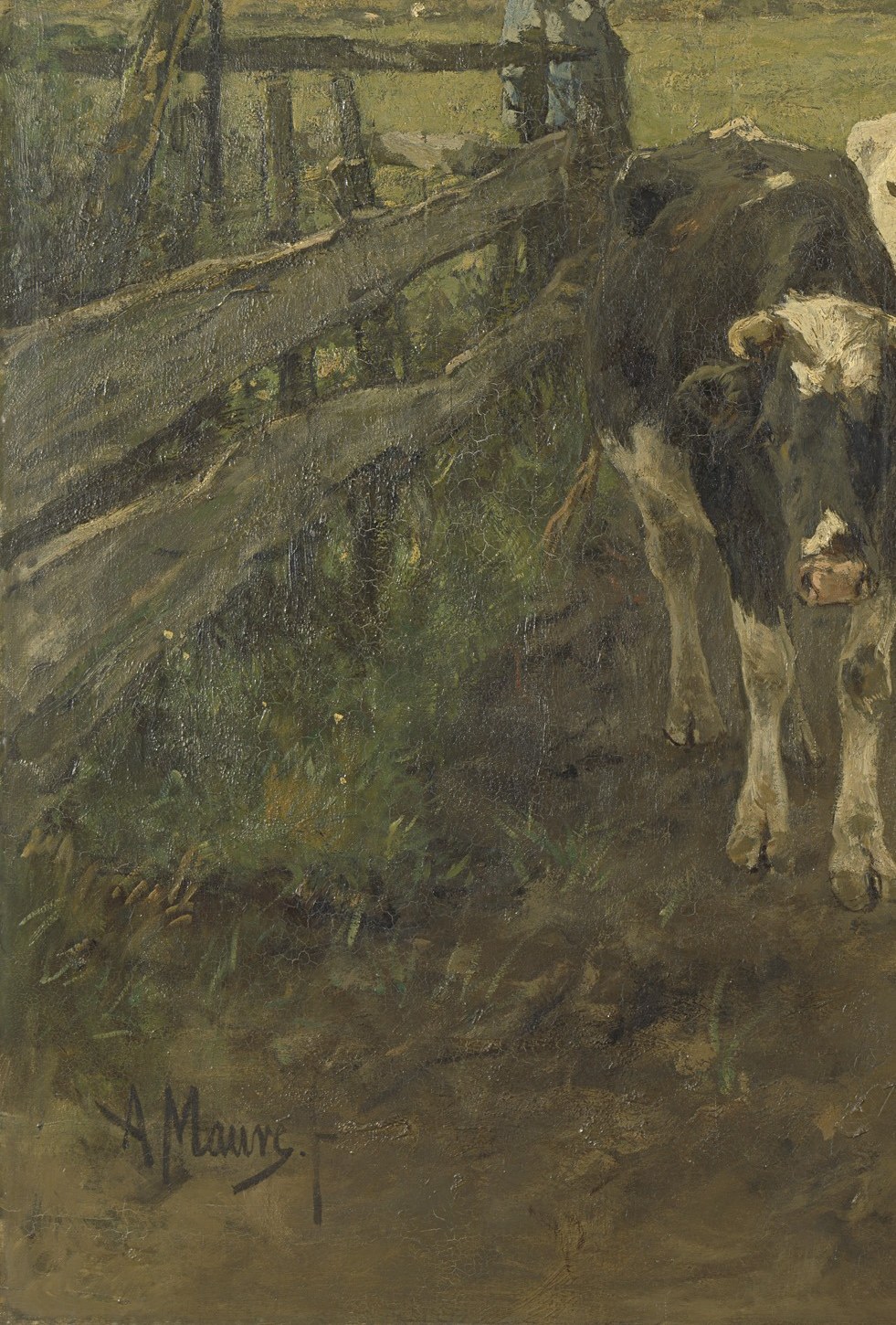
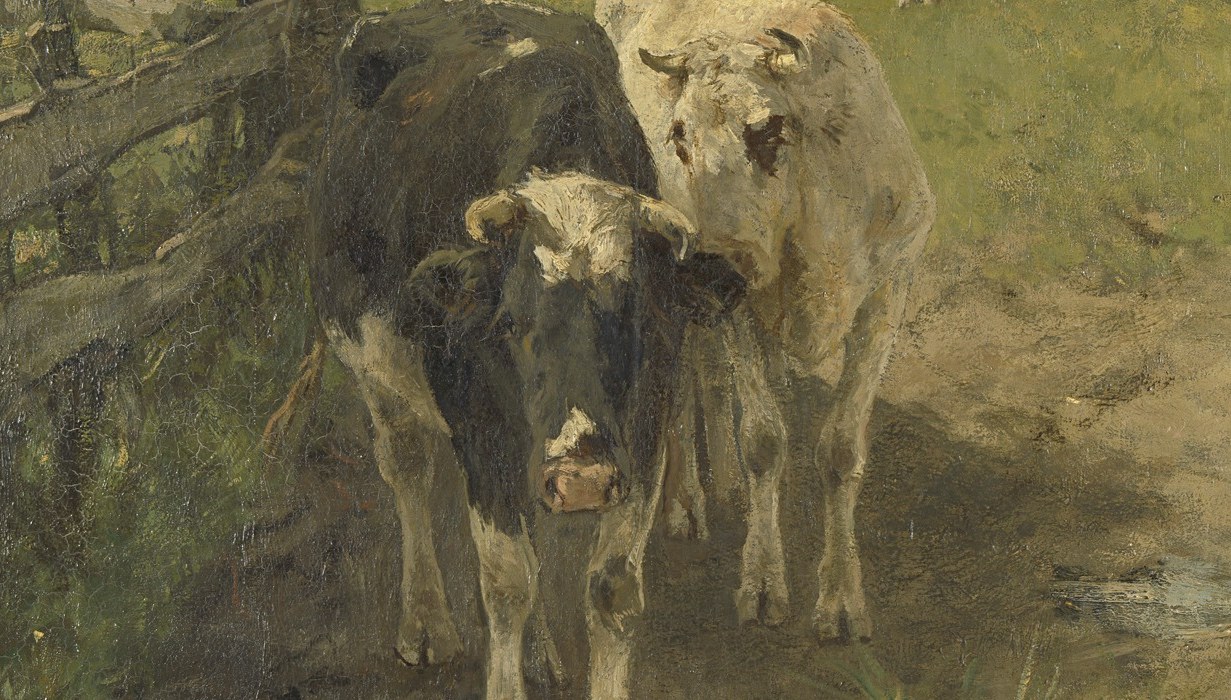
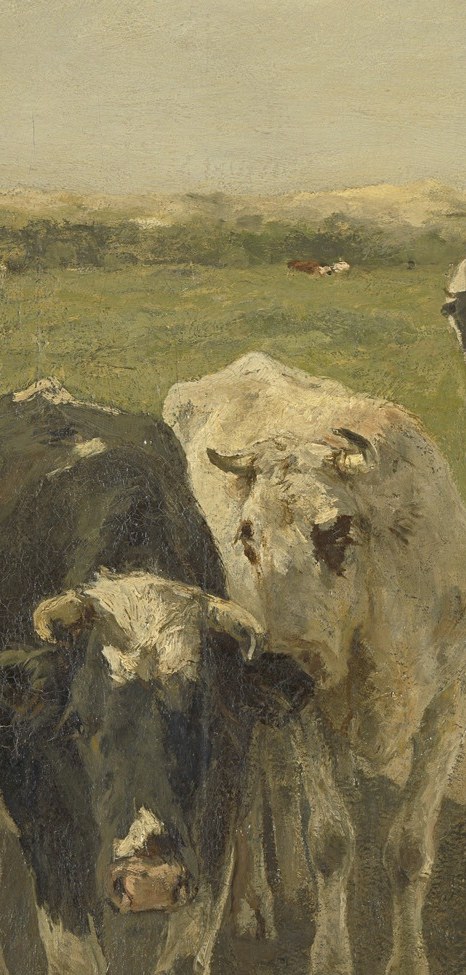
Anton Mauve painted "The Milking Corner" in 1890, near the end of his life, and the Rijksmuseum holds it today. The painting is a quiet masterclass in what the Hague School did best: rural life with the melodrama stripped out.
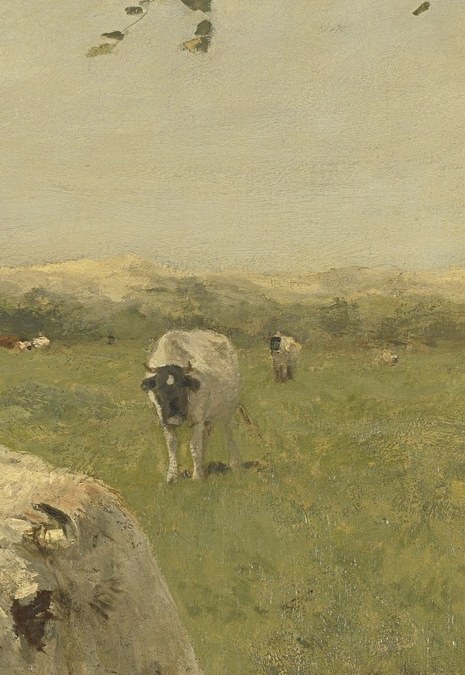
At first the composition seems to be about the two large cows dominating the foreground. But let your eye travel past the rough wooden fence into the upper-right background. A third animal grazes there, nearly dissolved into the pale gray sky. The painting rewards the kind of sustained looking that a scrolling feed punishes. It is a real farm with depth, not a static portrait of livestock.
Mauve was one of the most commercially successful Dutch painters of his era. American collectors developed such an appetite for his sheep pastures that a running joke emerged about price differences between paintings of "sheep coming" and "sheep going." He was also the first serious painting instructor to his cousin-in-law Vincent van Gogh, who admired Mauve's restrained color and would later push far beyond it.
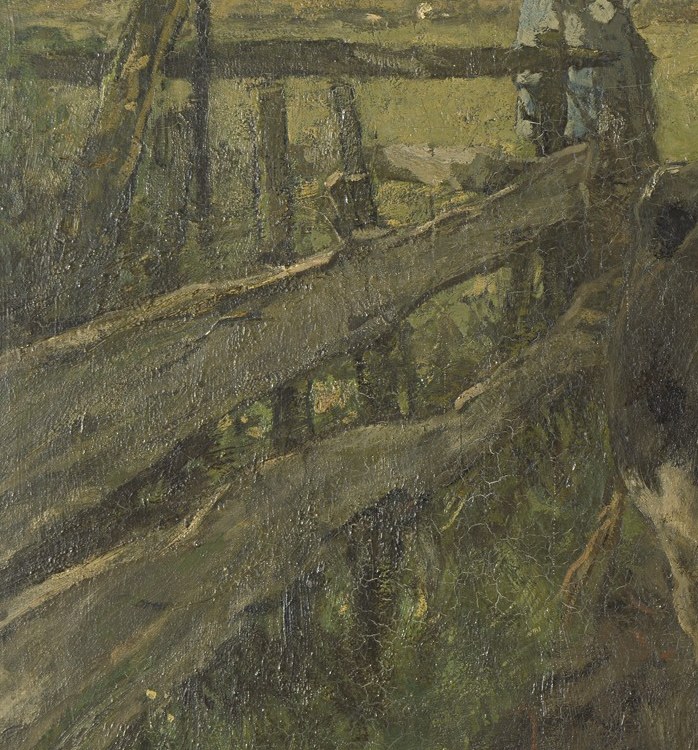
The foreground mud is not idealized green meadow. The farmer is small and absorbed in labor, not posed for us. The spring leaves on the left tree are just emerging, this is a world waking up, not a romantic climax. That is the whole Hague School idea.
Details
Transcript
Most people see the two big cows and scroll on. But the painter buried a reward for patient eyes. Pass the fence. Past the foreground. Look deep into the field. There is another cow back there. A third animal grazing, easy to miss in the silver-gray light. This is not a staged studio scene. It is a working farm, breathing and layered. American collectors loved this quiet honesty so much, they bought his paintings by the crate. Mauve was van Gogh's cousin-in-law and his first real painting teacher.