Sleighing Scene by Martin Edgar Ferrill
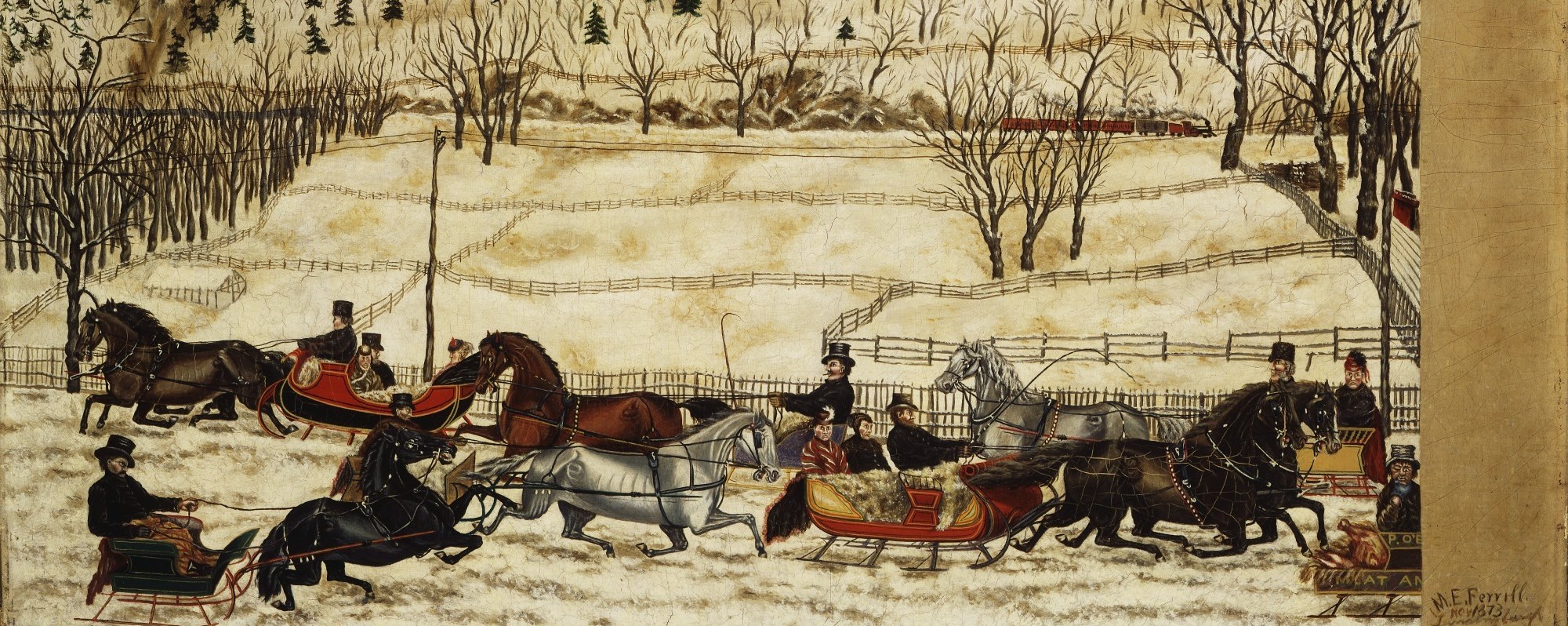
Martin Edgar Ferrill's 1873 "Sleighing Scene" captures a vivid moment of 19th-century American winter life. This oil painting, held at the Detroit Institute of Arts, beautifully depicts a popular recreational activity of the era.
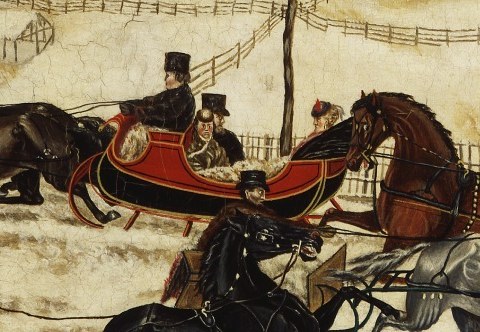
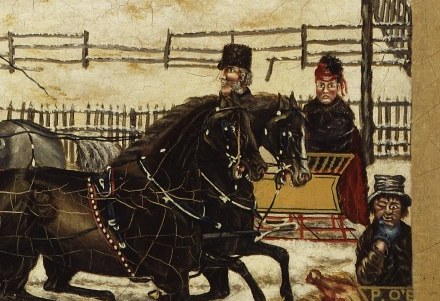
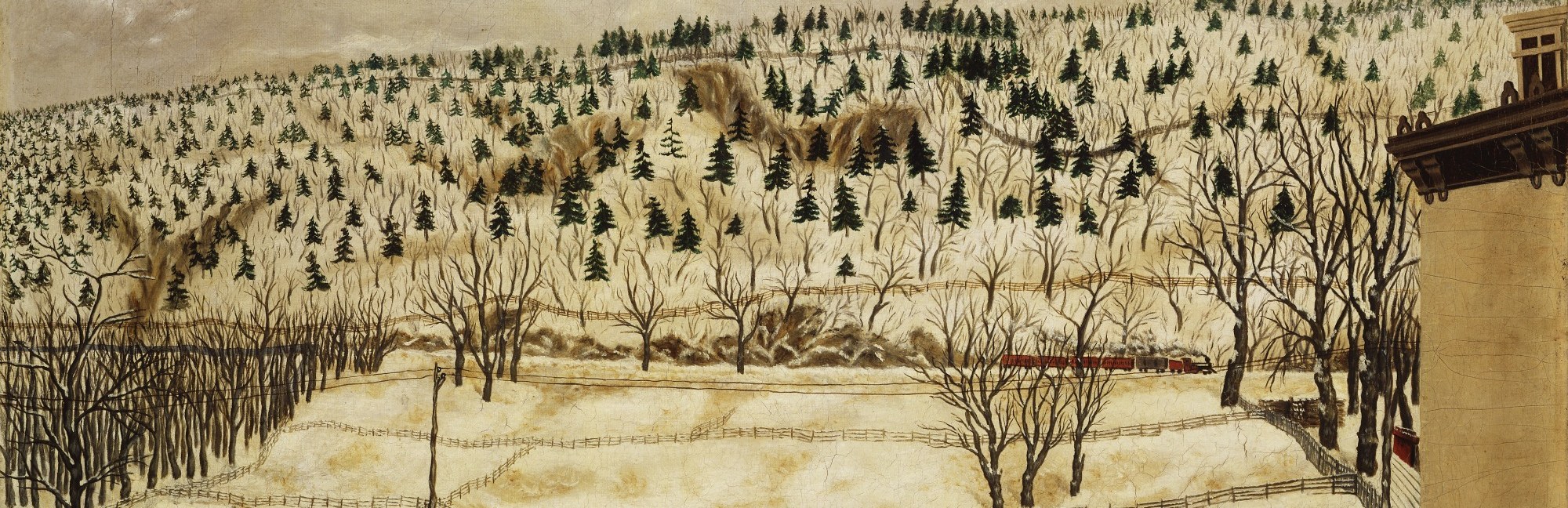
Observe the three brightly colored sleighs, red, blue, and gold, as they descend a snow-covered slope. Ferrill's meticulous brushwork highlights the texture of the fresh snow and the powerful movement of the horses, contrasting with the stark silhouettes of the bare trees.
The painting reflects a period when sleighing was a common and communal winter pastime. Ferrill, an artist known for his realist tendencies, paid close attention to detail, depicting everyday life and the subtle nuances of seasonal light. His use of oil paint allowed for rich color contrasts that bring the scene to life.
This work offers a fascinating glimpse into a past winter, reminding us of shared experiences across time. What details in the painting make you feel the cold, or the warmth?
Details
Transcript
This painting, from 1873, captures a specific kind of winter travel. These horse-drawn sleighs were a common pastime in the American winter. The painter used oil to give the sleighs rich, contrasting colors. Notice the detailed brushwork on the texture of the fresh snow. The bare trees emphasize the cold, while distant smoke implies warmth. The artist, Martin Edgar Ferrill, focused on everyday life and seasonal light.