Still Life with Blue Tablecloth by Henri Matisse
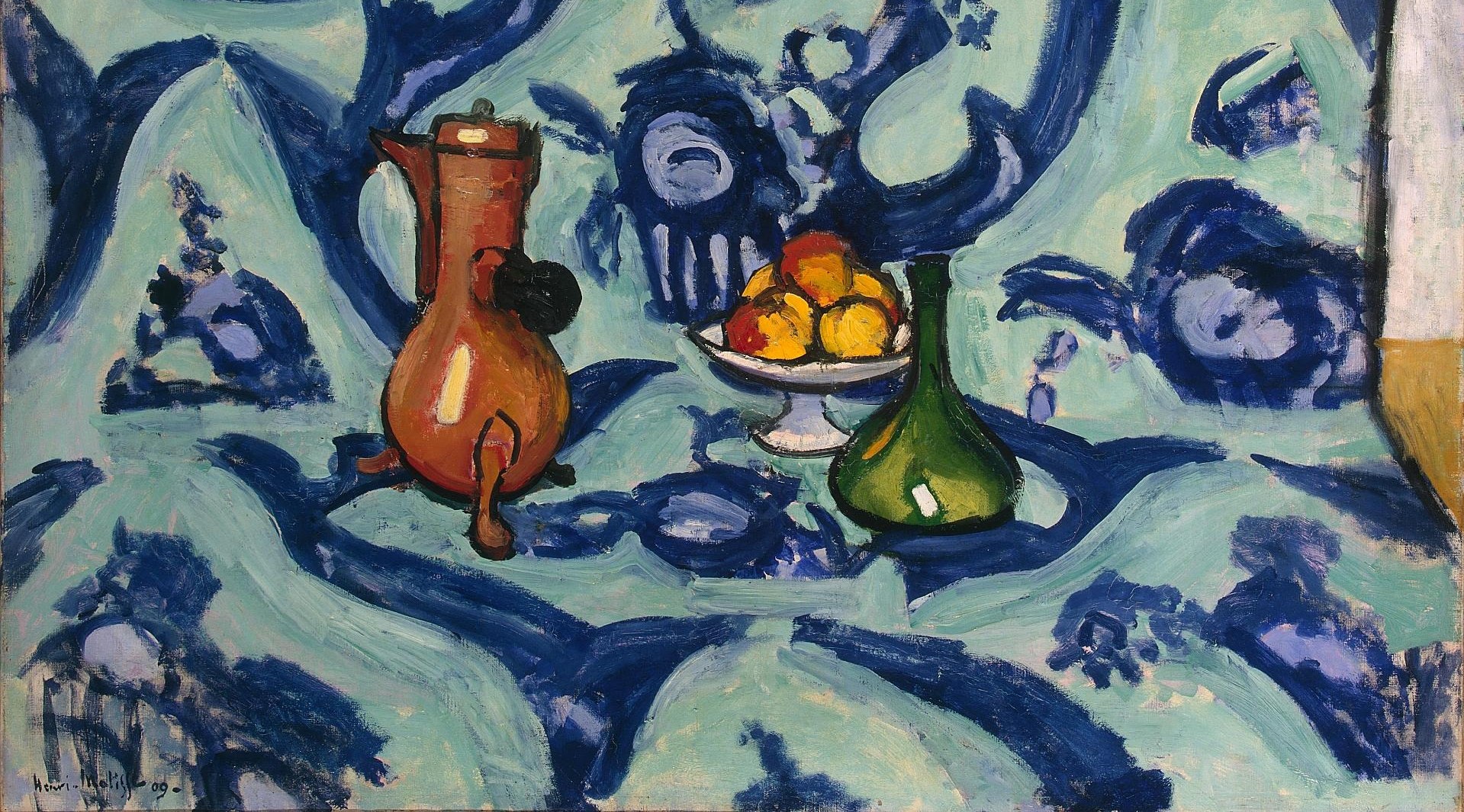
In 1909, Henri Matisse created *Still Life with Blue Tablecloth*, a painting that perfectly encapsulates the revolutionary spirit of Fauvism, a movement he helped define. This oil painting, now held at the State Hermitage Museum, transformed ordinary domestic items into a vibrant exploration of color and form.
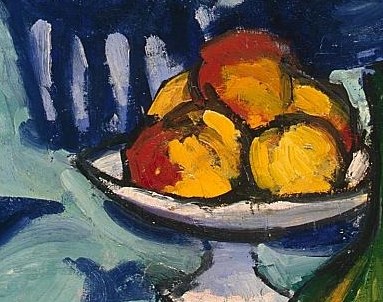
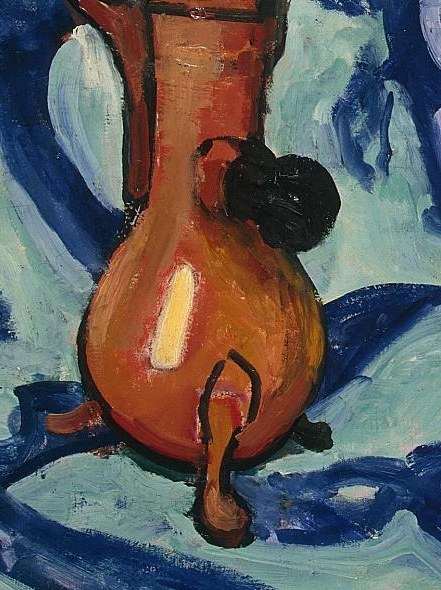
Look closely at the swirling blue pattern of the tablecloth and the energetic brushstrokes. Matisse wasn't aiming for photographic realism but for an expressive use of color that would convey emotion and energy, a radical idea at the time.
Matisse, alongside artists like Pablo Picasso, was pivotal in redefining visual art in the early 20th century. His work challenged traditional perceptions of beauty and representation, paving the way for modern art. This particular still life showcases his mastery of bold chromatic experiments.
This painting invites us to see the everyday world not just as it is, but as it could be, transformed by the power of color. What emotions do these vibrant hues evoke for you?
Details
Transcript
In 1909, this painter used everyday objects to ignite a new style. This is a still life, a traditional subject. But his use of color was revolutionary for its time. Called Fauvism, it emphasized bold, expressive color over realism. Notice the thick, visible brushstrokes on the tablecloth. He became one of the most influential artists of the 20th century.