Barges at Pontoise by Pissarro, Camille
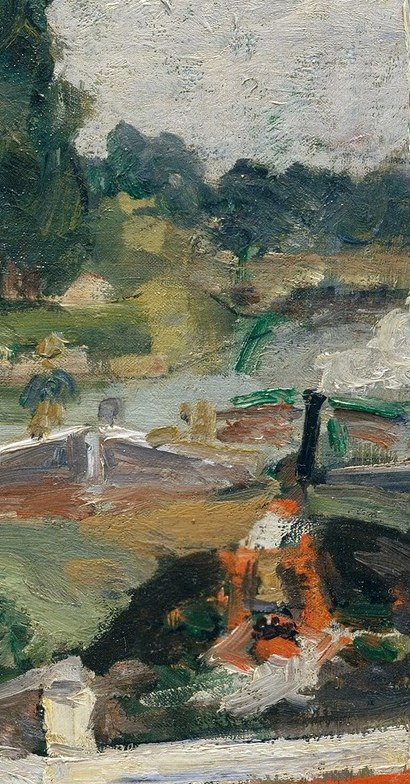
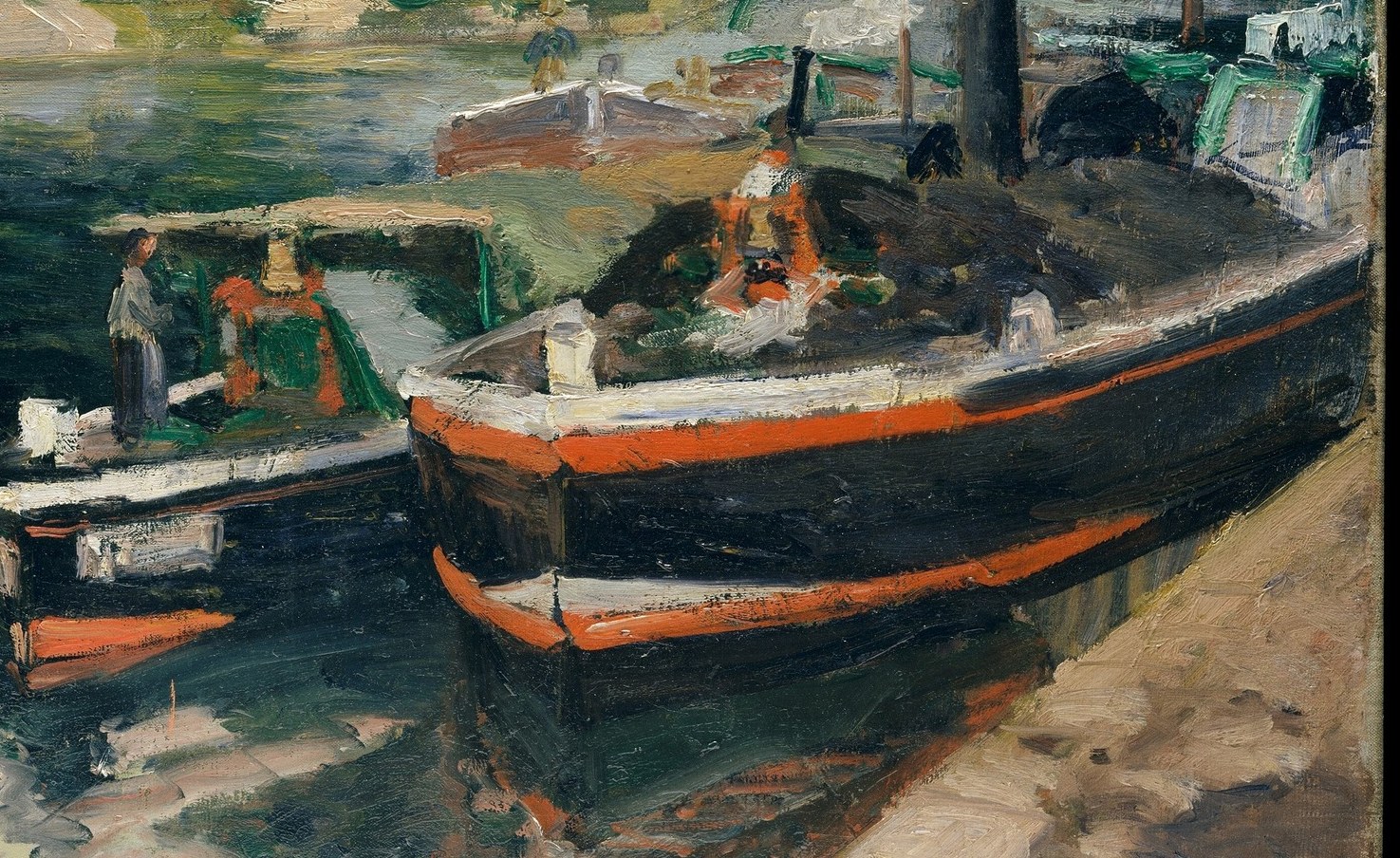
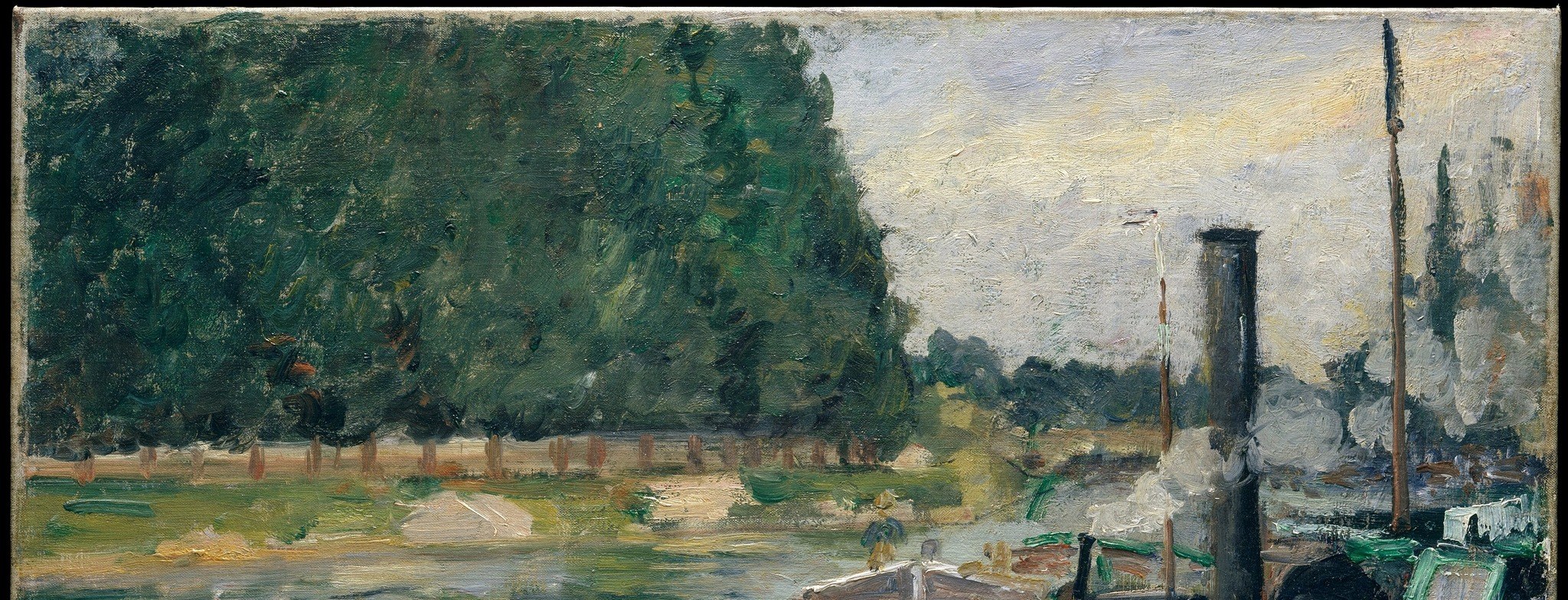
This is Camille Pissarro's "Barges at Pontoise," painted in 1888 and held at The Metropolitan Museum of Art. On the surface, it's a serene rendering of working barges moored on the Oise River, with a lone figure dwarfed by industrial hulls and a lush tree line pushing back against the smokestack's soot. But the painting's quietest chapter is its wartime record.
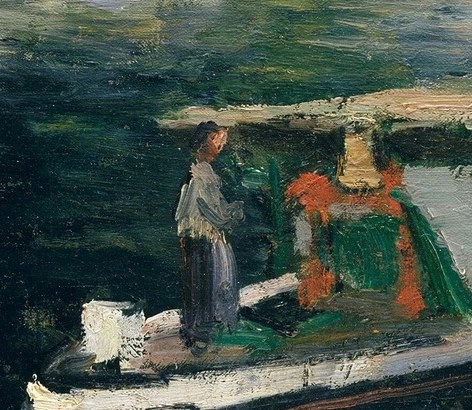
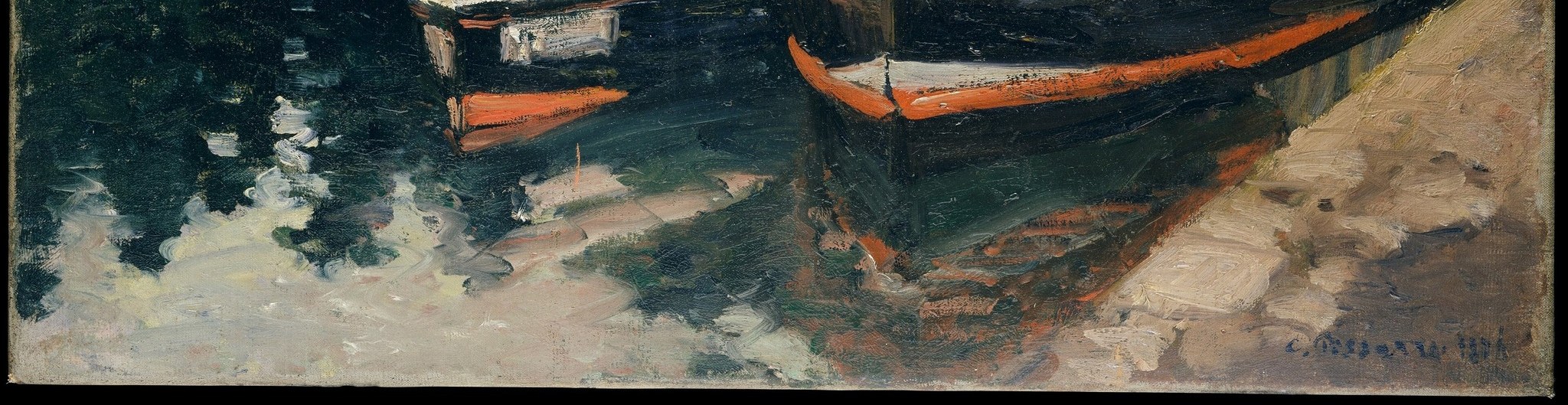
Spend time with the water. Pissarro's broken strokes don't mirror the scene so much as dissolve it, and the orange-red hull stripe refracts into a wavering double that makes the river an active collaborator in the color. The solitary worker near the bow is the only human present, and his scale against the barge tells you this is a document of labor, not leisure.
During the German occupation of France, the painting was looted from a French collection. After the war it was recovered and restituted, eventually entering the Met's collection. The canvas itself bears no visible scars from that journey, which makes the visual tranquility slightly unnerving once you know its history.
A painting that survived what its subject never could. What do you notice once you know an artwork was taken at gunpoint and still came back?
Details
Transcript
Look at a pleasant river mooring. Heavy boats, deep summer green. This man's solitary figure gives you the scale of the working life. Now look at that tall black smokestack reflecting in the water. The painter was Pissarro. Impressionist, 1876. Gentle. In 1940, the Nazis seized it from a French collection. After the war, it was recovered. The surface is unbroken. So that stillness you're looking at was always a lie.