Tawahquena Village by Catlin, George
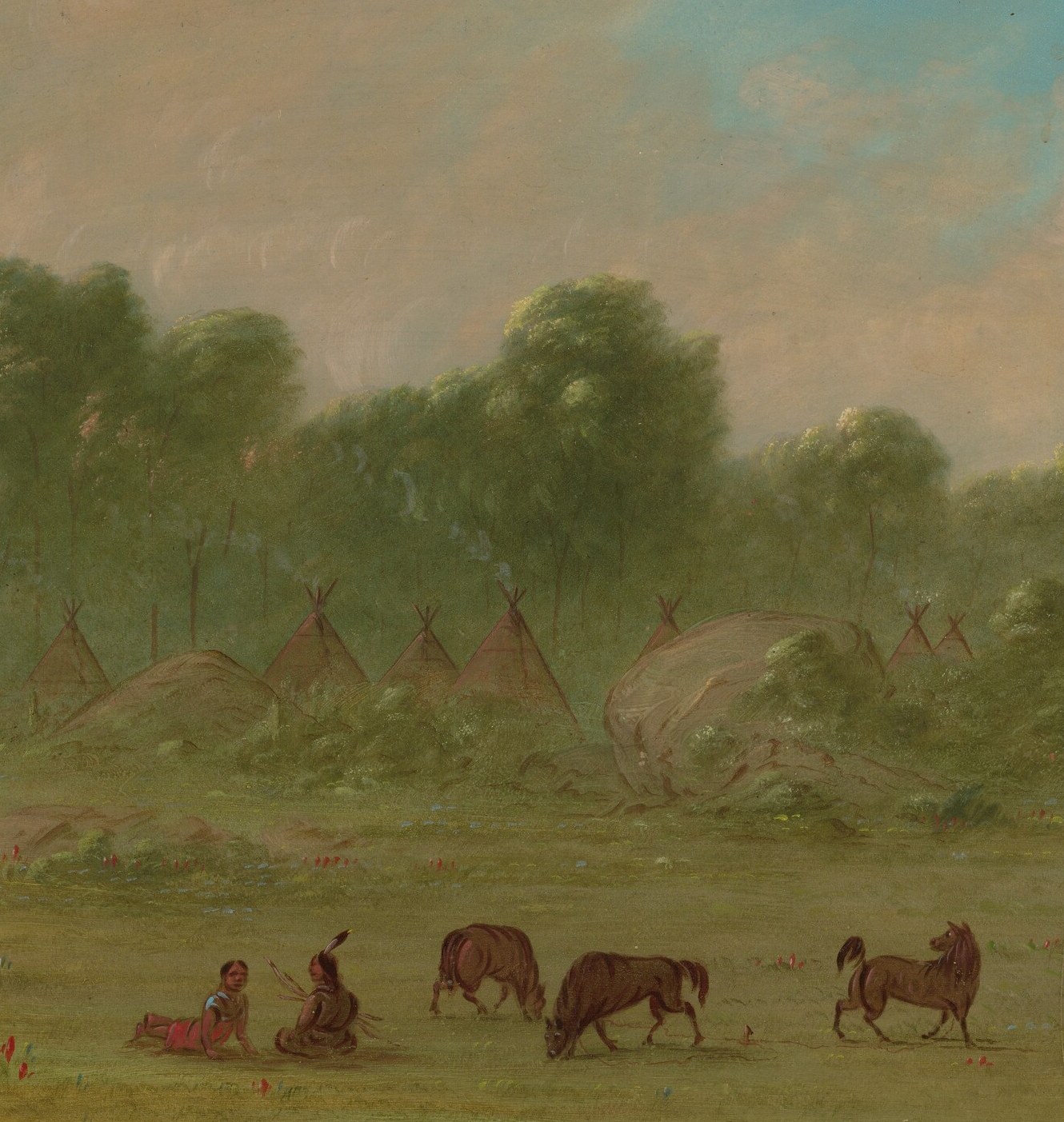
This is George Catlin's "Tawahquena Village," painted in 1865 and now held by the National Gallery of Art. It survived a strange theft. The artist's life's work, over 500 paintings called the Indian Gallery, was stolen by a man he trusted, only to resurface years later in a warehouse.
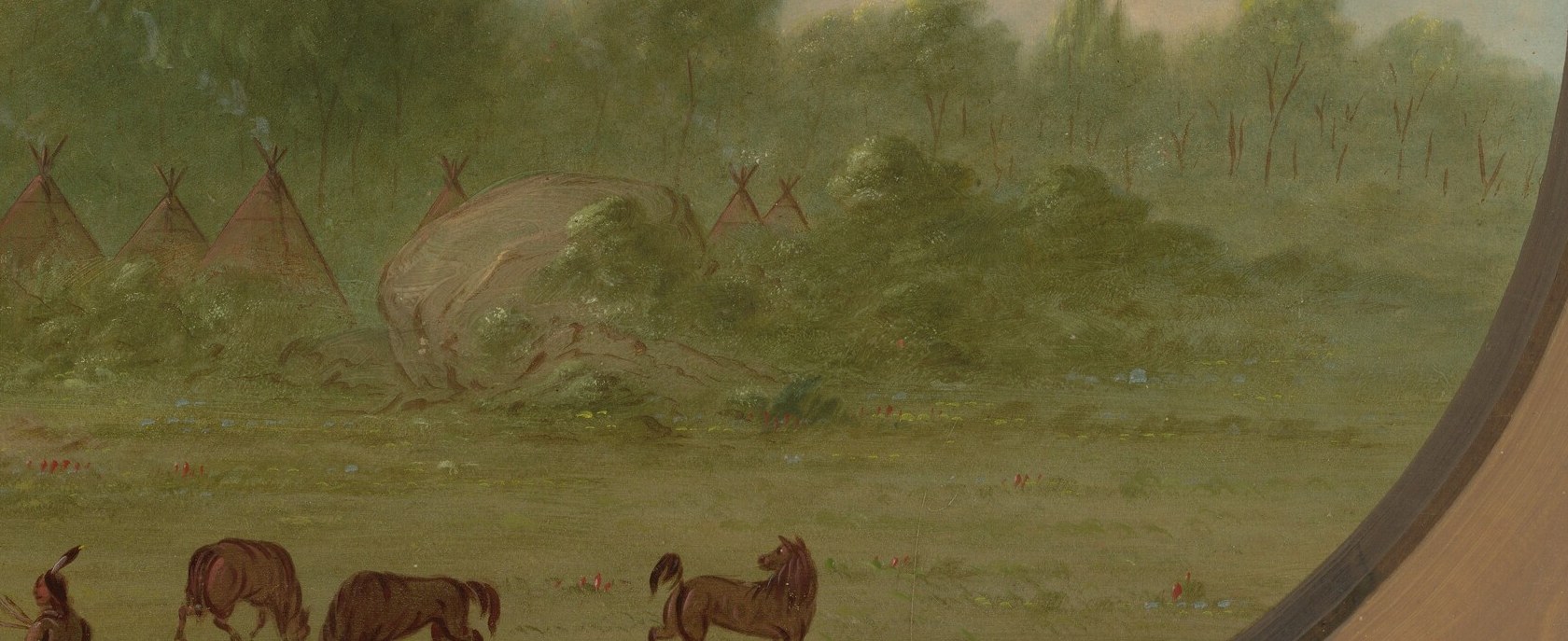
Look at the lower left corner. The artist's signature appears to have been cut from the original card and clumsily pasted back on. It was likely an attempt to obscure the work's provenance while it was in the hands of traffickers, leaving a visible seam that tells the story of the crime.
Catlin spent the 1830s traveling the American frontier to document Indigenous cultures he feared were vanishing. After decades of touring his gallery, he fell into debt. A lawyer named Joseph Harrison offered to secure the collection as collateral for a loan, then claimed it as his own, hiding it for years. This small landscape, with its anchoring tree, was recovered and eventually donated to the nation.
A painting of a quiet village ends up bearing a visible scar from a capitol scam. What other evidence of crime hides in plain sight on museum walls?
Details
Transcript
In 1865, the painter George Catlin was living in a Brussels garret. He was nearly broke, and his famous Indian Gallery was tied up in a dispute. A man he trusted, a lawyer, offered to help and vanished with the collection. Stolen paintings surfaced years later. This small village was among them. Look closely: the signature has been cut out and glued back on. A botched attempt to erase the artist, now a permanent scar of the crime.