Portrait of Isaac D. Fletcher by Carnig Eksergian
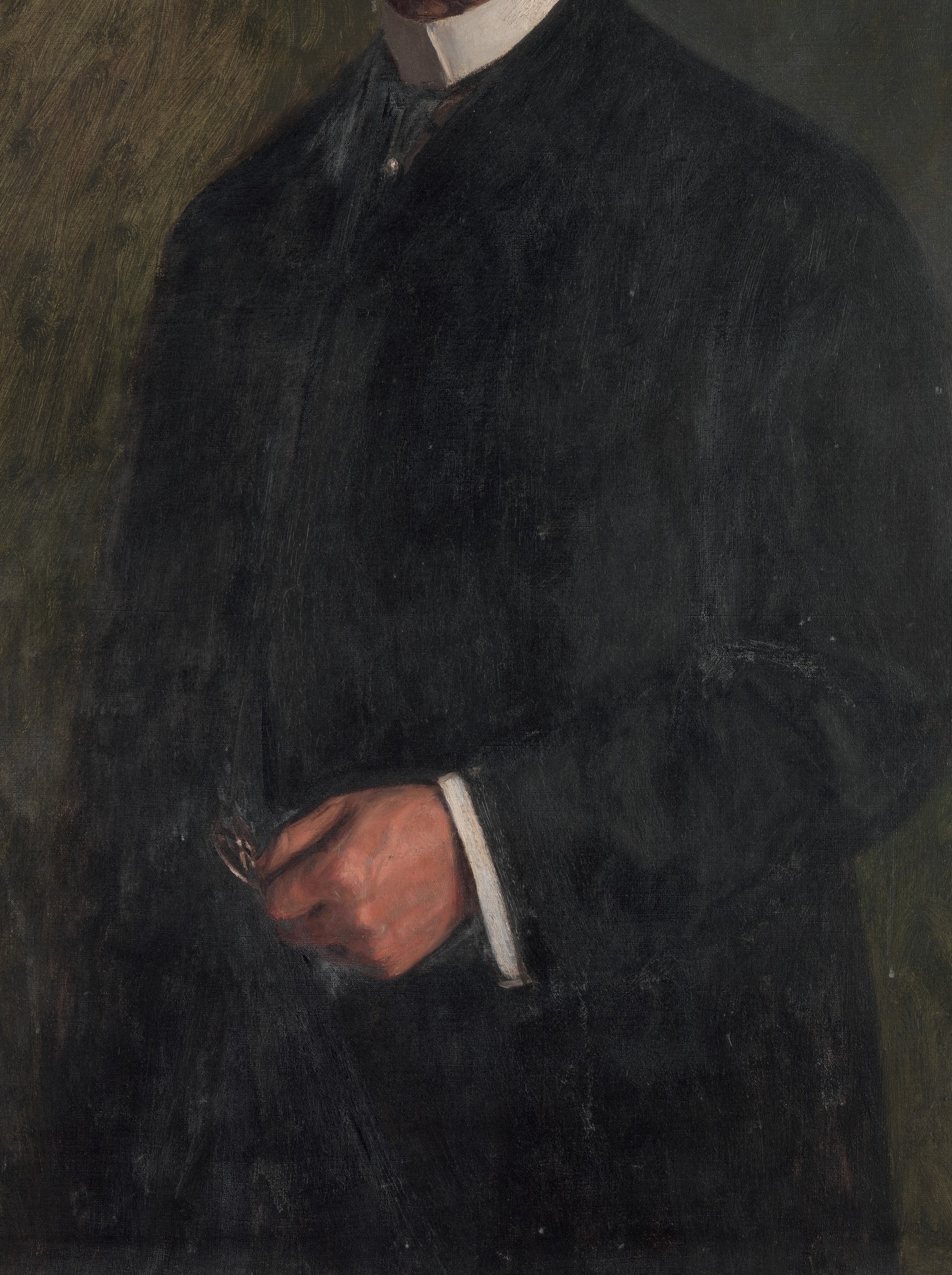
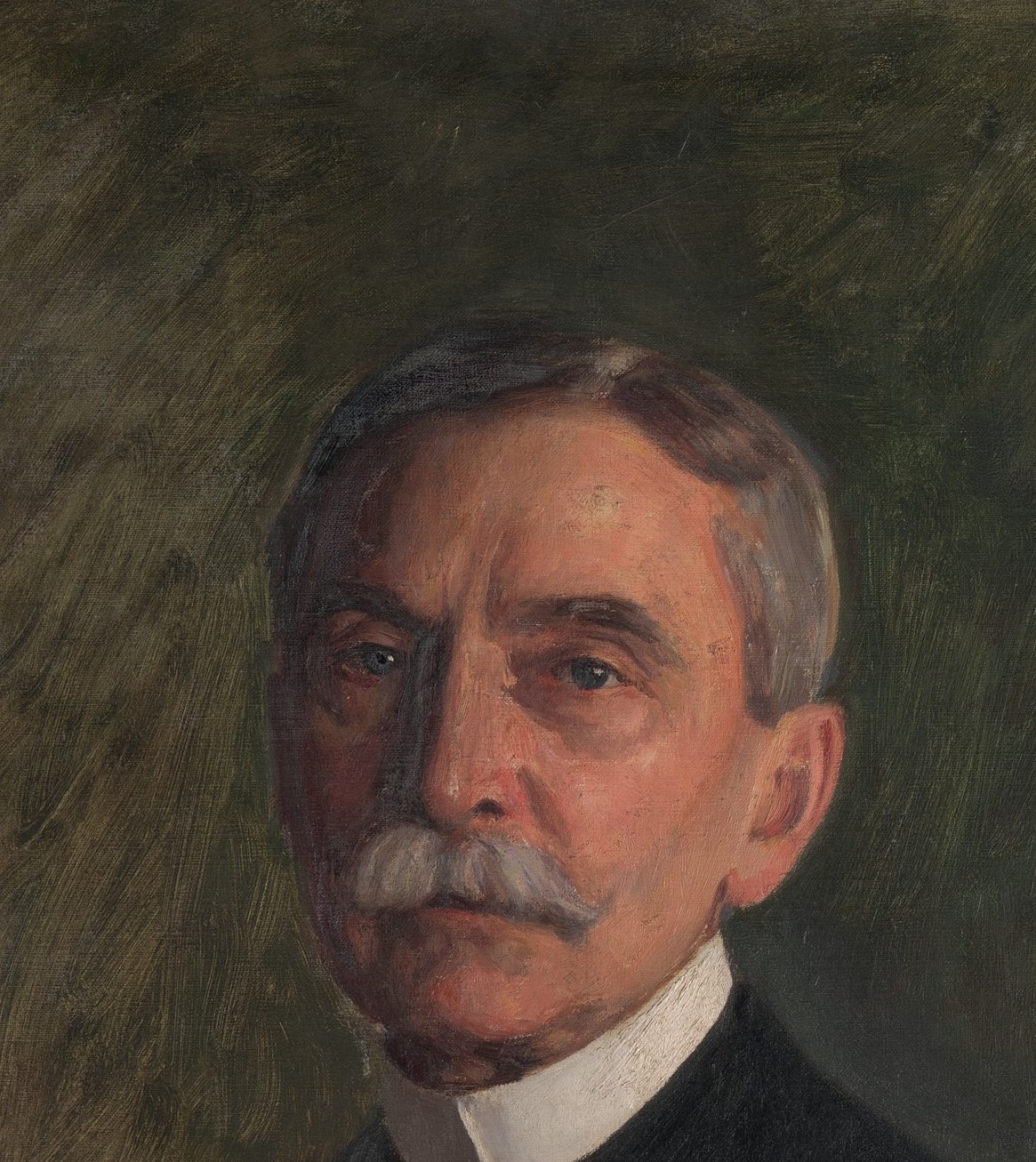
This is Carnig Eksergian's 1914 portrait of Isaac Dudley Fletcher, a now largely forgotten painting but one that tells the story of a man whose collection shaped The Metropolitan Museum of Art. Fletcher was a New York financier and one of the wealthiest art collectors of the Gilded Age. His private collection included works by Vermeer, Rembrandt, and other Old Masters, much of which he bequeathed to the Met upon his death in 1917.
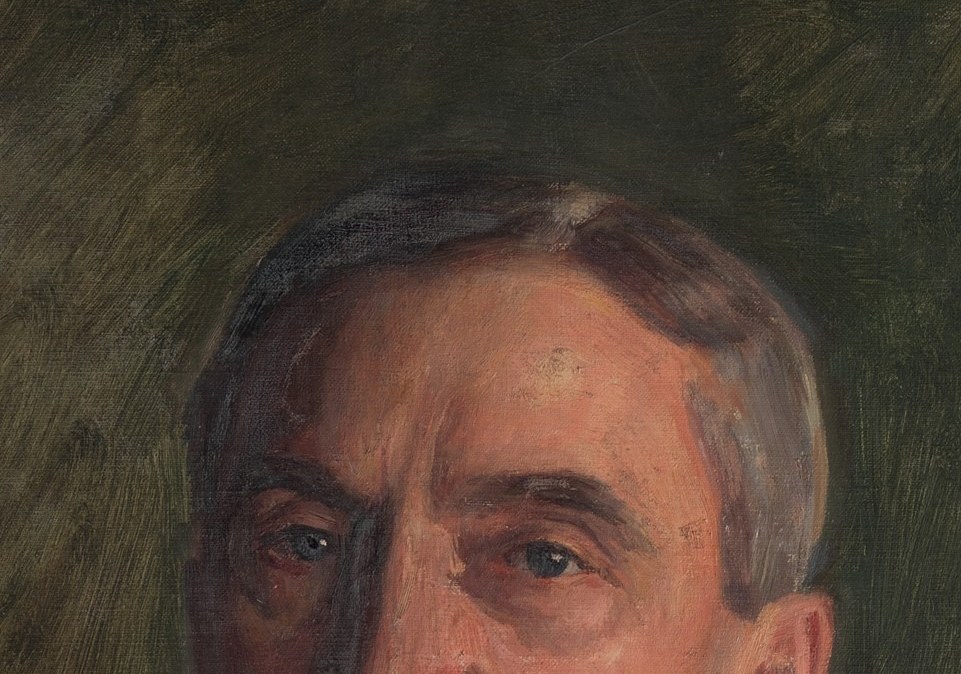
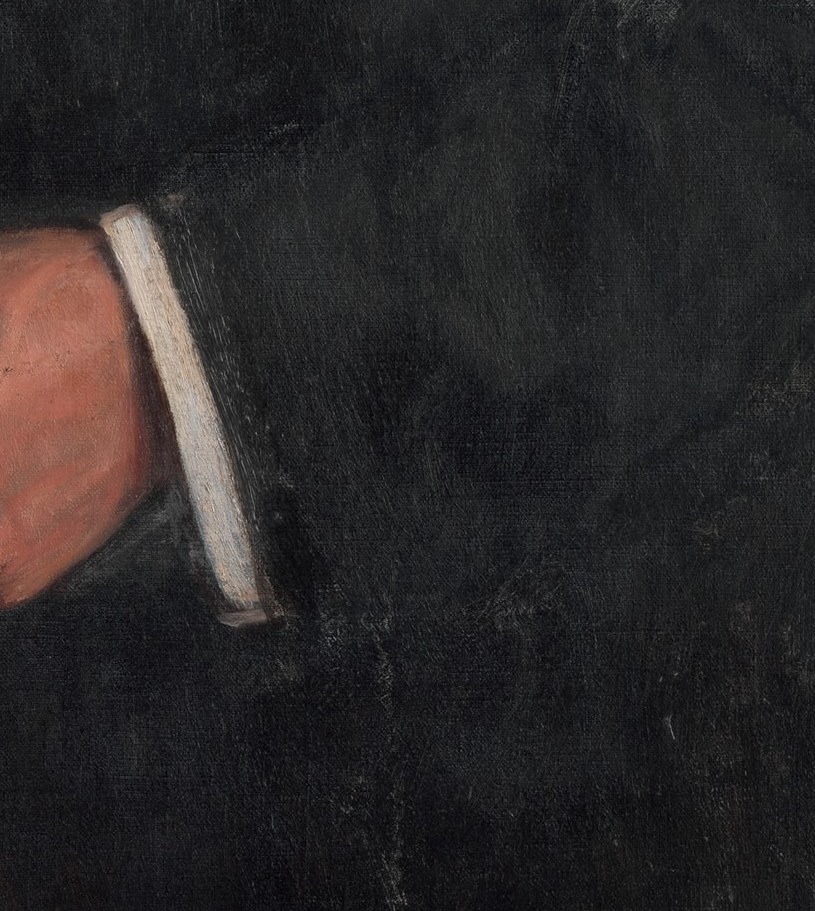
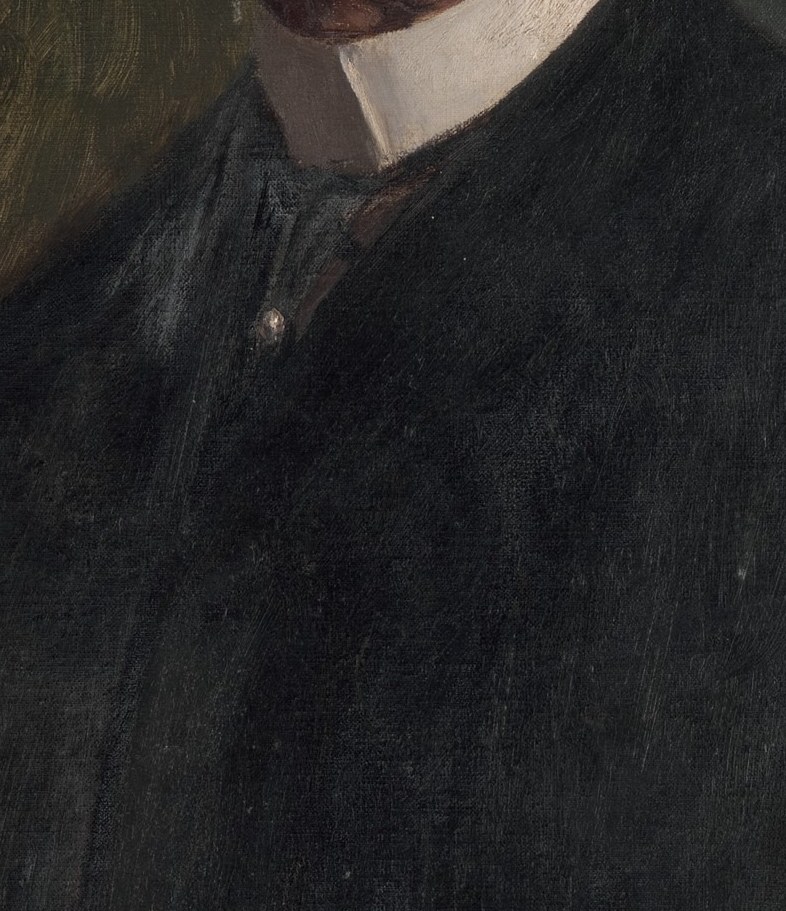
Look at the details Eksergian chose. Fletcher holds his glasses rather than wearing them, suggesting a man paused in intellectual contemplation. His eyes do not meet the viewer's gaze; they are directed slightly away, giving the portrait an inward, reflective quality that is unusual for a formal commission of this period. The composition is deliberately stark: the dark wool suit and dark background suppress everything except the face, the white collar, and the hand holding those glasses.
Eksergian himself is a footnote. Born in Bennington, Vermont, in 1859, he studied in Paris and built a respectable career in New York as a portraitist, but his name never entered the canon. This painting hung in Fletcher's mansion and then entered the museum alongside the Rembrandts and Vermeers it indirectly helped bring there. The collector became part of the collection.
A quiet portrait of a quiet man who made a loud, lasting gift. Does a portrait gain its real value from the artist who painted it, or from what the sitter chose to give away?
Details
Transcript
He was one of the richest men in Gilded Age New York. A financier who amassed one of the great private art collections of his day. But he never looks directly at the painter. His gaze sits somewhere off to the side, inward. He holds his glasses rather than wearing them. A man pausing in thought. His collection included a Vermeer and a Rembrandt, now both at the Met. The artist, Carnig Eksergian, was born in Vermont and trained in Paris. A forgotten portrait by a forgotten painter. But the collection reshaped an American museum.