The Crucifixion by Russian 19th Century
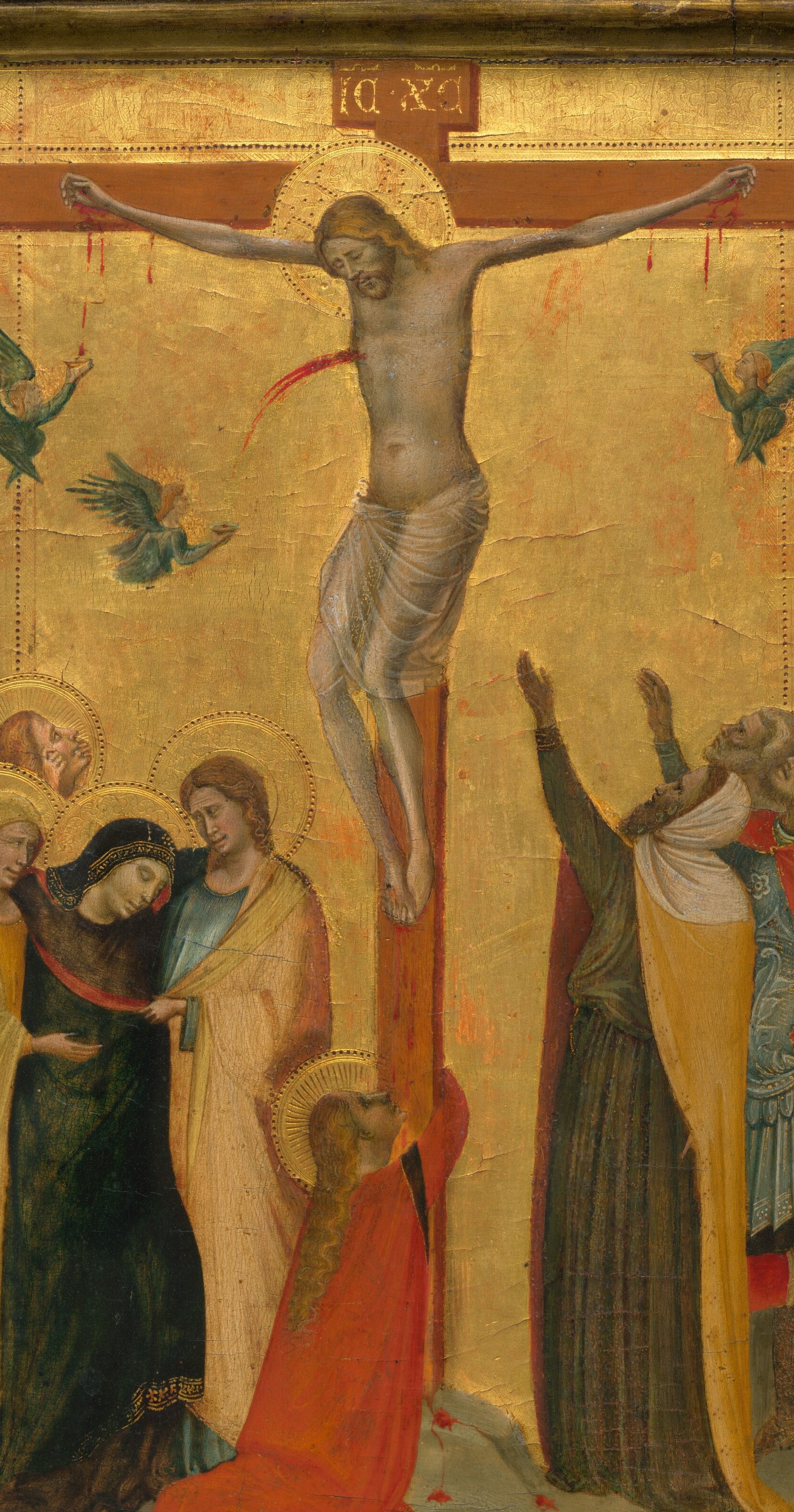
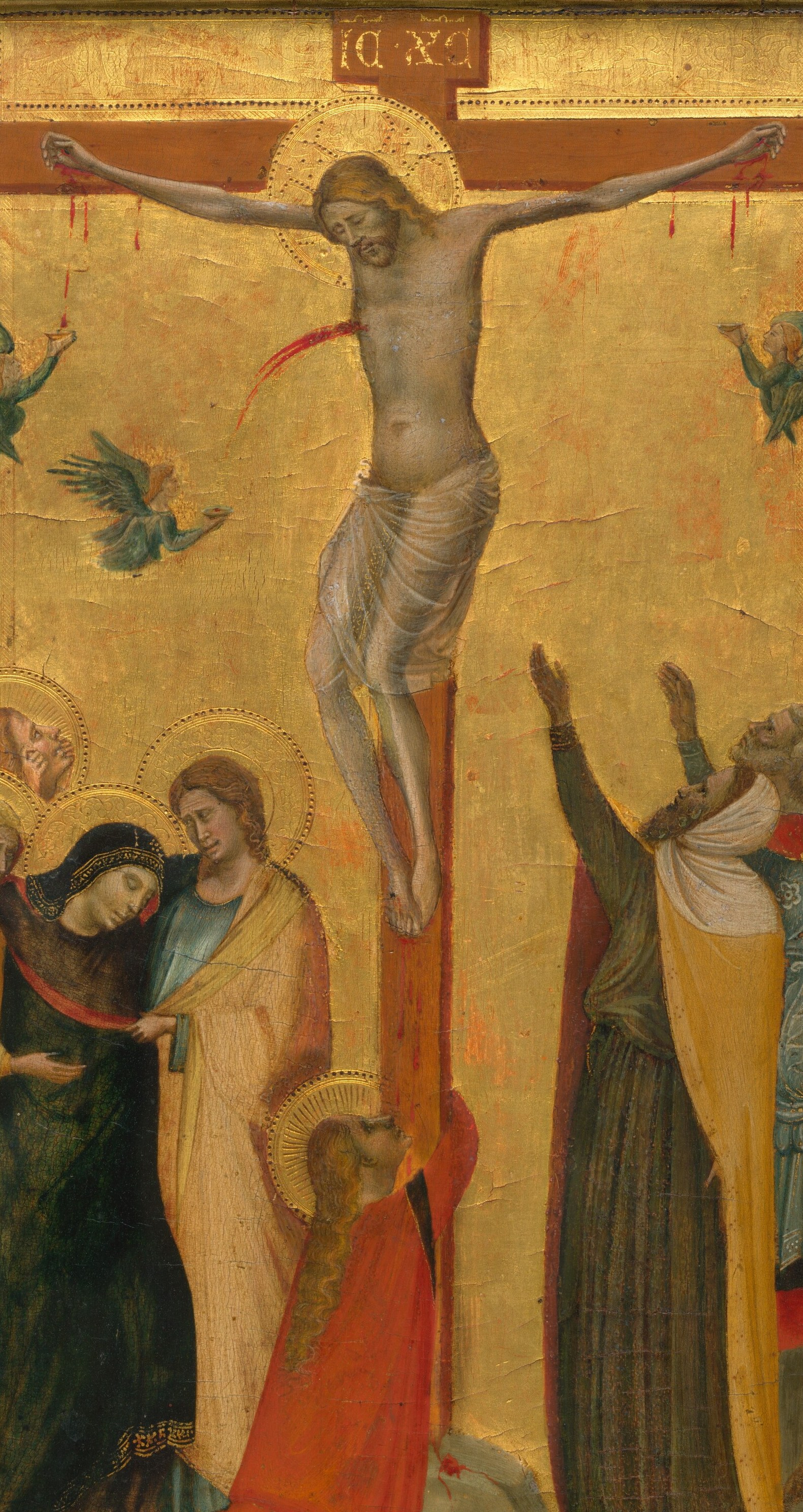
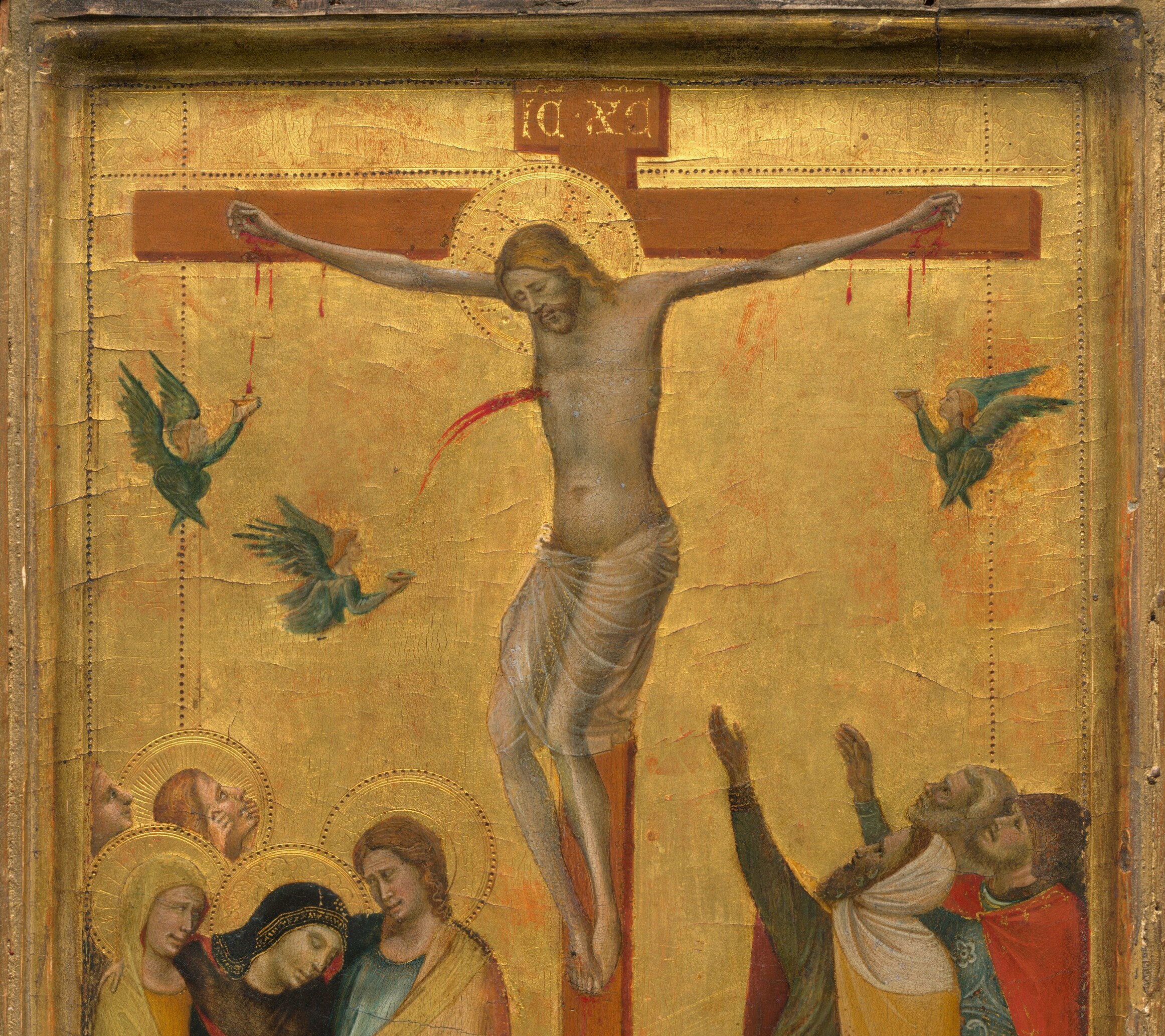
This 19th-century Russian Crucifixion does something you rarely see: a real brass cross has been physically embedded into the painted wooden panel. The metal isn't an illusion. It's an object. The boundary between icon and reliquary collapses right on the surface.
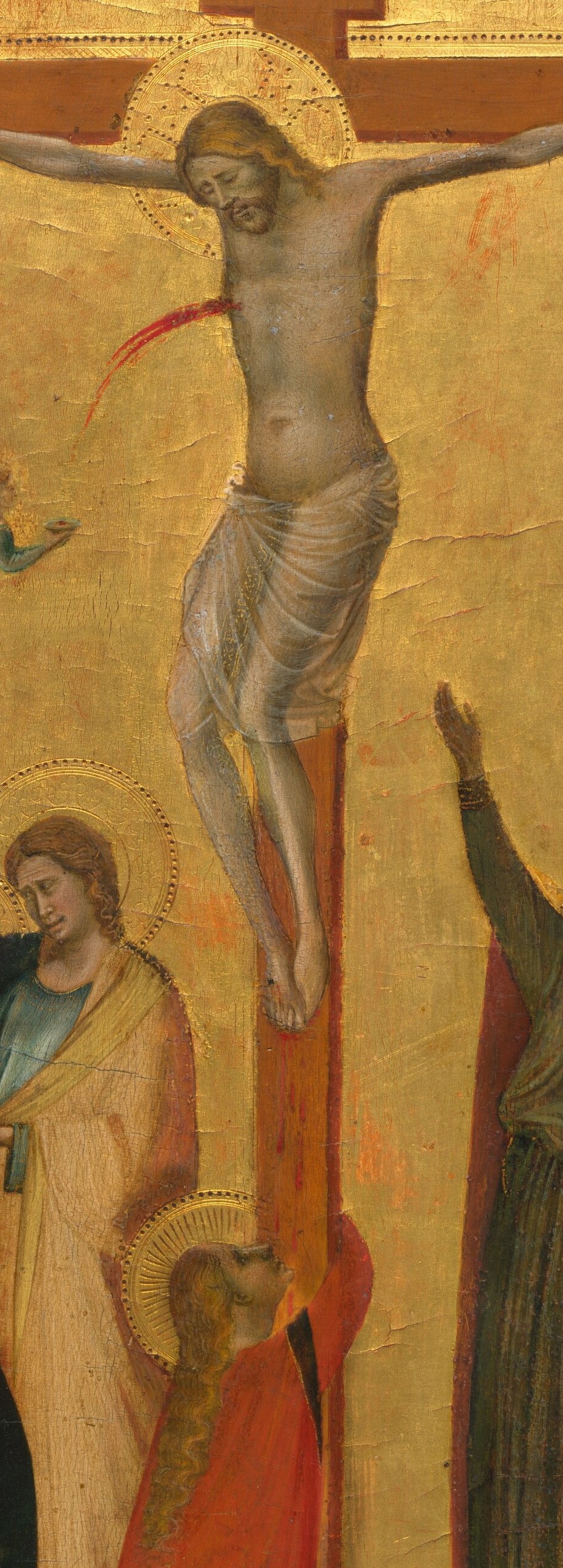
Look closely at the brass itself. The engraved or repoussé detail along the border is the direct trace of a metalworker's hand, visible inside a painter's composition. Against that gleaming metal, Christ's painted body reads as almost translucent, flesh rendered in oil, suffering rendered in brass. The tilted lower footrest is a specifically Eastern Orthodox detail: one end angles upward toward the repentant thief, the other downward toward the unrepentant, encoding an entire salvation doctrine in geometry.
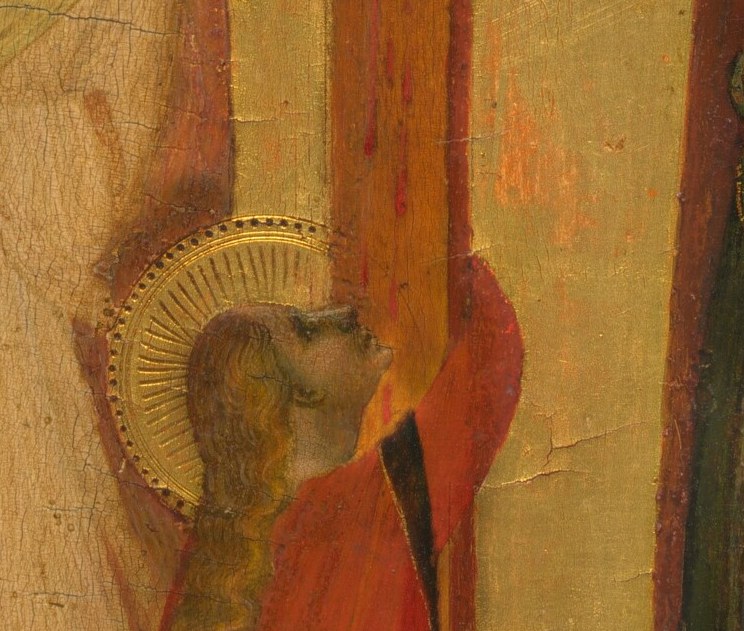
The painting follows Russian Orthodox iconographic conventions faithfully: the Virgin Mary veiled in grief at the left, St. John the Evangelist standing witness at the right, and small medallion saints at the cross extremities that turn this into a portable altarpiece. The gold ground behind them is the inherited gold of Byzantium, not a landscape, but heaven itself, with dark smudges evoking the supernatural darkness that the Gospels say fell at the Crucifixion.
A painting that contains a piece of the thing it depicts. What would it have been like to hold this panel in a 19th-century Russian church, candlelight catching the brass while the congregation sang?
Details
Transcript
This isn't just paint on wood. Look at this gleaming brass cross. It was hammered directly into the painted panel. A real metal object fused with oil paint. Christ's body is painted ghost-pale against the brass. The tilted footrest points toward a repentant thief. And right here, the engraved surface still carries a craftsman's hand.