Madonna and Child Enthroned with Saints by Carlo Crivelli
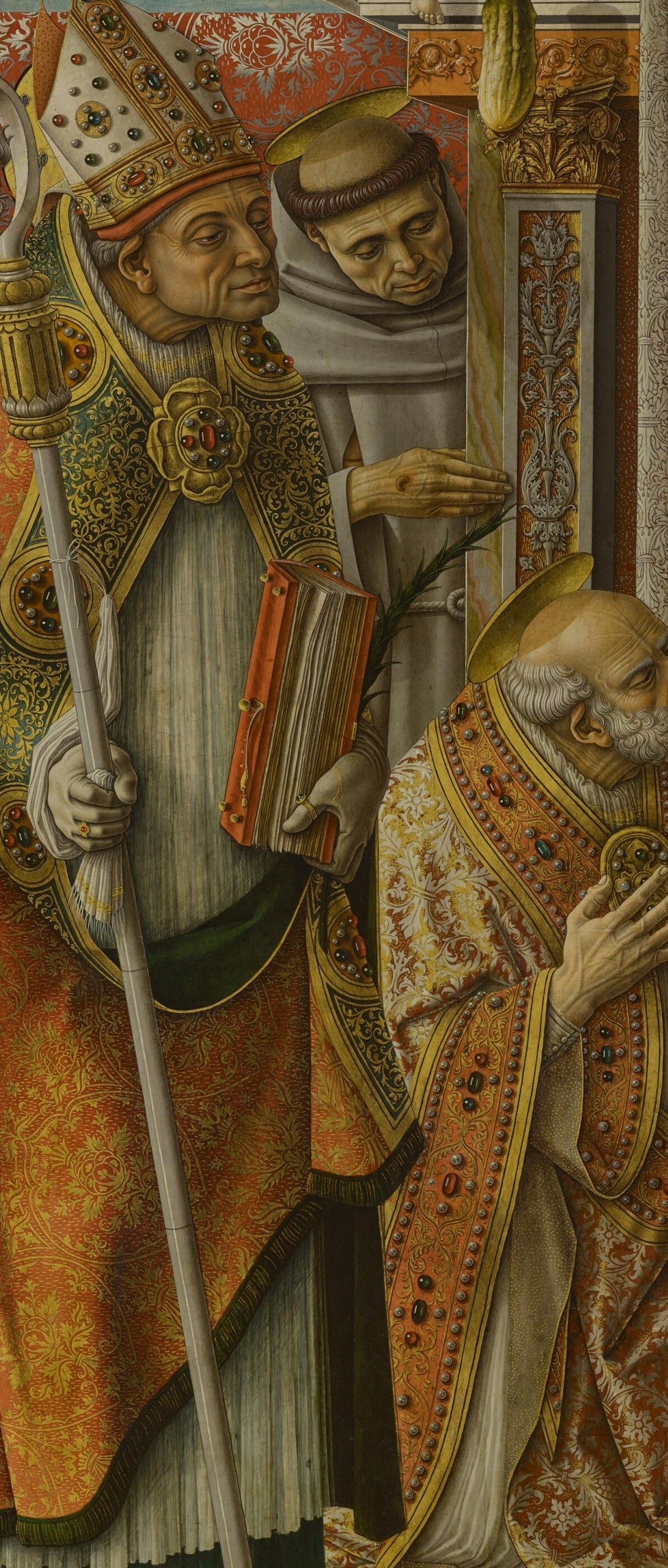
Carlo Crivelli's Madonna and Child Enthroned with Saints, painted around 1489, is a stunning example of his meticulous craftsmanship. Housed in the Gemäldegalerie Berlin, this early Renaissance tempera painting showcases his incredible ability to render textures.
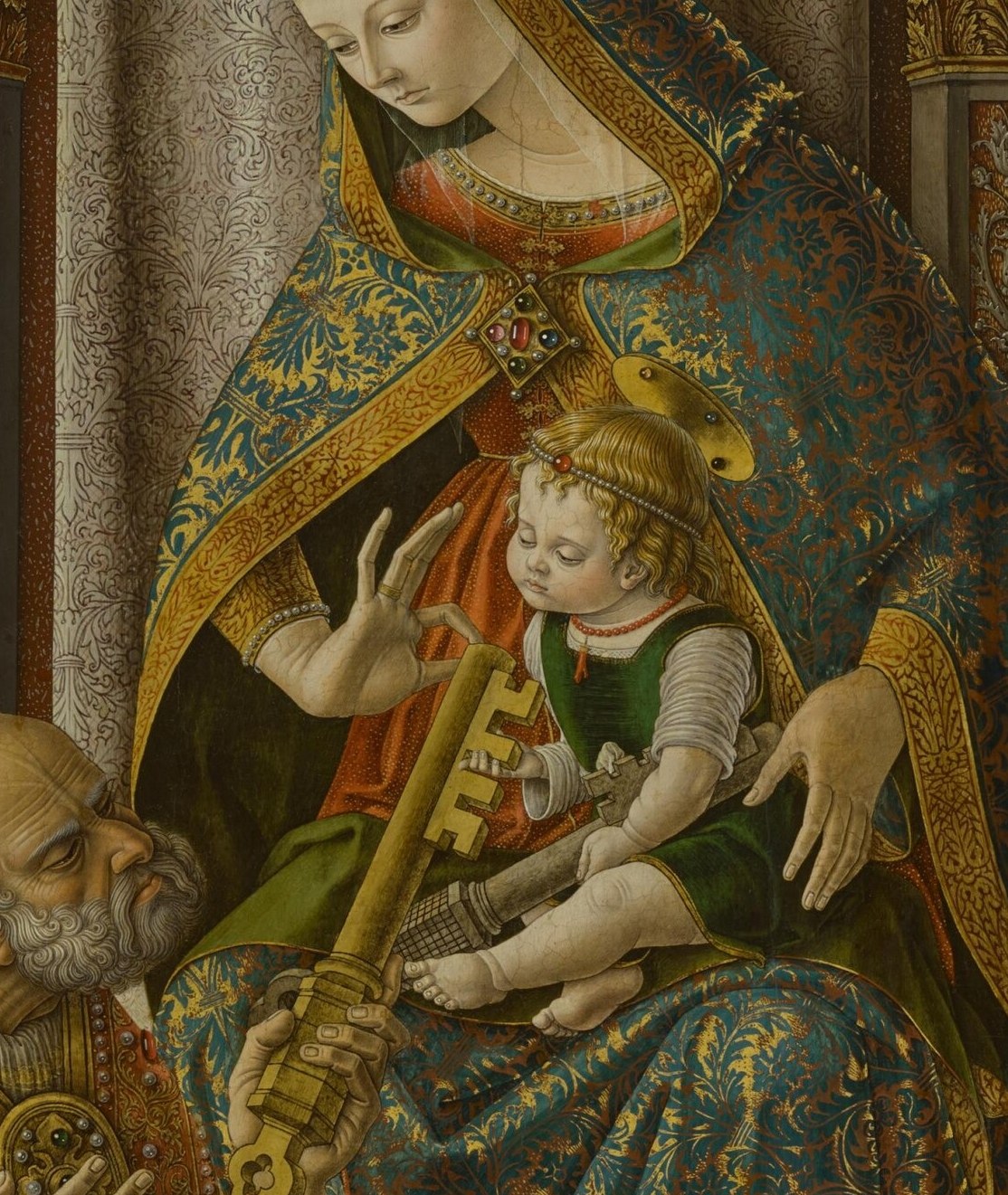
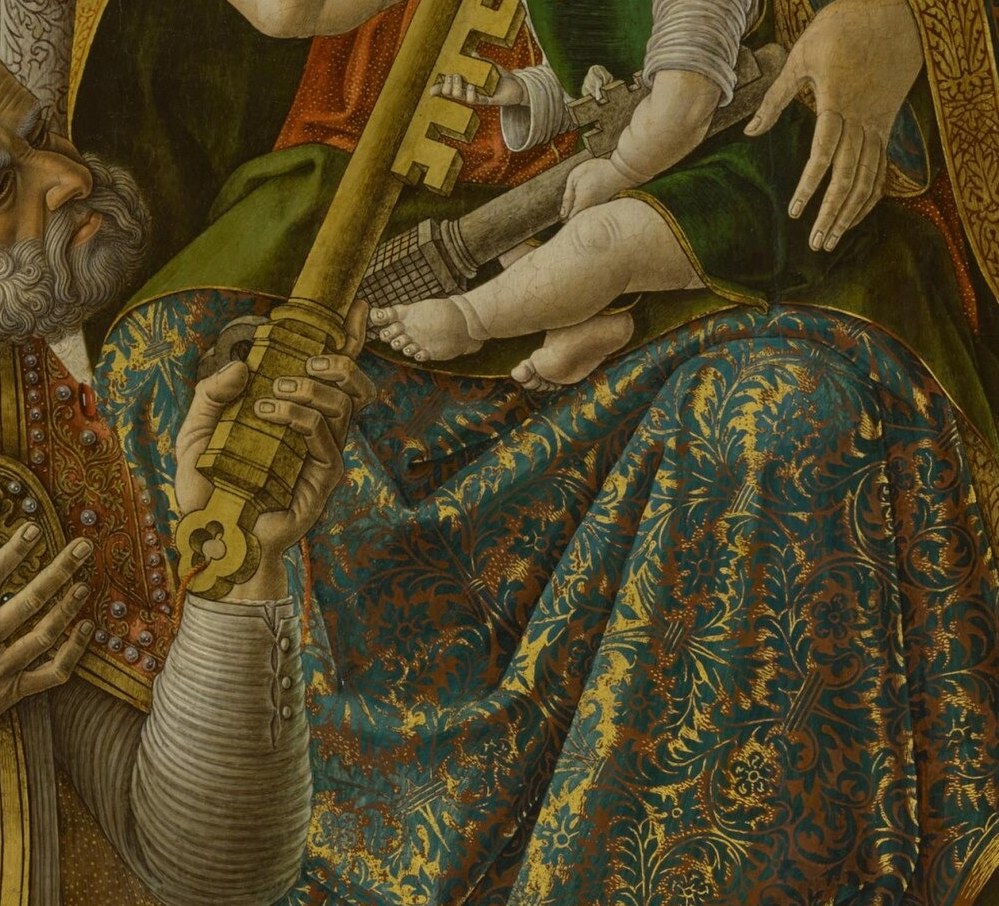
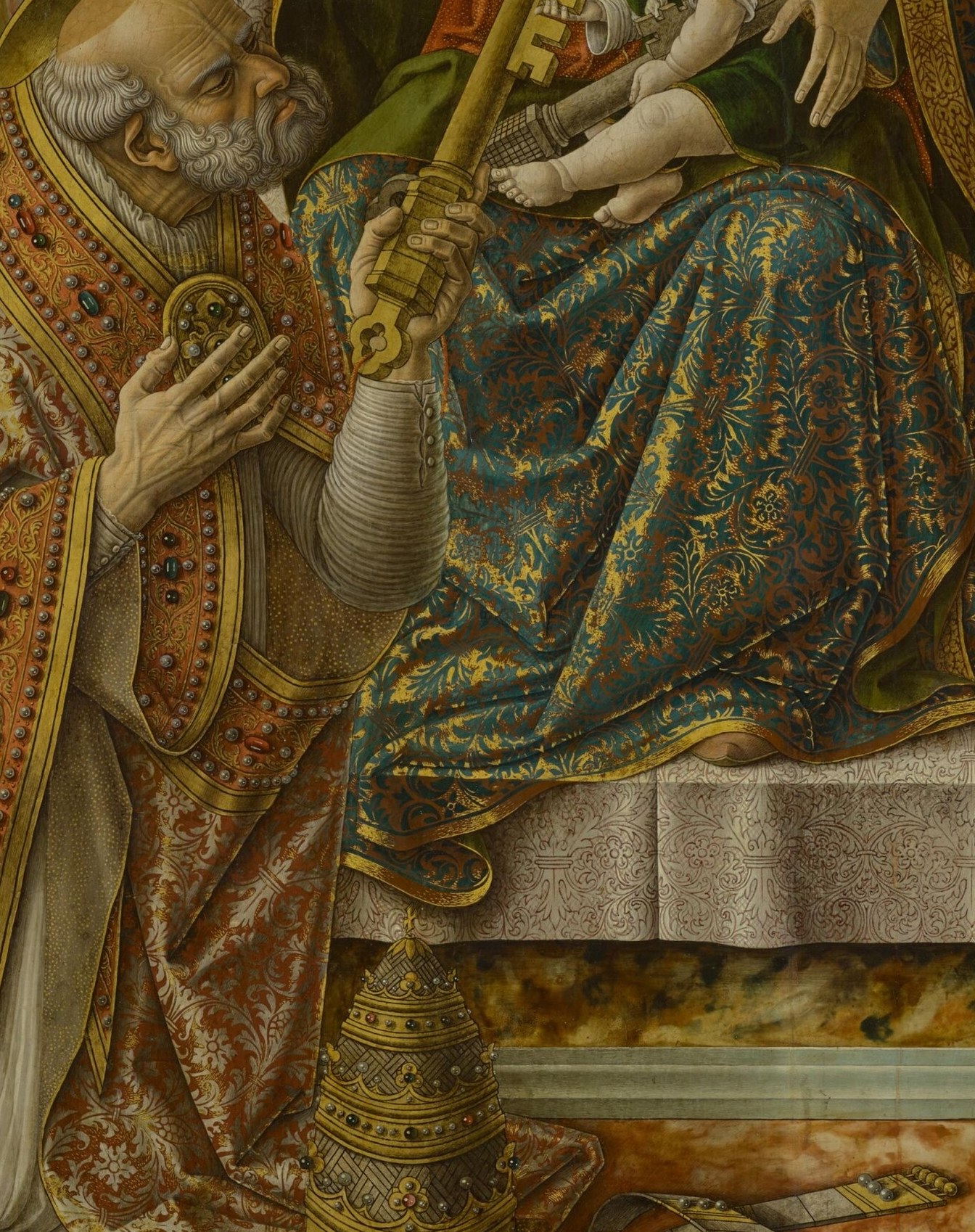
Look closely at the Madonna's robe. Crivelli's use of tempera, a fast-drying medium, allowed him to create an intricate, almost tactile brocade pattern. The way he painted each gold thread and fold makes the fabric appear three-dimensional, a testament to his virtuoso technique.
Crivelli developed his distinctive style in the March of Ancona, drawing on influences from artists like the Vivarini and Mantegna. His work is known for its precision and expressive quality, often setting him apart from his contemporaries. This painting perfectly illustrates how he brought incredible realism to divine subjects.
Isn't it remarkable how a flat medium can convey such depth and texture?
Details
Transcript
This painter was known for making paint look like real life. He created impossibly rich details, like on the Madonna's robe. Notice the intricate pattern of the brocade fabric. Every gold thread and fold is painted with tempera. It's a flat medium, yet he made it look three-dimensional. This meticulous technique defined his unique style.